Showing posts with label Film. Show all posts

Wednesday, 25 December 2013

Y is for Yoga
 

Yoga Is As Yoga Does is a song featured in Easy Come, Easy Go, the first of the three 1967 Elvis films. It features an encounter with some hippies — hence the modish subject matter of the song. In the movie, Elvis played a frogman and sang the yoga song as a duet with Elsa Lanchester, an actress previously linked with Frankenstein (she played the monster’s bride in The Bride Of Frankenstein) and Charles Laughton (she was both the homosexual actor’s fictional wife, Anne of Cleves in his Private Life Of Henry VIII and his real wife).
 

Laughton himself was also linked with Elvis. He was the substitute host on Elvis’ first appearance on The Ed Sullivan Show — Sullivan was recovering from a car accident — on 9 September 1956. Elvis sang Don’t Be Cruel and after he’d finished Laughton commented, laughingly: ‘Well, what did someone say? Music hath charms to soothe the savage breast?’
 

Laughton died in 1962. In 1964 Elsa Lanchester acted in Mary Poppins. In 1986, she was in Die Laughing — and then died.

Elvis recorded many other strikingly titled songs, most of them for his movies and many of them collected on the bootleg album Elvis’ Greatest Shit! (Dog Vomit, Sux 005, 1984): Dominic The Impotent Bull, Smorgasbord, Queenie Wahini’s Papaya, Petunia The Gardener’s Daughter, Fort Lauderdale Chamber Of Commerce, There’s No Room To Rhumba In A Sports Car and You Can’t Say No In Acapulco — the last pair both being cut on the same memorable January day in 1963.


Tomorrow Elvis, Superman and a Stanley Kubrick — the final link which explains life and everything like it.

Tuesday, 24 December 2013

X is for X-ray


In 1957, the American magazine Harper’s reported that in Russia, bootleg Elvis records, cut on hospital X-ray plates were selling for $12.50 each. This story has been repeated verbatim ever since. Wondering how you cut recorded music into something as hard as a glass X-ray plate, I called a leading expert in record cutting at his London studio. He confirmed my doubts in two words from the start of the alphabet. A was for ‘absolute’ and B was for ‘bollocks’.

Tomorrow It's Christmas so, obviously, it's  . . . yoga


Friday, 7 December 2012

Michael O’Leary, twat or cunt? A philological con-undrum


I quote Carole Cadwallar from her piece on the latest piece of ridiculous flim-flammery to emerge from the mouth of Ryanair boss Michael O’Leary. 


Customers had complained about having to pay £60 if they’d forgotten to print their own ticket. What did O’Leary have to say to them? ‘We say quite politely to those passengers, bugger off.’

And so, in The Observer, Carole Cadwallar used similarly base language to describe the Ryanair boss. ‘Michael O’Leary is a twat . . . He is . . . And Ryanair . . . is a twattish airline.’

Ah now, Carole, I beg to question. Is it fair to call O’Leary a twat? Is it an accurate characterisation? Is it reasonable to compare him — and his airline — to a piece of female genitalia? And then there is the most vital question of all: if Michael O’Leary is a vagina, is twat the best word in the context?

Some possible alternatives can be easily dismissed. He is clearly no pussy — there is nothing meek about him (or his airline). Nor is he a fanny — certainly there’s no fannying about in the Ryanair universe.

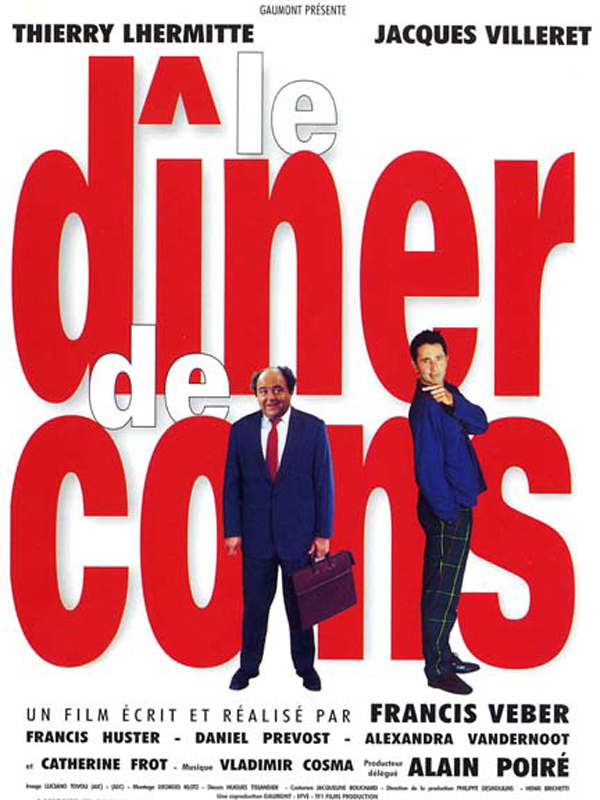
No, there are only two possible vagina words for the airline boss: twat or cunt. And I’d challenge Cadwaller’s choice of twat. I think most people would agree that it’s the weaker word and that a twat’s twattishness is the result of stupidity or, even more likely, laziness. A twat is an English equivalent of a French con — foolish rather than malevolent. The French play and film, Le Diner Des Cons


Le Dîner de cons 


was translated Dinner for Schmucks. Not for cunts. Though when they showed it in France, it was translated - confusingly, I would have thought - back to the same title as the original French film


When children’s author Jacqueline Wilson called someone a twat in her 2008 book, My Sister Jodie, that is surely the sense she was after. Someone that is useless, a drain on humanity but, really, they don’t do it on purpose. Someone doing something stupid like, say, using the word ‘twat’ in a book for children.


A cunt, though, knows what they are doing. And I find it hard to believe that O’Leary doesn’t know what he’s doing. In fact, I’m sure that his consciously obstructive rules for his airline are, more than anything, a way of getting free publicity. If I told people they couldn’t come in my house without a pre-printed ticket, then tried to charge them for printing it, I would, I reckon, be called a cunt for doing it. So O’Leary is clearly more cunt than twat. I quote myself, from my book Filthy English.


‘Cunt has only recently been used as an insult - since the late 19th century roughly. In that time, though, it has acquired unparalleled potency and pungency. I'd say there was an implication - an accusation, probably - of active malevolence in calling someone a cunt. Which is, to my mind, the reason it's seen as such a terrible word. Not because it represents vaginas and not just because it represents real hatred but because it represents real hatred allied to vaginas. So it's a violent repudiation of all our origins.’


PS1 All things considered, though, I don’t think O’Leary really is a cunt. He’s not nasty enough for that. (Nasty being another vagina word, of course.) Matter of fact, I’d use a native Irish phrase for him. I’d say he was a cute hoor. And if you want to know more about cute hoors, you’ll have to buy my book — now available, and selling well, as an eBook.


PS2 You don’t have to go via the satanic Amazon either. Both paperback and eBook are available via Waterstones.com, Play.com, Foyles.co.uk, blackwell.co.uk . . . and any good online bookstore.


Monday, 19 November 2012

The first fucking James Bond film

It’s a couple of weeks back now but I went to see the new James Bond, Skyfall, on a wet Wednesday afternoon on half-term in Penzance. It was packed.

Before I get on to Bond, though, let me wander off for a bit with something about the cinema, the Savoy. It’s the oldest in Britain, I think. Last time I was there, when they showed the bit before the film about how taping movies etc is an act of piracy, a member of the audience stood up and, in the deepest, roundest Cornish accent ‘Aaarr, that it be.’ (I’ve told that story before but in person. I’ve no idea if it worked in print.)

And so to James ‘fucking’ Bond. Well, actually, Judi ‘fucking’ Dench. Have you seen the film yet? Did you catch it? Mrs/Ms/Miss M, at a dark moment, says: ‘I fucked up, didn’t I?’ She doesn’t say it clearly, she mumbles it.


And my point is? That no review — not that I’ve seen anyway — has commented on it. Why did they put it in the film then? My guess is for two reasons. One, I can tell everyone about but the other — which is the real one, I reckon — is something that can only be revealed to people who’ve actually seen the film.

Reason one. It was a straightforward way of emphasising the gravity of the moment. Nothing else would have achieved the same impact. Which shows that, however publicly acceptable ‘fuck’ has become, it still does retain power.

Reason two. Because it is a Rubicon of a moment. A river has been crossed. A moment has happened. It’s an indication that things will never be the same again. It’s an emotional harbinger of something that happens later in the film. Something tough and irrevocable. But I can’t tell you what it is. (If you’ve seen the movie, I don’t think you’ll have too many problems figuring it out.) It has nothing to do with sex, though, just with the more usual modern meaning of ‘fucked’.

Next The next Greatest Song In The World Ever . . . Today. This one doesn’t even have words.

Friday, 20 January 2012

Flash, bang, wallop . . .

Bang goes Kodak. Two thoughts etc . . .

One Think Cunard and White Star Line. With the early 20th century success of their Atlantic passenger lines, they thought they were in the boat business. When actually of course they were in the people-moving business. So when long-distance flight became possible, they kept on with their ships and, eventually, disappeared as businesses.

Two I was actually looking to buy some printers yesterday. One, to trial. Maybe three or four more if that one did the job. So I did a little online research. Conscious that the real cost of printing - particularly if you need, as I do in this case, to print a lot of photos - is the ink, I was taken by Kodak's regular boast that its inks were cheaper than anyone else's. So I checked out all the reviews I could find. 

The Kodak printer of choice seemed to be the one called Hero. (Yes, I know I should have set my own alarm bells then but I didn't.) I scanned the reviews and they seemed to be pretty damn positive. So I decided I might well buy one. I went to Amazon to start the process. Then I saw one bad review and it said: actually, you know what the worst thing about this printer is, that it is really not very good at printing photos. So I went back over the other reviews and I saw lines like: well, yes, it is really good but the photo-printing is not what you hope for, particularly from Kodak etc etc

So I cancelled the order and will switch to Canon. Let's see how that goes.

Which is an object lesson in company decline and failure. As Xerox developed the personal computer (mouse, icon interface etc etc), then let Apple steal it, so Kodak developed the digital camera then hid it, in case it cannibabilised its own business. Instead, it got eaten by the Japanese. 

So, I guess, the moral is this. It's better to eat your own leg and survive than let someone else eat it for you. I'm sure it says that somewhere in the Bible or Koran.

Actually, one more thought. People are always saying Britain should do more manufacture. I'm not sure about that. Manufacturing was a blip in the national history. Mostly, we've been traders. An obvious choice given our geographical position. And traders are, by nature, wide boys (and girls). They go where the action is, shamelessly. Trading is never out of fashion. It's subject to technological change, true. But, at its best, most purest, it is quite uninterested in either the object being traded or the method of trade. Cash is the king in this realm. Always. So . . . while I'm not exactly standing up for bankers and incomprehensibly complex derivatives trading, I do think there is a question here somewhere. And another one: if there is not something in what I'm saying, why does our pantheon of national heroes include Francis Drake, Arthur Daley and Del Boy Trotter?

PS I will put up the sleeve notes for the Xmas compilation. I decided to make them longer than I first intended. I'll be posting them one a day, starting early next week.

Monday, 2 January 2012

On the eighth day of Christmas . . .

The Social Network. Among from the all the many reasons to applaud it, three things . . .

One Its yellowy colour overall. Despite two viewings of the movie, I'm not sure quite what the meaning is. Despite having written a piece for Hungry Eye magazine on this subject, I'm still uncertain about it. Perhaps uncertainty is yellow. Perhaps yellowness evokes uncertainty. I'll let you know when I've got the answer. Maybe it'll arrive in the next post.

Two It didn't feel like 'film'. Most movies, even good ones, have tricks and rhythms that feel so familiar, that are so familiar that you exist in a state of predictive nostalgia. (Which is something I'm working away at in another context, pop songs.) They have soundtracks that insist on doing your feeling (and thinking, too) for you. The Social Network doesn't do that. It has the rhythms etc not of life, of course, but of 'life', at least.

Three Written by a TV guy. There are loads of great things on British TV now. Funny stuff. Documentary stuff. Sports stuff. Historical drama stuff. But the contemporary drama stuff is complete bollocks. Even the stuff that is good is terrible. Maybe the producers and writers and directors should consider having a look at The Social Network.

Till later today . . .

Wednesday, 4 August 2010

Vicky Cristina Barcelona: what’s that all about, eh? Part five*

It’s possibly best to start reading earlier in the series but if you really can’t be bothered, all you really need to know is that I’ve been trying to figure out Woody Allen’s Vicky Cristina Barcelona.

PS1 In case you need telling, I don’t think all Americans are narcissists or that all America is narcissist. Or even that the invasion of Iraq was necessarily a totally bad thing or completely stupid idea. Just that narcissism and solipsism were big players in the badnesses and stupidities of the invasion and what came after.

PS2 Spending so many hours at the cinema with my sons and daughters gave me a deep appreciation for children’s films. Most of them are far better made, acted and plotted than adult films. Children’s passion for logic and consistency is so often worn down as they grow older, their own passion eclipsed by their wish to have their own thoughts supplanted by another’s withered hysterias. How else to explain the status of, say, Ken Loach or Mike Leigh?

PS3 My daughter’s current rave is Toy Story 3. She’s grown-up. She watched it on her laptop, a bootleg recorded on a phone from a mid-row seat in some American or Israeli multiplex. I can’t do that. I’m a grown-up grown-up. I’d love to see it at the cinema but I no longer have any children to take me. If I went by myself, they’d think I was a paedophile. And I had enough of those as a child myself, watching cartoons, alone, at long-defunct cartoons-only cinemas on Oxford Street and Victoria Station, moving seat about every five minutes so as to stay one step ahead of their hands. (And I wonder why I’ve just about given up on cinemas.)

Some entertainment?

The last government was always talking about things being ‘world class’. I never quite figured out how — on the Class Scale — that related to footballer’s ‘different class’. Which trumps which**. Oh well, here is a kind of international infant school guide to the world — where everyone is the best at something.

And here is someone who really was the best. Different class or world class or just class? All of them, I guess.

* Of five

** I have the same problem with the Load Scale. I’m never sure which is the greater, a shed-load, a shit-load or a fuck-load?

Next up I’m taking a break for a bit and will return at the start of the football season with — at last — my wonderings about who Freud would have supported in the World Cup. And the Premier League.

Sunday, 25 July 2010

Vicky Cristina Barcelona: what’s that all about, eh? Part four*

So I’m still finishing up my trawl through my thoughts about Woody Allen’s Vicky Cristina Barcelona. Having failed to make sense of the film’s surface, I looked for other readings of it which might explain what critics saw in it. I discussed the first possibility — that it was a film about the inherent paradoxes and limits of making a film like Vicky Cristina Barcelona. A social comedy about social comedies, that is. Now I move on to . . .

Two. The only other possible reading of the film to my mind is as an unknowing satire on unknowingness — completely naive in its composition but deeply sophisticated in its end-result. Most pointedly, the film can be read through the prism of the Iraq invasion. Or rather, as a metaphorical trope of the Iraq invasion. Not Rumsfeld’s unknown unknown** but an unknown known — a self-structured blind-spot. The inability to comprehend the other’s otherness — except as undifferentiated otherness***. Which brings us, of course, back to Freud and the unconscious.

By this light, Vicky Cristina Barcelona is the film Jean-Luc Godard would have made ‘about’ Iraq — much as Weekend was ‘about’ Vietnam. Well, not quite. That would have been a knowing satire on unknowingness.

It can, then, I guess, best be read as Woody Allen’s own, unknowingly made rumination on both Woody Allen’s strictly bounded conception of the world and his sad and rueful — though unknown to him — knowledge of those limitations and their significance as virtually unmediated reflections of American narcissism.

I hesitate before I write this but I’m coming to think of Vicky Cristina Barcelona as an inadvertent masterpiece, a kind of automatic writing which — quite unconsciously — creates and develops the most vivid and perceptive view both of the workings of the unconscious (in particular, the operation of projection) and of the myopias of an imperial state of mind.

* Of four. Plus postscripts

** Don’t get me wrong. I’m a big admirer of Rumsfeld’s riff about the limits of knowledge. I think it’s one of the smarter things I’ve heard a politician say in many years.

*** Hence, for example, early Rolling Stones records. To ‘love black music’ is to departicularise it, depersonalise it. To truly appreciate it — real, mature love, if you like — you have to acknowledge your wish to destroy it, too. Or, at least, your capacity for treating it with off-hand disdain. Hence the wonders of later Rolling Stones records****.

**** The psychoanalytically inclined might notice my larceny of Winnicott’s 1947 paper Hate in the Counter-transference*****.

***** The psychoanalytically inclined might also notice that my larceny and warping of Winnicott shows a true appreciation of his work******.

****** The non-psychoanalytically inclined have probably had enough. Even the psychoanalytically inclined, too, I reckon.

Next up The postscript. Well, postscripts, actually.

Meanwhile . . .

Les Them, a young woman called Gloria and . . . a donkey

The little known martial artistry of Red Bull cannery

Wednesday, 21 July 2010

Vicky Cristina Barcelona: what’s that all about, eh? Part three*

So? So I’m thinking and writing about the film that was meant to be Woody Allen’s return to form, Vicky Cristina Barcelona. I’m thinking about it not so much in terms of what it appears to be but sits behind that appearance. I’ve been thinking, given the contusions** of its surface (and my dilletante-ish readings of Zizek) of it as a representation rather than a film. Or, in Freudian terms, as a symptom or presentation of underlying neurosis.

I decided there were two alternative thoughts/diagnoses.

One, it is a satire about the making a film like Vicky Cristina Barcelona. There are Gaudi bits of the city. There are rich expatriate Americans — Henry Jamesian without the quality tailoring. There is Penelope Cruz playing ‘crazy Spanish woman’. There is Javier Bardem playing ‘crazy Spanish artist’***. There is lunch. There is Spanish sex — with two young American girls. So not so much Spanish sex then as Woody Allen sex.

It is a view of Barcelona which gloriously reflects the maker’s own projections — because that is the stuff from which it is made. The city, the characters, their actions, these are all things which have no independent life outside Woody Allen’s head. They are thin, substance-less, one-dimensional — almost heroically so. The director’s singularity of vision peers inwards to what he already knows — or, rather, thinks he knows but actually doesn’t. That’s its deliciousness. Henry James again: it’s as if Daisy Miller had written Daisy Miller.

So, taken as a whole, all these elements of cliché, pastiche, reductionism and seemingly unfiltered symbolism combine to produce a film which is an accurate and enjoyable parody of an imaginary Woody Allen movie set in Barcelona. It’s the film that you or I would make if we wanted to make a comic reflection of the film we’d imagine that Woody Allen would make about Barcelona.

Read that way, it’s possible to pass a passable ninety minutes or so. And thank Woody Allen for giving us a late flowering of a new found capacity for self-reflection (as opposed to his earlier self-regard, self-fascination even).

So: Vicky Cristina Barcelona as a wry comedy of manners about a film-maker’s id-fuelled myopias and fabulously ignorant cultural prejudices. Attractive young girls! Spanish artists! Flouncing Spanish women! Gaudi bits and bobs! Barcelona, mi amigo! Las Ramblas! Tapas! Attractive young girls! Etc etc.

The second possibility? Wait till tomorrow.

* How many parts? Well, it’s currently looking like four, with a postscript (or two).

** Yes, I did mean contusions.

*** Who seems to have a private jet licence, too. Not to get too literal and picky about this, but I know a Barcelona-based artist, successful enough to have had a piece in MoMa. He runs bars to survive. He’s rich as rich by Barcelona artist standards.

Meanwhile . . . Tourists to London (and admirers of Tessa Jowell) might be interested in this.

Tuesday, 20 July 2010

Vicky Christina Barcelona: what’s that all about, eh? Part two*

Like everyone, I lost Woody Allen somewhere along the way. Can’t remember when. Probably in the early/mid-1990s, maybe earlier. That apart, I remember seeing a bit — on cable — of the one about Wimbledon. There was a murder in it, I think. It was so bad that, well, I can’t even be bothered to summon the will-power to finish that comparison.

So to his Vicky Christina Barcelona. I’d read and heard that it was a return to form. Yes, I know it’s a couple of years old, at least but . . . see above. I saw it was on cable. I missed it half a dozen times or so. Then I told myself: no, you must watch it. So, for once, I made myself sit down at the start and stay there till the credits.

Well?

Not well.

To understand what I write next, you probably need to have seen it or have me provide you with at least an outline description of it. Again, I can’t be bothered. Work it out yourself from the title: two girls, Americans, Spain. Add what you know of Woody Allen’s work and you’ve got a good idea.

So . . . there are only two possible explanations/readings of this film** . . . Which I will start explaining/reading in the next post.

* How many parts exactly? Well, more than two, it seems. I’ll keep you posted.

** I’d been reading*** a certain amount of Zizek and so found myself somewhat influenced by his stand-up philosophy.

*** When I write about ‘readingZizek, I don’t, of course, mean reading in the sense of opening a book, studying it, finishing it. No, I mean reading newspaper interviews with him, glancing at the cover of a photocopy of his 1989 essay Which Subject of the Real? that’s on top of a Really Useful box in my office and rewatching his wonderful Channel 4 documentary, The Pervert’s Guide to the Cinema. Well, some of it.

Towards a future post . . . Go here, paste in some text (your own, mine, a writer you like) and it’ll tell you which famous writer’s style it’s closest to. I’ve done mine. Hence the forthcoming post. Only not till I’ve finished with Woody Allen and Freud on football.

Monday, 19 July 2010

Vicky Cristina Barcelona: what’s that all about, eh? Part one*

I rarely go to the cinema these days. Partly because of the smell — damp carpets in ‘heritage’ ones, popcorn in multiplexes. Partly because I go to the theatre a lot and, what with having to watch a publicly acceptable and democratically accountable amount of football, time is short. Mostly, though, I just forget to go. At least, that’s the way it feels.

When my children were young I’d go all the time. My daughter, in particular, loved seeing every new children’s films. Sometimes several times. Once, we found ourselves the only customers in Swiss Cottage Odeon for Mrs Doubtfire. It was like being in your own sitting room. If it was the world’s biggest sitting room.

My younger son loved cartoons — a taste I share with him and was happy to indulge, with Saturday mornings spent at Bugs Bunny retrospectives and Fritz Freling symposiums. (Some day, I’ll share with you my thesis that all cinema aspires to cartoondom and that CGI is a step in that direction — only counter-productively complex and expensive.) Sadly, my son’s true favourite cartoons were Japanese — Digimon etc. If you’ve never seen one, keep it that way. Sitting beside him in the dark, I’d find myself weighing up the merits of suicide.

I genuinely can’t remember the last time I went, or to which cinema. The last film I can actually recall seeing at a cinema was a Lord of the Rings thing. Maybe the first. Maybe the second. It was that younger son who took me — as in, got me to take him and his friends. I fell asleep. I was ravished by the New Zealand landscapes, though.

I do watch movies, of course, but on TV. Mostly on cable movie channels — because I pay for them so it seems churlish not to watch them, like an anorexic woman leaving half her restaurant meal on the plate. So I watch a lot of bits of movies — I’m not good at figuring out and remembering when what starts. I watch movies I’ve seen before — it’s not only small children who like to hear the same story over and over. I also tape movies I haven’t seen — and sometimes even watch those. Sometimes, I even watch whole movies, from the start to the end.

What this means, though, is I’m always behind in my movie watching. I’ve never seen the latest hit — or the one before or the one before that, generally. I could, I know, catch them on DVD — but that involves Amazoning them and, frankly, my house already has enough unread books and unwatched CDs and unplayed DVDs in it to keep me occupied and engaged well beyond my likely death.

Also, I could watch them online etc. But I already spend enough time on the computer and don’t feel I should watch pirate torrents. That’s a young people thing, inappropriate and unbecoming — unglamorous, even — in grown-ups.

So there are always movies I wanted to see but never got round to. In particular, the ones at the less populist end of the range. Cable movie channels are good on romcoms — so I get to appreciate Russell Brand’s updating of Spinal Tap in Forgetting Sarah Marshall. But I don’t often see the kind of movies I used to always see on first release at my local, the Screen on the Hill in Belsize Park. (I think it’s changed its name now. Shows how much attention I pay, right.)

Which leads to what I was getting to, divergently, right from the beginning: Woody Allen. Well, it will in the next posting.

* This was originally one long posting. Then it got very long. Then I showed it to my wife who said: it’s very long and it doesn’t read like a blog, it’s like an article. So I cut it in bits and will post one a day over the week. How many bits? Well, at least one more. I’ll let you know when I’ve figured it out.

Meantime . . . a touch of French expertise

Next up Vicky Cristina Barcelona: what’s that all about, eh? Part two