Not that this meant Elvis was a junkie. Rather, as many fine minds have pointed out, he was a heavy user of pharmaceutical preparations — addicted not to ‘proscribed drugs’ but ‘prescribed drugs’. In the last two and a half years of Elvis’ life, Dr Nick wrote him scripts for 19,000 hits of the drugs he liked. ‘The worst case of indiscriminate oversubscribing I have ever seen in my investigations for the State of Tennessee’, said a local prosecutor on Geraldo Rivera’s 13 September, 1979 US TV report, The Elvis Cover-Up, which first exposed the extent and range of Elvis’ multiple drug abuse.
Yet… both the Board of Medical Examiners and the jury at a criminal trial cleared Nichopoulos of any wrong-doing. ‘He expended enormous efforts to keep drugs from Elvis and more than once saved his life,’ wrote Stanley Booth, Rolling Stones biographer, fellow Memphian and patient of Dr Nick’s, in a touching and vibrant essay for Mojo magazine. ‘The only people who understood that apparently were the jury who acquitted him.’ In the piece, Booth quoted Sun rockabilly Charlie Feathers: ‘It wasn’t drugs that killed Elvis, it was breakfast.’
Sam Phillips didn’t agree. For him, it was a broken heart that killed Elvis, only not a physical but a metaphorical one. ‘I’m talking about emotional entrapment. That’s deep stuff. And it’s serious stuff. And no matter what happens to you in this world, if you don’t make it your business to be happy, then you maybe have gained the whole world and lost your spirit and maybe even your damned soul.’ Fifteen years after Elvis’ death, in an interview with LIFE magazine, Nichopoulos, then still practising medicine in Memphis, said of Elvis: ‘I used to see him every day. When I’d get through at the office, I’d stop by at Graceland and see how he was doing. Now I find different ways to go home so I won’t be reminded.’
Next up Elvis and his tabloid life
Friday, 26 October 2012
The greatest song in the world ever . . . today Number one: Fats Domino’s The Fat Man
This is the thing. I’m sure you feel the same way, too.
You’re listening to the radio or to your iPod on shuffle and a song comes on, one you already know well but probably haven’t heard for a while, and you think: how wonderful is this, now I remember why I was so driven by it in the first place.
You play it again. And you feel the same again. And again. It’s like love at first sight on repeat mode. Rapturous. Childish wonder. Intimations of immortality, that kind of thing. It is, without doubt, the greatest song in the word ever.
Then you forget it again. Well, I do.
So writing about these moments here is a way of fixing that memory. Some kind of memento of lost todays. From now on, every time I find myself thinking: that is the best song ever, I will post something here. With a link to the song. And picture of the artist. Plus a little information, a story or two and a bit of an attempt to explain why it is the best song in the world ever.
And so to the Fat Man’s The Fat Man.
It was Fats Domino’s first record, cut as long ago as 1949, in New Orleans. Antoine Dominique Domino Jr was then twenty-one and, well, good golly, miss molly, he is still with us. I’ve only seen him play once, in the late 1970s. He seemed ancient — not to mention enormous. But he was only the same age as I am now. (I’m bigger than I was then, too.)
The Fat Man is a song about hanging on a street corner watching the girls go by. Not just any corner either but Rampart and Canal, then the heart of non-white New Orleans.
Non-white? Why didn’t I write black? Because of the kind of girls the fat young man is scoping. These are not just any girls. These are Creole girls. I assume the singer referring to what are now called Creoles of color — ie they have African ancestry. Pre-Civil War, they were classified as neither black nor white. Creoles were a kind of black upper middle class in New Orleans. Fats was a Creole himself — hence the Frenchie Christian name. If you want an idea of the kind of girl he was lusting after, think Beyoncé — she’s another Creole.
There’s another story behind that story, too. While Domino took a credit for writing The Fat Man, it’s really just his cleaned-up take on an earlier New Orleans anthem, Junker’s Blues. That’s the one Dr John played as Junco Partner. It’s possible that, these days, it’s best known as the basis for the Clash’s Wrong ’Em Boyo.
This greatest song in the world ever is all about hitting a piano hard and keeping on hitting it. Even sitting at a desk, you nod your head along. I guess that is its secret. And the whah-whah bit. It was possibly the first rock and roll record to sell a million. I think it was the whah-whah bit that did it.
Not that long ago, I went to see Nick Lowe play, at Cambridge Corn Exchange — a one-night stand with a three-piece band.
Memory?
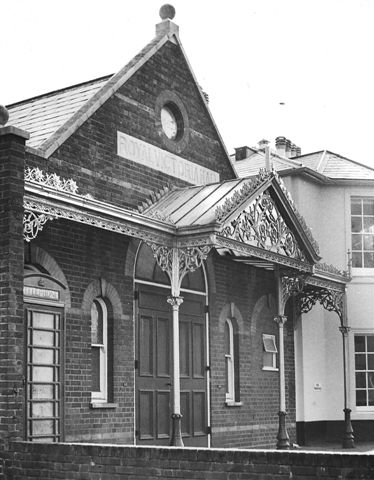
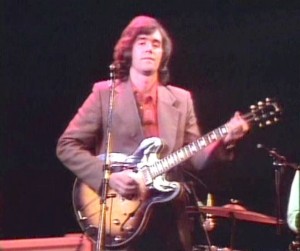
It must be nearly forty years since I first saw him play, at Tunbridge Wells Assembly Hall or maybe Southborough Royal Victoria Hall. He’s better now. Much. His clothes are better, too. Pastel frilly shirts never really suited his hawk-like frame.
The unconscious?
For one of the encores, he sung The Beast In Me, alone. To most, it’s a Johnny Cash song — or what passed for Tony Soprano’s theme song. But it was written for Cash by Nick — who, the man in black said, was his favourite ex-son-in-law.
That night in Cambridge, Nick sang it with such echoic meaning that the audience did what audiences tend to do when their hearts have been powerfully opened and operated on — nothing. When he finished, there was that rare, silent moment in which everyone draws themselves out of the emotional world they’ve just been through. Only then does the performer breathe and the audience applaud.
Later, I thought about the song and its lyrics . . .
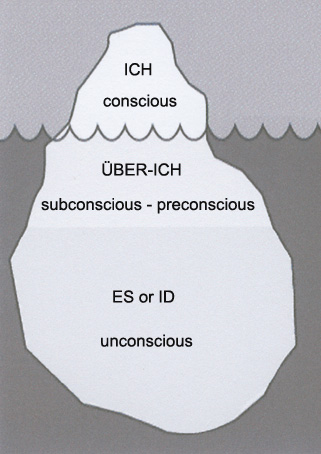
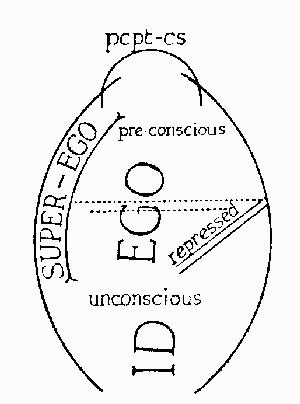
And I thought two things. One, it’s a song about the unconscious, the id, if you like, that bit of our brains that’s been around a little longer than manners and fine writing — but is still hanging around down there in our well, somewhere far below the cortical line. Two, that’s why Nick’s version so got to us all. Whatever the beast in him — and reliable sources attest to his historical propensity for beastliness — it’s in all of us, too.
Memory and the unconscious?
If you’d asked me about Nick a couple of weeks ago, I’d have made a point of pointing out that he was one of the only two famous people to have been to my school. The other was Bob Woolmer the cricketer.
Then, on the train to Cambridge, I read my old friend Will Birch’s book on pub rock, No Sleep Till Canvey Island. And I remembered that Nick didn’t go to my school.
It’s true that I knew Nick a bit when I was a teenager. He and his then band, Kippington Lodge were, in the parlance of the day, getting it together in a cottage in the hills of East Sussex. Me and my friend Steve would visit them. They’d smoke our dope and steal our girlfriends. The usual fair exchange between teenage boys and half-successful musicians a few years their senior.
Nick didn’t go to my school, though. That was Brinsley Schwarz — the guitarist, that is, not the band that took his name. I guess, my unconscious must have swapped Lowe for Schwarz, figuring out that it was a more impressive thing to chalk up on my internal CV. Not just a beast in me, then, but a beast with aspirations.
Next up White wine, olives, cheap cider and the narcissism of small difference
Sunday, 25 January 2009
What I did on my holidays Part two: a musical
A long time ago, I knew Ian Dury quite well. I wasn’t a friend or anything but, as a music journalist, I spent enough time on tour with him and the Blockheads to learn at least five things about him.
Two, his songs and rhythms were dream expressions of the dancer inside him. As a raspberry — his word, not mine — he could barely move, let alone dance. His songs were imaginative projections of his impossible dreams: if he could have danced, this is how he would have danced. As dreams rather than reality, his dances could be perfect in a way reality never can. The Dury dance is not just in the music and rhythms but the lyrics themselves.
Three, his whole Essex Cockney shtick was just that, a shtick. The closest he’d got to Upminster in any meaningful sense was Walthamstow Art College. Like most successful English pop stars of that generation, he was a grammar school boy. (Me, too, of course.)
Four, he could be a complete and utter arsehole — even by the standards of pop stars. He drank. He chain-smoked dope. He could be selfish to the point of malice.
Five, everyone around him forgave him his trespasses. Until they didn’t. When did that happen? I guess when the hits stopped coming. It’s a rare eye that doesn’t turn away from a falling pop star. Also, frankly, I gradually formed the view that Ian destroyed his own career. It’s what people do. Fear of success is probably as common as fear of failure, maybe more.
When he died, I got myself a commission to write a life-and-emotional-crimes of Ian Dury piece. It could have been a really good story. I never finished it. Maybe that was my fear of success. Like I said, fear of success is common as . . . muck.
All of which is by way of making the point that when I went to see Hit Me! The Life & Rhymes of Ian Dury, I had some previous on the matter. It was at the Leicester Square Theatre. The last time I’d been there, it was a pop venue, the Notre Dame Hall. My date for the night had even played there.
The show? Well, it’s more a tell than a show, to be honest. But the story it tells is similar to the one I would have told: that Ian was a horrid, glorious, unstable mixture of genius and arsehole.
It’s a two-hander — Ian and his long-time minder, Fred ‘Spider’ Rowe, a former criminal whose life was transformed by his partnership with Ian. It was a marriage of sorts, of course, and one that, given Ian’s capacity for arseholeness, ended in divorce. I found myself thinking of Steptoe And Son. And wishing that it had been less shouty. And that it had found a way to give voice to the inner life of Spider. And that it had had something interesting to say about the mechanics and meaning of Ian’s lyricism — both words and music.
The audience loved it, though. Particularly, this joke:
Ian: If they held a c*** contest, you’d come second, Spider. (I censor myself only to prevent my blog being torn down by external authorities.)
Spider: Why’s that, then?
Ian: Because you’re a c***.
A wonderful joke, so good that I’m going to put it in the book I’m writing about swearing. (Filthy English, Portobello, October 2009.)
And, I suspect, a joke written by the man I saw talking to the playwright at half-time and again at the end — Chris Langham, the actor who went to jail for downloading child porn. He had been brought in to help fine-tune the show for its West End debut. I only learned that later, though. ‘Row over disgraced star's involvement in musical’ was the Independent’s take on it.
Next blog: What Do You Do With A Convicted Paedophile? (Particularly now that Ian Dury is no longer around to make rhyme and reason of the question.)
Saturday, 7 June 2008
Primrose Hill: drugs and polymorphous perversity
I live just down the road from where Freud first lived when he fled to London. He landed at Dover on the morning of June 6, 1938, took the train to Victoria Station, then a taxi to 39 Elsworthy Road, via the tourist sights of London which he requested to see — Buckingham Palace, Houses of Parliamentetc.
Six years later, to the day, British and Allied troops landed on the beaches of Omaha, Gold, Sword etc. (I don’t think the identicality of date was deliberate, or significant even.)
On the ferry, Freud slept and dreamed that he would land not at Dover but at Pevensey — ie where William the Bastard disembarked and, after a battle up the road, recreated himself as William The Conqueror. Freud claimed that all dreams were, at heart, fantasy wish-fulfilments. This dream is the best example I’ve found so far.
It’s a nice, big house, 39 Elsworthy Road. Red-brick, quoined, with a stone portico and the slightly anthropomorphised front elevation that’s usual on most houses of its age, shape and kind — ie it looks like a face, deliberately, welcomingly so. Please step in through my mouth, madam.
It’s quite grand actually by modern standards. I should imagine there’s more than one servant’s room. It was probably quite new when Freud moved in. A home for a society doctor or a well-connected barrister perhaps. It would now cost you, oh, £4.5 million, say — more if it had been renovated to today’s local standards. Cyril Burt, the great proponent of IQ tests, lived a dozen or so doors away — though I’m not sure if he was there in Freud’s time.
Freud’s office was on the ground floor at the rear, giving on to a garden which leads, through a private gate, on to the football fields part of Primrose Hill. When he was looking out of the window, there would have been a café on the lee of the hill. But that’s long gone, swept aside during the war, I should imagine, when the whole of the hill was turned into an anti-aircraft gun battery. You can still see where the concrete emplacements were — their boundaries and shape are often marked out by carpets of daisies.
I’ve no idea who lives there now. There’s no blue plaque on it as Freud and his family moved on within months, up the hill towards Hampstead, to 20 Maresfield Gardens. (My wife’s great aunt, who drove a sports car into her eighties, lived over the road at number 45 Maresfield. She told me she saw Anna Freud quite regularly but never quite got round to talking to her.)
Every time I pass the Elsworthy Road house, I think about one of two things.
1. Freud being paid a visit there by Salvador Dali. It went very badly. Dali saw himself as an equal. Freud’s taste in art stopped several centuries before impressionism, let alone Dada and surrealism. Still, two men of the unconscious sitting there miscommunicating: surely one of history’s great meetings.
2. It’s just over the road and down a bit from where Liam Gallagher lived. I find myself thinking about Freud and the Primrose Hill set of recent years. What would he and they have found to say to each other?
Despite having written Three Essays on Sexuality (by general agreement, one of the least sexy books ever), Freud would not have wanted to have anything to do with their wife-swapping and nanny-jumping. It’s true he came up with the concept of polymorphous perversity but he thought that was a thing of childhood and to be put away with childish things rather than used as a way to ensure regular appearances in Grazia or OK! (Though he did allow the press in and was photographed by his desk, I don’t think he sold the exclusive rights.)
Anyway, I think I’m right in saying that he hadn’t had sex for more than forty years — since his last daughter, Anna was born, in 1895. Anna herself, she hadn’t had sex at all. Freud worried about this in his letters. He knew it was wrong. He knew it was because of her intense relationship with him. He analysed her himself, something that would now have him drummed out of the trade. Yet he — and she — couldn’t — or wouldn’t — change. Therapeutic resistance. The two Viennese lightbulbs that didn’t want to change.
As far as anyone knows, Anna never had sex at all — she had a lifelong relationship with an American woman Dorothy Burlingham but it’s said to have been platonic. It’s odd, isn’t it, that something that is popularly (if not correctly) seen as being all about sex should have been created by someone who stopped having sex the year he created it. And carried forward by someone who never had sex at all, who went to her grave a virgin.
So what about that other Primrose Hill set hobby, drug-taking? How would Freud have kept his end up in that matter? Well, by 1938, he tried to avoid taking drugs, even though he was in serious pain from the oral cancer which would kill him the following year.
But in his younger years . . . I don’t share my cousin’s view that he was a coke-head whose addictive personality caused him to come up with a coke-warped set of theories. But I do agree he had his moments.
Here’s what he wrote, on June 2, 1884, to the woman who would become his wife two years later: ‘Woe to you, my Princess, when I come. I will kiss you quite red and feed you till you are plump. And if you are forward you shall see who is the stronger, a gentle little girl who doesn't eat enough or a big wild man who has cocaine in his body. In my last severe depression I took coca again and a small dose lifted me to the heights in a wonderful fashion. I am just now busy collecting the literature for a song of praise to this magical substance.’
Now, if Freud had pitched up in Primrose Hill with that kind of attitude . . .
The other evening, I took the younger princess to the football, Arsenal vs Newcastle. She can be a bit girlie about the game. She still doesn’t grasp the difference between a cup match and a league match — this was a league match.
But she’s always loved the spectacle and drama of a full football stadium — particularly the view as you emerge from the vomitorium on a floodlit night. She’s come to the occasional game with me since she was old enough to insist I put in place an equal opportunities policy vis-à-vis her older brother. Her enthusiasm even survived an attack on us by a baseball-bat wielding, coke-dealing (I guess), parking-spot-raged, RangeRover-driving ‘fan’.
Her grasp of the subtleties of football culture is, accordingly, finely calibrated. So on the way to the match, discussing possible outfits with me, she told me she’d thought of wearing an ironic comment on north-eastern evening dress. ‘A very short mini-skirt, bare legs and a Northern Rock t-shirt’ I told her there wouldn’t have been time to put the weight on.
So she’d settled for a different kind of irony. She was wearing a sheepskin coat, presumably a considered comment on what was more or less a uniform for a generation of football managers and commentators. Only hers wasn’t so much a car coat as a steppes warrior’s one.
As we approached the ground, she developed her thoughts, composing a chant, a new variation on the traditional metropolitan slur directed at northern football fans, to the tune of Guantanamera: ‘One cashmere jumper You’ve only got one cashmere jumper [repeat] And I bet it’s from M&S.’
As she sang, very quietly, we spotted a young woman in her traditional north-eastern evening dress. And, at our feet, we saw a rabbit . . .


 Posts
Posts