Showing posts with label Fear. Show all posts

Tuesday, 26 June 2012

Journey to the island of Pic Tocome

Yesterday, I said I was going to give examples of inadvertent errors — in the context of French penseur Derrida's appearance in Apple ad. I said it was probably left in by mistake from an early private draft.

I see similar things most days. I now get The Guardian delivered direct - which means it's there on my door mat every morning before I wake up. But it is, of course, an early edition. So mistakes haven't always been cleared away. A regular error is leaving the typesetting or subs instructions on the printed page. It'd be text boxes in Quark or something like that. They'd be using a template and there would be dummy words in the text boxes to indicate what should go there. 

Example? Invented in detail but typical and frequent in type. If a football match has kicked off late, there will be no result. Rather, on my printed copy, there will be words such as: Score to go here.

I do have one real example, though. It's not from the Guardian - where I did work for a while so I do know whereof I speak. It's from the Mail on Sunday - where I also worked for a while so I do . . . etc etc.

It's about a man named Roddy. He was deputy editor at the time. Being deputy editor of a major newspaper is much like being a vice president of the US. It's elevation without the fun of being able to actually do something important. So Roddy, among other duties, looked after the travel pages - which, if I remember right, came with the added responsibility that the ski writer was the son of Daily Mail's editor. Responsibility without power. A situation which makes it difficult to stay awake. Or stop heading off to lunch around 11am.

So there he is looking at a layout for a travel spread. Quick glance. Quick read of the display copy. Still hard to concentrate. Thinking of what he's going to see at the theatre that night — he was (and is) an extremely cultivated and charming and smart man. If a little . . .well, let me finish the story.

He has to say something. Like he cares. So he sees on the page what he thinks is the holiday spot being written about. And he comments on it. This is what he says: 'Pic Tocome. Excellent. Everyone tells me that's the island to go to this year.'

Only it wasn't, of course. He had just read the dummy phrase written in a blank box on the layout. It said: pic to come. That is, a photograph would be put there but it had yet to arrive.

Did anyone laugh? Come on. This was the Mail on Sunday and he was the deputy editor.

Did anyone point out his error? Ditto.

Did anyone tell him later? I just have.

Do I think it's news to him? Yes.

Tomorrow Euroswearing 2012 is back. Whose filthy mouths will propel them to victory in the semi-finals

Friday, 21 May 2010

Just shut up, won't you

This is a posting that somehow went missing in my internal post office. I think it's a follow-up to this but it still seems to have an independent life of its own.

As a group, we don't just mark ourselves as separate from the new intake. Like all students, I guess, we also mark ourselves as separate from the lecturers etc. Last year, I tracked this marking by our increasing capacity for silence.

Analysts are comfortable with silence. More so than just about anybody. They are used to having someone in their consulting room who is silent for long periods. Silence is, of course, a communication in itself.

Most other people are uncomfortable with silence. They fill in gaps in the conversation as quickly as they can.

As a group of students, we started out in the second category but, bolstered by each other, moved towards the first. At the start of the course, if a lecturer asked a question, someone would have a go at answering it straight away. Some lecturers, it must be said, were less than generous in their responses to answers and questions. Most of us quickly decided we'd rather not be made to feel stupid so we kept quiet.

Over the weeks and months, we became both more comfortable at asking genuine questions and more comfortable in staying silent when we felt we had nothing to offer - whether because we didn't want our heads bitten off or because we hadn't done the reading or because we weren't particularly interested in the seminar.

As the year passed, our capacity for remaining silent grew and grew. Sometimes it was genuinely productive. We were thinking stuff through, ruminating, wondering. Sometimes, we weren't, though. We were being snotty.

At least once, the whole group seemed to decide - spontaneously and for whatever reason - that we just didn't feel that generously minded towards the lecturer. So when we were invited to join in, we said nothing. Confident in our capacity for silence, most of us didn't even hide our gaze. It wasn't that we didn't understand the seminar or have things to say about it. Just that, collectively, we wanted to withdraw.

It was a kind of strike, I guess. A childish one, I know. But kind of fun in the way childish rebellion can be.

A little something for the weekend Having laughed at Chinglish, now is your chance to sneer at Teabagish.

Next up The second of five big Ds and Freud: Determination (less boring than it sounds, honest)

Friday, 7 May 2010

Who would Freud have voted for?

As the election was around and about, I found myself wondering about psychoanalysis and politics. Did I learn anything about the juncture between the two? Did the course give me anything special or extra to say about politicians and the political process?

So I thought about things like . . .

Projection and the way leaders' qualities are so easily built out of our own interior worlds - Hitler is the example psychoanalysts generally reach for but the same kind of thing applies to, say, David Cameron (though more obviously to Margaret Thatcher - obviously).

Grandiosity and the almost cute way that some politicians (Gordon Brown, say) have of actually believing in themselves with such certainty.

Narcissism of small difference, of course - to exaggerate tiny differences to the point of bonkersness (technical phrase: look it up in a psychoanalytic dictionary) is essentially and profoundly human. See That's Why I Hate The French by Goodall, Atkinson et al (1980, Belfast). Politicians do take it to new levels, though. Which leads to . . .

Hysteria and a recent conversation with a political activist. I'd said, quite lightly, that I thought change of party was essential to democracy. (If I thought I could have got it right without checking I'd have quoted HL Mencken's guide to voting: Chuck the rapscallions out!) The activist's reply, in all seriousness, was: 'That's what they said in Germany in the 1930s.'

Then? Then I found myself asking a more interesting question - for me, at any rate. Did studying psychoanalytic thought change my political views? To my surprise, I decided it did. Not in any obvious, party-political way but in a subtler and more profound way.

It wasn't just general stuff that made me think and rethink. It was a couple of specific things - one historical and personal, one conceptual and theoretical.

The personal, historical one was Freud's own life. Being immersed in all those details of pre-WW1 Vienna gave me a real sense of how different a society can be from ours while still being culturally rich and - despite there being an emperor on his throne - surprisingly free. Not that that the same thing can't be said of our modern democracies - just that I wonder if we sometimes easily assume that democracy begins and ends with the political process.

Freud's Vienna was structured and corralled and hidebound in all kinds of ways - capital punishment, anti-semitism, minimal suffrage etc etc. But still it gave space and time to not just Freud but Klimt, Schiele and Kokoschka, Brentano and Wittgenstein, Berg, Mahler and Schonberg. The Wiener Werkstätte, too. (Not that Freud took much, if any interest, in any of them.)

I found myself thinking the same when reading 1599, a book about how that year was for Shakespeare and England. That year, he wrote Hamlet and As You Like It - in a city where theatres could be closed down at a monarchical or bureaucratic whim and religious fundamentalists stalked the land, banning ancient celebrations and painting over church wall paintings. I thought of Tehran, of course, and the Taliban. Maybe there could be a Shakespeare there - or at least a Thomas Middleton. Also, naturally, I thought of that fatuous little speech in The Third Man about how all four hundred years of peaceful Switzerland had given us was the cuckoo clock*.

The conceptual and theoretical thing that changed my political underpinnings was Freud's Civilization And Its Discontents, written and published in the shadow of the gathering holocaust. Commentators generally describe Freud's politics as conservative - and it's true that he seems less than overwhelmed by the wonders of communist Russia. Further, he was unconvinced by the belief that universal suffrage was a universal panacea or that heaven would ever descend and merge with our sitting rooms.

It was a specific section in Civilization that stuck in my head, though, and turned it a little - not in a conservative or even cynical direction but certainly in a worldly one, maybe even a slightly world-weary one. A little distance and scepticism before dinner is always a good stomach-settler.

Freud was writing about the Biblical injunction 'Thou shalt love thy neighbour as thyself.'

This is (some of) what he wrote. 'Let us adopt a naïve attitude towards it, as though we were hearing it for the first time; we shall be unable then to suppress a feeling of surprise and bewilderment. Why should we do it? What good will it do us? But, above all, how shall we achieve it? How can it be possible? My love is something valuable to me which I ought not to throw away without reflection . . . If I love someone, he must deserve it in some way . . . my love is valued by all my own people as a sign of preferring them, and it is an injustice to them if I put a stranger on a par with them . . . What is the point of a precept if its fulfilment cannot be recommended as reasonable?

'On closer inspection, I find still further difficulties. Not merely is this stranger in general unworthy of my love; I must honestly confess that he has more claim to my hostility and even my hatred. He seems not to have the least trace of love for me and show me not the slightest consideration . . .

'The element of truth behind all this, which people are so ready to disavow, is that men are not gentle creatures who want to be loved, and who at the most can defend themselves if they are attacked; they are, on the contrary, creatures among whose instinctual endowments is to be reckoned a powerful share of aggressiveness.' I think he included women in his ungentle humanity. 'As a result, their neighbour is for them not only a potential helper or sexual object, but also someone who tempts them to satisfy their aggressiveness on him, to exploit his capacity for work without compensation, to use him sexually without his consent, to seize his possessions, to humiliate him, to torture and to kill him.'

A bleak, depressive reading of the human psyche. But, in the lead-up to the Nazification of Europe, not an inaccurate one. You could say that its that view of mankind underpins the creation of the EU - an elaborate supra-national structure designed to protect us all from that reality. You could disagree with Freud entirely - whether or not you believe in the possibility of big rock candy mountains.

But you can't dispute its power as a guide to humanity. At least, I can't. Still, as Romain Rolland had it, pessimism of the intellect, optimism of the will. Or, in the words of Hill Street Blues, be careful out there.

PS So who would Freud have voted for? Well, he liked his cigars and was a big believer in the basic rules of capitalism - see his guide to how analysts should deal with getting money out of their patients. So I reckon Cameron - though he'd have been deeply wary of all that 'Big Society' and 'Change' stuff. Still, like the rest of us, he knew you always have to hold your nose at the ballot box.

Next up Freud and free will - at overlong last

* Yes, I know the cuckoo clock is actually German. Though I guess the person who first made the gag didn't. That was Ruskin, the 19th century art critic. Graham Greene borrowed it - in a last minute panic. Then, embarrassed (and worried about being rumbled), he let Orson Welles and his unfeasibly large ego convince themselves that the great big actor had written it himself.

Wednesday, 27 January 2010

The writing of it

And so to desk. I did finally write my dissertation, about which I was surprisingly anxious - which might be a hint as to why it's taken even longer to write this blog about it.

I . . . well, I did all the usual things I'm sure everyone does when they have a dissertation to write.

* They sit reading and reading and reading their way through a pile of stuff, most of which looked like a good idea when they first looked it up/printed it/downloaded it but which now starts to seem increasingly irrelevant/tedious/marginal.

* They write an intro which starts to seem tendentious/over-written/unclear/boring.

* They go away to another part of the country, lie on another sofa, reading more books and papers - between going for walks and making phone calls.

* They feel bored.

* They keep going.

* They come back to London and start writing - in between doing all those other things in life that suddenly seem so urgent.

* They finally have something on paper - which seems . . . fantastic/boring/axiomatic/irrelevant/second-hand.

* They go away again, read some more - walk some more, go out to lunch some more, worry some more.

* They finish it. Well close enough to finish it that they think they better show it to someone - particularly because they worry that they perhaps took the tutor's encouraging them to be brave maybe too far. But the supervisor is now long gone.

* The tutor who encouraged them recommends someone else to read it, a former student who (to their relief and gratitude) tells them it's not complete rubbish.

* They do the final tweaks and polishes. They print it and get it bound the way they have to - something that, of course, takes longer than they anticipate.

* They arrive to hand it in with three minutes to spare. They are told by the administrator: 'You will be disappointed to know, Pete, that you are not quite the last . . . Best title so far, though.**'

* They wait what seems like months but is no more than six weeks or so. They get a Saturday morning phone call (or was it Friday) telling them they've passed.

Next up So was it all worth putting myself through all that studying? What did I get out of it?

** Which was . . . 'Love and work. Love. Work. And. Sex, ambition and hate, too, of course. Oh, and desire, sublimation and play. And and. And the spaces in between.' I'll send you a copy if you're interested.

Thursday, 8 October 2009

Close encounter of a personal kind, two

It was a barbecue in north west London, a Sunday afternoon at a friend’s, with beer and baked meats and cakes. Sunny and relaxed in a lovely garden and a beautiful Victorian house.

Fortunately, I was more prepared for what happened than the person I encountered. The host was a psychoanalyst and — I knew — a friend to at least one of the tutors on my course. One in particular.

I saw this particular tutor as soon as I walked in. She recognised me, of course. But she took a few moments to work out who I was. Context is all. This was a kind of category error, an eruption of one part of her life into another. It made her feel awkward, I could see. So I moved on to the beer and baked meats.

A little later, I found myself sitting opposite her. She talked about the course, about the strains of Saturday morning seminars, of how the money wasn’t great. Mostly, though, she talked about the students. She was interested in them and concerned for them — or rather, us — in a way that was hard for a non-teacher like myself to imagine. She cared in a way I never would.

Then she asked me why I hadn’t turned up to several of her Saturday morning seminars. I think she said I missed two. Or that I’d only turned up to two. I’m not sure which. I can’t remember my answer. I do know, though, that I didn’t tell the truth.

Then her husband rescued me. ‘What is she like as a teacher?’ he asked. At this moment, of course, the whole patio fell silent and looked to me and my answer. My brain raced and raced and raced. A breath or two passed, maybe. ‘Charismatic,’ I said, telling a truth.

He was pleased. She was pleased. My wife was impressed at my unusual of deployment of tact.

Next up What happened next

Wednesday, 7 October 2009

Close encounter of a personal kind, one

Around the time I was doing my exams, a friend invited me to her final show for her art degree. Like me, she was a mature student and presumably making up for something she’d missed out on first time round. Or, rather, felt she had.

It was at Goldsmiths — which is where I took my first degree all those years ago. I’d driven past the building many times. It was on the way to my parents’ house. I’d even walked past it once, with a friend who was set on showing me the bright lights of New Cross. (We didn’t find them. Even the pub in which they filmed Shaun of the Dead was closed, shuttered, boarded, beerless.) But I hadn’t entered Goldsmiths since the day of my last exam.

I knew the art school had a spanking new building, designed by Will Alsop. I’d even got a look at it when I was taken in search of hip New Cross. So I assumed that the show would be in there.

It wasn’t. It was at the back of the back field — which meant I had to go through the front entrance. The way I’d first entered the building when I went there for an interview. The way I’d entered it every time I turned up for a lecture or seminar — which wasn’t that often. The way I’d entered it the day of my final final exam.

How was it? Odd. What was odd about it? That it wasn’t odd. It didn’t feel strange. It didn’t bring back memories. There was a new lighting system but that aside, it looked pretty much the way it did the last time I saw it. We turned right at the front door, then left and down the corridor which led to the side entrance to the main hall in which I had sat down and written my exam. The corridor I’d walked across as I left the exam for the student union bar.

What did I feel? Surprisingly little. I didn’t feel like a stranger or a prodigal son. It wasn’t unpleasant. It wasn’t exciting or comforting or even evocative. It was just . . . the way it was. It was somewhere that I once was and now wasn’t. As a part of my past, it seemed to have no connection with my present. That was then, this was now. Done, dusted. Resolved perhaps.

And the final show itself? That was not that different from way back when either. Lots of conceptual work. Goldsmiths was not big on painting then and it’s even less big on it now. The only major change was the amount of video work. Virtually every ‘piece’ had a video showing itself back to its viewers (and itself). Reflections of the way it used to be — even if only a microsecond earlier

Next up A close encounter at a north London barbecue

Tuesday, 6 October 2009

Testing, four . . .

So this year's exams? How did it go?

Well, it was different, in several ways. One, I'd done three-quarters of the exams last year so I only had three questions to answer. Two, to be honest, I'd done a lot less reading this year. Three, I was caught up in finishing my book.

So it was a kind of exams-lite. The revision wasn't so much revision as learning the stuff for the first time. I did my spreadsheet of past questions but it took so little time it didn't feel like it was making the contribution it did last year.

I can't remember exactly how much revision I did. It certainly wasn't as much as I did the previous year and I certainly didn't feel that anxious about the exams. I didn't exactly swan up to them but I did aspire to - maybe even pretend to. I definitely worked hard at concealing any furious below-water paddling there might have been.

Next up Two close encounters, one with my younger self

Monday, 28 September 2009

Testing, three . . .

So . . . if the first time I finished my university exams, I went straight to the bar, got drunk and vowed never to do an exam again, what did I do second time around?

Well, I didn't go straight to the bar and I didn't vow never to do an exam again. I went home and had a cup of tea. Then I took the tube back to Tottenham Court Road and joined my fellow students for a couple of drinks. I didn't get drunk, though, and I didn't vow never to exam again.

I was, to be honest, fairly tired by this point. I was writing a book. I was running the usual life of someone with a living to earn, three children and a small dog. I also had another long-term project which I was about half-way through. Right through the revision, I'd had a touch of back ache which I kept at bay by doing yoga stretched every hour or so.

So what happened next? My back went, of course. I spent weeks in which the smallest journey - across the room, say - was a real struggle. Like everyone else in that position, I suffered through the reality of what some people spend their life having to deal with - and got an unpleasant foretaste, perhaps, of the inevitable difficulties of old age.

I learned, too, that you can keep working through. In fact, I found myself feeling really fortunate that I could keep working through. A lumberjack, say, or a hospital cleaner, would not be so blessed. Me, though, I could sit at a desk or table tapping out words and working hard not to feel sorry for myself.

It was a strangely restricted life. Work. Get fed - itself something of a novelty for me, as I'm usually the one doing the feeding. Sleep. Get up. Work. Get fed. Sleep. I didn't see the local shops for almost a month. I still remember the day I managed to walk to a restaurant for lunch - 200 metres or so. When I got there, I had to sit on the steps for a minute or so to recover.

All of which adds to the reasons I didn't write much about the exams before now and why my blog was so episodic for a while.

So how did I do this year, in my second set of exams?

Next up The answer to that question.

Thursday, 10 September 2009

Testing, one . . .

Just over 35 years ago, I walked out of an exam room, having finished the final paper of my psychology degree finals. I’d been sitting exams once or twice a year since the age of nine or so. Twelve years: maybe twenty sets of exams. Mostly, I was good at them. But I’d had enough.

I walked into the bar, I announced that I would never take another exam. Then I got drunk.

I don’t know if I meant my decision to last a lifetime but I certainly stuck to it for long enough. Apart from taking my driving test (and maybe the odd personality test in a magazine), I sat no exams for 35 years. Nor did I miss them.

It’s not that I don’t think exams are a good thing — now and or back then. I think they’re a good way of assessing capability. They’re not perfect, of course, but they are a pretty good measure of knowledge, understanding and ability to work smart and fast in a stressful and unpredictable situation. All incredibly useful skills in life and work’s not uncommon tight spots.

Renouncing exams was a purely personal thing. Enough was, just, enough. I felt I’d had my lifetime’s fill of them.

So, when I decided I wanted to do a masters in psychoanalysis, I was put off by the fact that the UCL course had exams. It was clearly the best and toughest course — closest to my house, too. But exams . . . I really, really couldn’t be having with them.

I mentioned this to a university lecturer friend, Elizabeth. She was her usual direct self. ‘Don’t be so silly,’ she said. ‘You of all people shouldn’t worry. You’ve spent a lifetime writing to deadline under pressure. You’ll be fine.’

Next up So was I? Fine, that is.

Wednesday, 9 September 2009

School’s out

It’s over. In the words of Alice Cooper (and the playground rhyme that inspired him), no more pencils, no more books, no more teachers’ dirty looks.

That’s it. It’s all over bar the mark. I’ve done the seminars, the essays, the exams, the dissertations. Somewhere down the line, I'll get the piece of paper to prove it.

Meantime . . . I took an extended summer break from this blog — even longer than I intended, frankly. I will now, though, be posting fairly regularly. In particular, I’ll be writing about the course and stuff I learned on it — about psychoanalysis, yes, but also about people (in which category, I include myself, at least some of the time).

So . . . forthcoming attractions include:

Dissertation writing — as viewed from a lifetime of writing

Exams — what’s a grown man sitting at a desk scribbling furiously with a pen

Drugs — should I have taken neuro-enhancers?

Chance encounters of a psychoanalytic kind — a barbecue of analysts (where? in north west London, of course)


Sunny Goodge Street — what I’ll miss about the course

Then and now — a (brief) return to south east London and finishing with academia for the second time

Typography — me and IKEA

Lacan and le con — what the French psychoanalyst kept in his cupboard

See you soon.

Monday, 8 June 2009

What a (narcissistic) difference a year makes

The other week or so, there was a drinks evening for everyone on my course — right after the final lecture/seminar ever, for me anyway.

It was in a room at the myhotel just off Tottenham Court Rd.* We walked the few hundred metres in loose groups. Some got a bit lost, of course. I asked: what would be the collective noun for psychoanalysis students? I think I remember suggesting: a confusion. Someone else, though, came up with a far better idea. I can’t remember what it was, though. So the best suggestion will be rewarded with a copy of the Freud Goes Pop CD I compiled to amuse myself.

En route to the drinks, one of this year’s students said to me: last year was much more sociable than this, wasn’t it?

I said: ‘Oh, no, not at all. I thought you lot were really sociable.’ She disagreed — though she did disagree when I suggested they were harder working than the previous year. (I might have used the word ‘swottier’. If I didn’t, I’m embarrassed to admit that at least part of me thought it.)

So I said: ‘What about the Sunday morning film shows at the ICA?’ (A season of four movies which I dreaded in advance and didn’t like much when I was there — the post-film discussions were not exactly sparkling.) ‘Didn’t you go out for coffee or a drink afterwards?’

‘No,’ she said. ‘Well, maybe one or two occasionally.’

Which was pretty much the end of the chat. There was nothing else to say, really. She was, it seemed, clearly right. This year was less sociable than the previous one.

And yet . . . all year, I’d felt differently about this. Somehow I’d got the idea that they were far more social than they were — certainly than they thought or felt they were. I’d come into a seminar and they’d all be chatting away to each other and I’d feel something of an outsider.

We couldn’t both be right, of course, could we? Well, yes, of course we could. Groups form so easily, don’t they. And define themselves against each other so clearly, so easily — projecting all kinds of stuff on the other group, as imaginary or fantastic as it can be.

To them, the previous year was the Friendly Ones. To me, this year was the Swot Team.

Freud had a phrase for this, of course: the narcissism of small difference.

* There was a similar event last year. When asked for venue ideas, I suggested Spearmint Rhino — it’s just down the road. They weren’t keen on the idea, for some reason — not even when I raised the possibility that they might get a special psychoanalyst’s discount.

Next up What we drank at the drinks, what we ate (and some of what we said)

Tuesday, 2 June 2009

Memory and the unconscious

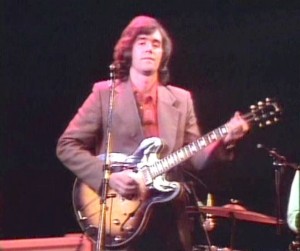
Not that long ago, I went to see Nick Lowe play, at Cambridge Corn Exchange — a one-night stand with a three-piece band.

Memory?

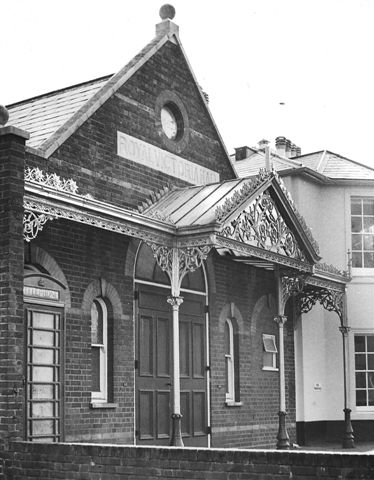
It must be nearly forty years since I first saw him play, at Tunbridge Wells Assembly Hall or maybe Southborough Royal Victoria Hall. He’s better now. Much. His clothes are better, too. Pastel frilly shirts never really suited his hawk-like frame.

The unconscious?

For one of the encores, he sung The Beast In Me, alone. To most, it’s a Johnny Cash song — or what passed for Tony Soprano’s theme song. But it was written for Cash by Nick — who, the man in black said, was his favourite ex-son-in-law.

That night in Cambridge, Nick sang it with such echoic meaning that the audience did what audiences tend to do when their hearts have been powerfully opened and operated on — nothing. When he finished, there was that rare, silent moment in which everyone draws themselves out of the emotional world they’ve just been through. Only then does the performer breathe and the audience applaud.

Later, I thought about the song and its lyrics . . .

‘The beast in me is caged by frail and fragile bars
Restless by day and by night, rants and rages at the stars.
God help, the beast in me . . .
They’ve seen him out dressed in my clothes,
Patently unclear whether it’s New York or New Year.

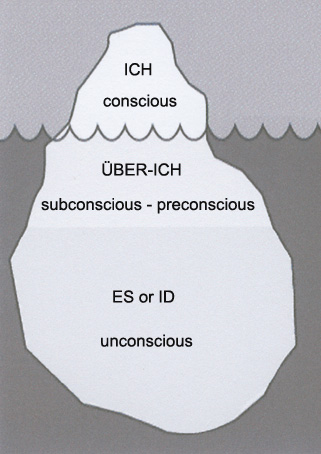
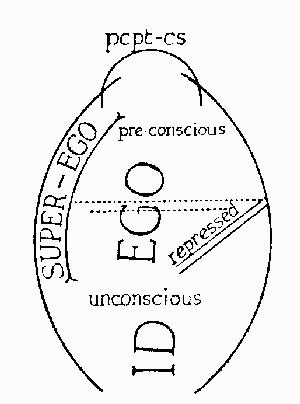
And I thought two things. One, it’s a song about the unconscious, the id, if you like, that bit of our brains that’s been around a little longer than manners and fine writing — but is still hanging around down there in our well, somewhere far below the cortical line. Two, that’s why Nick’s version so got to us all. Whatever the beast in him — and reliable sources attest to his historical propensity for beastliness — it’s in all of us, too.

Memory and the unconscious?

If you’d asked me about Nick a couple of weeks ago, I’d have made a point of pointing out that he was one of the only two famous people to have been to my school. The other was Bob Woolmer the cricketer.

Then, on the train to Cambridge, I read my old friend Will Birch’s book on pub rock, No Sleep Till Canvey Island. And I remembered that Nick didn’t go to my school.

It’s true that I knew Nick a bit when I was a teenager. He and his then band, Kippington Lodge were, in the parlance of the day, getting it together in a cottage in the hills of East Sussex. Me and my friend Steve would visit them. They’d smoke our dope and steal our girlfriends. The usual fair exchange between teenage boys and half-successful musicians a few years their senior.

Nick didn’t go to my school, though. That was Brinsley Schwarz — the guitarist, that is, not the band that took his name. I guess, my unconscious must have swapped Lowe for Schwarz, figuring out that it was a more impressive thing to chalk up on my internal CV. Not just a beast in me, then, but a beast with aspirations.

Next up White wine, olives, cheap cider and the narcissism of small difference

Friday, 9 May 2008

Further contributions to the understanding of stage fright: what do psychoanalysts have to say?

When I wrote something about stage fright (Feb 20), I didn’t look to see if psychoanalysts had had anything to say about it. Now I’ve finished my essay, I had the time to look.

Why do psychoanalysts reckon performers sometimes get themselves fritted into non-performance? I found two papers which outlined all the various theories.

Both were by Glen Gabbard, a New York psychiatrist, psychoanalyst and academic. One was written in 1979, the other in 1983. Both begin with quotes from songs: the first from the Beatles’ With A Little Help From My Friends, the second from The Chorus Line’s The Music And The Mirror.

Like a good academic (and author of The Psychology Of The Sopranos), Gabbard read everything there was to read on the subject and summarised it for us lazier people. He found various ideas and theories about stage fright:

* It’s linked to anal erotism.

* It’s like blushing — gratification and punishment are combined in one symptom.

* It’s linked to guilt about early voyeurism — of the parents having sex, if only in the future performer’s fantasy world.

* It’s frozen self-regard — ‘narcissistic intoxication’ with oneself. (I really don’t get this one: narcissistic intoxication is scarcely unusual in performers: in fact, it’s more or less standard: the Madonna Complex maybe.)

* It’s castration anxiety — which the performer’s previous performances have failed to cover up.

* It sets in when the performer worries that the audience can see right through to his infantile sense of omnipotence.

* Performing is a secret attempt to recreate the perfect, idealised world of complete union with the mother — in the womb, perhaps — and the stage-frighted performer is worrying the audience will realise this is what he’s up to.

* A racial memory of being the outcast, ‘the stoned man’ is evoked — a Jungian one this. (By the by, in my — fairly extensive — experience, most performers are stoned men, after breakfast anyway.)

* It’s a flasher thing. ‘The performer is torn between the desire to expose his genitals to prove he is a fully-equipped sexual creature and the fear that the onlookers will find his equipment laughable.’

* The performer is a child. The audience is the adult. The child knows he is being childish and is terrified the adult will realise it.

* It’s linked to envy. ‘Performers tend to be an envious lot.’

* It’s linked to guilt. If I have something, it means it has to have been stolen from someone else. So I feel guilty. So . . .

* It’s narcissism.

Well, maybe. There are various variations on a basic theme there. There’s certainly something deep and uncontrollable going on with stage fright. I’m certain that it has meaning and that it’s a current reading of something historical — as that thing-of-the-past is re-read and reconstructed by the performer.

One idea I thought was a good way of expressing something that’s fairly obvious to anyone who’s spent time with musicians or actors. According to this view, performers are ‘mirror-hungry personalities’ — driven to look for approval and ‘sustenance for their famished selves’. They try again and again and fail again and again in ‘their desperate efforts to shore up a damaged self-esteem’. Even temporary success on stage only raises the prospect of future failure. So they fright themselves into inaction — which, at least, elides the possibility of failure.

Two last things. One, a witty line from Gabbard. ‘The childhood wish to romp about in the buff and display one’s genitals for all to see is revived in the act of performing.’ Again: think Madonna etc etc.

Two, a clever line from Gabbard, which resituates stage fright into the kingdom of the positive. ‘Perhaps it is fortunate that few performers ever completely master stage fright, for an intangible sense of communion between the performer and his audience might well be lost as a by-product of the mastery.’ Simple really: no possibility of failing also means no possibility of succeeding.

Thursday, 24 April 2008

The student on the couch

I’ve just finished my essay, the first piece of writing I’ve had to do for the course, the first piece of academic writing I’ve done since, well, since Gary Glitter was a chart-topper and Margaret Thatcher was the education minister.

I won’t tell you what I wrote about. You don’t have the time, frankly. I read the question aloud to one friend and, by the time I’d finished reading it, we’d buried him and on our way back to the house for a cup of tea, a sausage roll and just-a-small-one-to-take -the-chill-off.

Instead, I’ll just tell you how hard I found it. Moan, more like it. Unlike my family and everyone else I’ve told about it, you can’t walk away while I’m talking . . . though you can click away, I suppose. Oh, well, goodbye.

So now none of you are left, I’ll have a little chat with myself about it. I’ll put one of me on the couch and the other of me on a chair, stroking my chin. There’s a regular section in the International Journal of Psychoanalysis called the Analyst At Work. I’ll think of this as the Theoretical Psychoanalytic Student On The Couch and use the IJP format, in which the one on the couch is P (for patient) and the one on the chair is A (for analyst).

First the analyst sets the scene . . .

Peter is a 53-year-old-writer who has been coming to see me for 53 years now. For this paper, I’ve chosen one recent session. As usual, he is dressed in jeans and a t-shirt. He could do with a haircut. Currently, his presenting problem is — he says — writing his first essay. This is not the first time he has brought this kind of issue to our daily sessions. I perhaps should make the point here that not all my interpretations and comments are strictly orthodox.

P: I had no idea how difficult it would be writing an essay. I shouldn’t have done the course. I should’ve stayed in bed.

A: You’re a professional writer. I’m sure it will be fine.

P: That’s what everyone tells me. I don’t believe them.

A: They’re probably right.

P: You, too?

A: Tell me, what exactly is the problem? Or rather, what do you think it is?

P: I know I can write. See, that last sentence made sense — this one, too. I know I did the reading. I know I got it in on time.

A: Was that a problem?

P: Only the normal problem. Three printers went wrong on me the day I had to hand it in. All attempts to email it failed.

A: So why are you so worried? The worst they can do is fail you. What’s the real problem?

P: That I’ve somehow got it all wrong. I know it was clear and made sense, had an argument and some references — though I’m not sure if I got the citations quite right. They weren’t obsessive about citations in my day.

A: Mine neither. Anything else?

P: They’re really tough and fussy. One word over the limit and you get a five per cent penalty. The full-time students have already done an essay. One told me hers came back with marks all over it about things like bracket placement in the references.

A: Sounds like a sub’s job to me.

P: Abso-psycho-lutely. I’m hiring one next time.

A: So, again, what’s the problem?

P: So I’m not sure it’s what they want. I worry it’s not ‘academic’ enough. know there’s an ‘academic’ way of writing things. Someone I know started an MA in military history and got into endless rows with his lecturers whenever they raised that post-modernist stuff they do at universities these days. He gave up in the end and dropped out. I’m not daft. I’m quite happy to bend their way. I’m just not sure how to.

A: Are you telling me the truth here?

P: Possibly not. I suppose I could have bent further their way.

A: So why didn’t you?

P: I guess I was worried about what you’d say.

Monday, 3 March 2008

Interpreting Dreams, Themes & Schemes

I've had a small involvement in the production of a compilation of songs from Bob Dylan's radio show, Theme Time Radio Hour. It's on the American satellite channel XM . It's also on BBC Radio 2 — where it is somewhat behind the times, 43 weeks last time I looked. And on BBC Radio 6 — where it is a mere 30 weeks behind. You can also download it here, at Night time in the big city.

It was the album of the week in The Sunday Times and the lead review in Mojo magazine, with five stars.

I helped with the words for the gorgeous-looking booklet. This is something I wrote about the collection for a bulletin which goes out to everyone on Ace Records mailing list.

What, I wonder, do we dream of when we dream of Bob Dylan? And, more intriguingly, what does Bob Dylan dream of when he dreams of us?

This is what I think: he dreams of a small boy called Robert who lives in a small city, an industrial centre in a rural landscape. It’s a nowhere town that was once called Alice but had its name changed when an enormous hole was dug where its new name used to be. That giant hole was — and still is — the biggest of its kind in the world, an open-cast iron mine.

It’s a place that seems to doze on the periphery but is, in fact, also surprisingly at the heart of things. When Robert was growing up, it had the most lavishly appointed high school auditorium in the whole country. He played there, in a rock and roll band.

It’s the head point for the drainages to three great seas, the Gulf of Mexico and the Atlantic and Arctic Oceans. Swim up any of the great rivers of the eastern United States (Canada, too) and it’s where you’ll end up, like a salmon returning to spawn.

It’s where the Greyhound Bus company was founded and headquartered for many years. It sits between the two great spinal cords of the continent — to the west, the eternal geographical one, the Mississippi River, to the east, the old national one, Highway 61.

Here, young Robert took in all the musics that swam to him up all those rivers, that spilled out of all those long-haul buses, that drifted up the great natural wonder that the Cheyenne called Big Greasy River — and the first European to see it called the River of the Holy Ghost.

Blues and folk and country and R&B, that’s what Robert’s dreams were made of. And I think he had a dream of a radio dee-jay out there somewhere, distant enough to be mythic, close enough to be real. This dee-jay would play records for Robert and his imaginary friends. He’d link song with song, mixing and matching and combining and recombining them. It’d be a bridal outfit of a radio show: something old, something new, something borrowed, something blue. And the dee-jay would tell stories to go with the songs: about them, inspired by them, around them.

In dreams begin responsibilities, wrote Delmore Schwartz, poet, drunk, Lou Reed’s teacher. And so Robert eventually became his own dream, hosting Theme Time Radio Hour, week in, week out. Last time, I looked there had been 69 shows. I’ve got them all in my iTunes and so, whenever I shuffle-play, I’ll always hear Bob Dylan’s voice, reading me a Robert Frost poem or making one of those wry digs he makes every time he plays a Beatles track. It’s strange: one of the most elusive of performers now shares his thoughts with me on an almost daily basis.

Theme Time Radio Hour is the mix-tapes collection we’ve all dreamed of making. It’s both a taxonomy and a topography of 20th century popular musics. Not all of them, it’s true. There’s no Charles Trenet, say. No Abba, either. But Grandpa Jones is there. Jack Teagarden, Charles Mingus, the Donays and the White Stripes, too. The show is always as happy to let songs collide and divorce as it is following them up the aisle or encouraging them to cuddle up in bed together.

Dylan (and his collaborators, I guess) approach 20th century pop the way 18th century naturalists figured out how tomatoes are related to tobacco and where swallows go to in the winter. Making sense of things nearly always involves categorising them somehow.

As these things do, it started with life’s basics, things like Weather, Mother, Father. And it’s pretty much stuck with the everyday: School, Sleep, Food, Tears. It’s addressed life’s two great certainties, Death and Taxes — though not yet the third, Nurses. It’s travelled a bit: Tennessee, New York. It’s even found space for a little product placement: Cadillac.

Roger Armstrong (and his collaborators, I should imagine) have taken this great, ongoing taxonomic and topographic project and refined it down into an elegant precis of the original. A taxonomy of a taxonomy, a topography of a topography. I found myself thinking about something I was told only recently: that any chip of any diamond will always be a mini-version of the whole diamond, a microcosm of all its glories.

So this double CD, too, takes and shakes the everyday world, raising all kinds of new questions and notions along the way. Listen — carefully or lightly, or both — and you find new thoughts on something as old and universal as the Heart (show 41, Billie Holiday’s Good Morning Heartache) or the potential erotogenic symbolism of Musical Instruments (show 37, Dinah Washington’s Big Long Slidin’ Thing) or the bibbity-bobbity relationship between family life, heredity and alcoholic Drink (show 3, Mary Gauthier’s I Drink).

Then there’s the two versions — one black, one white — of Pistol Packin’ Mama (show 25, Guns). They got me thinking afresh about what really is one of pop’s oddest megahits. It had a 15-year run as a scene-maker, from around the time the time the world went to war to the time Elvis went into the army. Maybe there’s another song recorded by both Bing Crosby (plus Andrews Sisters) and Gene Vincent (plus Blue Caps). I never heard it.

If it weren’t for the jauntiness and accordion of Al Dexter’s original, I’d have realised long ago that it’s a pop musical parallel to the same period’s film noir, with the same anxieties about women’s new place in a new world (and the bedroom). Personally, I see Joan Crawford in the lead, reprising her role in Mildred Pierce, only with a blam-blam-blam in every hand, as Dylan put it in John Wesley Harding.

A fast dance tune about sex and violence, drink, guns and girls that ends with the singer’s murder. If you can’t find your own dreams, schemes and themes in there somewhere, I doubt you’re human.

Wednesday, 20 February 2008

Performance anxiety

Another day, another evening. I went to a show. Someone I know — a little — was performing.

The last time I’d been to a show in this hall was to see Jerry Dammers’ Spatial AKA Orchestra — a guileful reconsideration of the jazzy sounds of Herman Poole Blount from Saturn (or perhaps Sun Ra from Birmingham, Alabama). Half the audience walked out. Presumably, they’d hoped to be hearing Let’s Two-Tone Again (Like We Did In The Eighties). Those of us who stayed were so entranced that when the band finished onstage and single-filed out of a side door, we followed. And there, outside, the band played on and on, by the river, as dusk fell and fountains hissed.

This night’s performance was not like that. It started fine. People had flown in from around the world to see the performance. The performer hadn’t done a show in a very long time — stage fright, I’ve been told, by someone who knows.

The show started wonderfully. Performer and performance were welcoming, clever, moving even. The audience was glad it had come and showed it by applauding, loudly. It was having a great time. The performer expressed surprise and pleasure at the audience’s enthusiasm.

Then the performer began fluffing notes and forgetting lyrics. At first, it was occasional. Then the mistakes grew more and more and more and more relentless. They, rather than the performance itself, came to define and dominate the performance.

The audience never let on that it knew this. Not consciously anyway. It kept on applauding, only louder, perhaps in the hope that this would confidence-boost the performer. Later, I wondered it the audience was — unconsciously — making amends for less honourable thoughts. Thoughts such as: we paid good money for this?

There were encores. And it was a good show, actually. Just not what it could have been, perhaps should have been. Stage fright. Performance anxiety. I couldn’t work it out.

Then, later, I find myself thinking about the emperor’s new clothes. A few year’s ago, I wrote a piece of fiction for a magazine. It was a version of the fairy tale of The Emperor’s New Clothes as retold by the tailors. It wasn’t bad. It wasn’t good either. But I could live with that. Until, that is, I was talking to a therapist friend about it and she said: you know, I always thought the real secret to the story is that the emperor got what he really wanted: that, between them, the tailors and the little boy, uncovered his heart’s desire. Which was? Not to be an emperor.

So what is going on in a performer with stage fright? What are they actually afraid of?

The audience? Well, maybe. But then why did they become a performer in the first place?

Failure? Well, maybe. But who isn’t? Fear of failure is perfectly rational and sensible. Generally, it’s what either drives us on or convinces us to give up before we start.

Performers with stage fright are long past that stage. At least, the ones I’m thinking about are. Not the ones who walk onstage for the first time, take one look at the crowd and freeze. Almost certainly, they will give up there and then and take up something less anxiety-inducing — base-jumping, say, or parenting.

Rather, I’m thinking about the ones who develop stage fright as their career progresses — generally as it blossoms or blooms. Stage fright never seems to happen to the also-rans, only to the genuinely talented — generally, the generously talented. It’s rare in stars, too. In fact, it seems to happen most often to performers who never quite hit the highest of heights, certainly not the heights that were predicted for them. They’re the performers who never fulfilled what was expected of them. They’re the stuff that cults are made of.

Which made me think of the naked emperor and how he got what he secretly desired. Does the stage-fritted performer’s stage fright, in fact, given them exactly what they secretly want? If so, what is it? Failure, I guess. Stage fright certainly all but guarantees they’ll never achieve what they’re capable of — no matter how loudly their small(er than it should be) crowd applauds.

So what are they so frightened of? Success, I guess. It’s the only thing that makes logical sense. For the performer with stage fright, failure is the success they crave.

Why should success be so frightening? Now there’s a question.

I know there’s a reference to something like this somewhere in Freud. It’s a story about one of his patients, a highly talented young man who repeatedly scuttles his own career, mostly by to losing his CV or forgetting to turn up for interviews on time. He knows this, he knows he keeps doing it, he wants to stop doing it, he tries very hard to stop doing it but keep doing it he does.

Why? If memory serves, it’s because he’s afraid of outperforming his father. Which, I guess, introduces a whole new set of possibilities about stage fright.

(I’ve tried to find the actual story but can’t. I’ll keep looking, though. I thought the young man was given the pseudonym K but that doesn’t seem to be right. Maybe I confused him with my imaginary encounter between Freud and his contemporary, Kafka’s K. I day-dreamed of K going to see Freud and telling him he thinks he might need psychoanalysis: he’s been accused of this terrible crime, only he doesn’t know what it is.)