Showing posts with label Family. Show all posts

Friday, 13 December 2013

An alphabetical advent calendar of Elvis

M is for Minnie Mae Presley
 
Minnie Mae was Elvis’ paternal grandmother. She was born on 17 June, 1890 and died on 8 May, 1980. That means she outlived both her son Vernon and her grandson, whose birth she attended. Hers is the one of the four gold and black gravestones in the Meditation Garden in the grounds of Graceland. (Actually, there are four and a quarter gravestones if you count the mini one for Elvis’ stillborn twin, Jesse Garon.)


Tomorrow The link between Elvis and an ancient European language

Thursday, 21 June 2012

A place of memory and desire, part six

On being Irish. In my dreams, anyway . . .

As I was later friends with Phil Chevron and much of the rest of the Camden Town Irish music business murphia, I suppose I got to dream that dream in a refracted but real way. Which leads me back to the Radiators’ Sound City Beat. For the first time, substance has been placed in that part of my dreamworld. I now really do have a feel for what it might have been like for me if my family had stayed in Ireland and I’d grown up in Dublin rather than London and its satellite towns.

It’s now as if I actually got to see all the bands that Phil hymns in his sleevenotes. Oh, the Hootenannys, now they were grand. And the showbands, some of your men there were real players . . .*

As fictitious as all that is, it feels like a genuine sense of completion. Thanks Phil etc. If it weren’t for you, I’d have had to consider employing the services of Rekall Incorporated. You know, the ones who guarantee they will remember it for you wholesale.

Which still, though, leaves another genuine alternative past for me, constructed from a mix of historical truths and imagined possibilities. In this one, I grow up in Liverpool, see the Beatles play the Cavern, go to the same school as Lennon and McCartney. Really, honestly, I’m not joking. It could have happened. Easily. A little decision here, a little change of mind there and that could have been my teenage life.

Also, if things had turned out a little different, I could even have grown up in Bray and, instead of being flown in from London to see the Radiators, I would have already been there, twenty-four years old and enthused about this bunch of Dublin punks coming down for a Sunday afternoon seaside show. So maybe when I did see the Radiators that day, they were also creating for me a memory I could have had. Only I didn’t yet know that.

Memory and desire. Who would want to move beyond them? Why?

* Actually, I did get to see a showband play, at a marquee show in Monstarevin. If you never got to see a showband in a country marquee show, you missed something, believe. Another band played that night, too, for the younger people. Maybe it was the Horslips, maybe Thin Lizzy. I can’t be sure. But I am sure that, myself aside, they were the only ones there with shoulder-length hair. Such things mattered, of course.

Next My cursed contribution to the Euro championships. I pose and answer the question: if Euro 2012 was based not on football but swearing prowess, who would win? Later today, the first quarter final: Czech vs Portugal.

Thursday, 5 January 2012

On the twelfth day of christmas . . .

Family. I'll be untypically emotive. Years ago now, I remember reading someone who, when asked which was more important, health or wealth, said: neither, it's family, because when you're sick or broke at least there is support around you. 

I'd add friends but, basically, it's true, isn't it. Few of us prosper without family and friends. In a meaningful sense, that is – which does include financially. Unhappiness is not just a product of not making your way in the world, it's also a reason. Unfair, I know, but . . .

I've been blessed, I guess. I have family and I have friends. Quite a few people occupy both categories. So . . . Xmas and its twelve days?

Well, over the break I read a piece by Ian Jack in the The Guardian in which he pointed out that London over Xmas has now become the kind of family place it used to be. Leaving aside the fact that in my area the exodus to second houses is so notable that you could have a half hour kip in the middle of the road, that is certainly true. Further, he added that the break has become a kind of retreat where families get to spend time with each other, across the generation. Some use the opportunity to fight and relive old wounds, I guess. But not everyone.

In which light, I can report that, over the break, my time-spent included . . .

* family outing to Billy Elliot matinee (young cousin is in the cast)

* Xmas dinner (cooked with my daughter) for a baker's dozen — on Boxing Day, it's a family tradition, leaving Xmas Day itself free for, well, nothing

* dinner with a couple of friends in Cornwall, one of whom I probably won't see for a while as she's heading off east to interior design junks (honestly)

* not one but two football matches with my younger son

* takeaway curry round our table for a dozen family or so

* a formal sit-down meal at a cousin's which I missed because of a bad cold - but got to eat takeaway the next morning

* a nuclear family meal on Xmas Eve

* giving phone cooking advice to a friend when the leg of lamb (an odd Xmas dinner choice, I know, but tradition isn't what it was, clearly) got left in the freezer by mistake and dinner was due in four hours - they say it was the best lamb they ever ate so maybe I stumbled on a new recipe

* brunch with cousins at their house in the far reaches of the known world (Bury St Edmunds)

* a friend's birthday party in his brother's pub

* a New Year's Day party at a friend's

* a completely private New Year's Eve – another family tradition

* picking up my elder son and dropping him at the airport - and, because of Luton's parsimony, having to pay a pound each time for the privilege

* more, probably, that I've forgotten about

And so that's your lot, folks. 

Tomorrow (or perhaps the day after), I'll post the sleevenotes for my Xmas music selection.

Friday, 9 September 2011

Wonders of the modern world, ten . . . When dinosaurs roamed north London

Other places have gnomes in their front gardens. Primrose Hill has dinosaurs.

It reminded that the great ice age stopped at Finchley Road station. Honest. Back then, there was a great ice cliff, a couple of miles high – half way down where the platform is now, I think.

One day I’m going to walk that boundary — where the ice stopped and the dinosaurs began. (Okay, I may have got my pre-history a little messed up there. But . . .)

Which leads me back to Freud . . .

I hear that Lucien — sorry, Lucian — Freud’s nephew Matthew is moving into the area, following in his great-grandfather’s steps. Elsworthy Road was the psychoanalyst’s first home in exile. Matthew isn’t living there, though. From what I hear, he’s on the other side of the park. Not exactly where Sidney Bechet or Roger Fenton lived but not far. Nor from where Sylvia Path killed herself.

I think of Matthew Freud’s forebear, Edward Bernays. He was the son of the marriage between Sigmund’s sister and his wife’s brother. Vienna-born, Bernays emigrated with his parents, becoming a true New Yorker — a top-dollar pitchman, the PR rep for the Wilson government, Lucky Strike cigarettes and, later, anti-smoking campaigners.

He either did invent both the phrase ‘public relations’ (a replacement for the word ‘progaganda’, made unpalatable by German use of it in WW1) and the practice of public relations — or, by claiming he did, Bernays convinced everyone he actually did it, even if he didn’t. Now that’s what I call public relations, volume one.

Just the kind of thing that it looks like Matthew Freud’s in-laws could do with right now, I find myself thinking.

Tuesday, 18 May 2010

What would Freud have thought of Gordon Brown?

Watching Gordon Brown give his resignation speech in the street, I felt unaccountably uncomfortable. There were obvious reasons for this — inside my head, if not everyone’s.

* I don’t much like Gordon Brown — everyone has their reasons (as the movie has it*) but mine include:
his self-martyring manner, unbecoming in the over-12s;
his spending my money like a drunken sailor;
his centralist, dogmatic micromanagement which has infested so much of government;
his use of the word ‘investment’ as a synonym for ‘spend’ (as in ‘we are investing 44 billion pounds in . . .’)


* I don’t much like celebrities parading their children — I didn’t much like Rooney bringing his newborn son on to the pitch at the end of the last game of the season

* I don’t much like the non-separation of the public and the private — I don’t think Sarah Brown should be hidden away in purdah — rather that she should be getting on with her life and work — would Gordon have turned up for her work leaving-do, with kids in tow?

Yet still . . . there was something else that concerned me about the scene. I couldn’t figure out what it was but it hung around, uncomfortably. Then, in another context, I recalled something the pioneering English female psychoanalyst Joan Riviere wrote in a review of Freud's New Introductory Lectures** . . .

'Among all the manifold significances one's child can have, a major one is abundantly clear in all analyses: it represents oneself as a child, one's own id.'

And that was it, for me. What I was seeing was Brown’s use of his own children as representations of his own self — not just his own childhood self but his secret, urge-drenched adult self. (Of course, as a parent three-times over, I know I’ve done this — still do, I’m sure. But even the guilty may point the finger at other sinners.)

So what did I see in that moment that made me uncomfortable? Well, the first thing to consider is that this was the two young boys’ first public appearance — to my knowledge anyway. Previously, they had only two public ‘faces’. One, sheltered behind pixellation. Two, as metaphors used to demonstrate their father’s humanity — eg, the worked-up gag comparing his adversaries’ adult conflict to his two sons squabbling in the bath. Patronising, heartfelt, intrusive, genuine, fake, clunky — so much of Gordon Brown was there in that brief phrase, which probably wasn’t even written by him.

At the leaving moment, though, he (and, I guess, Sarah) did something quite new with their children. He brought them into the public arena. He stood them on his office desk — see the Guardian photograph. He (or someone) bought them new formal jackets. He depixillated them. A bride stripped bare moment.

It was clearly a very deliberate — though, of course, not necessarily fully conscious — act. Why suddenly de-privatise such an essentially private element of his life? No one made him do it. It was clearly his choice to put his boys on show.

What was going on? Starting from Riviere’s observation, what did Brown’s act show us about what she referred to as ‘id’ but I’m quite happy to think of as ‘inner self’ or some such. What part of inner Gordon was he representing? Something fairly basic and simple (not to say universal), I think. He was — though probably better not to tell him this — expressing his inner child.

By using his children as simulacrums of the hidden Brown, he was able to represent all those qualities he (and his pals) claim — tenderness, caring, inherent humanity, sweetness. It was a last, almost desperate attempt to rewrite his public self. See little Gordon, he was saying. I’m just a little boy inside, really. I might be wearing a suit and tie but I feel like I’m wearing a new-bought jacket with my favourite trainers.

More than that, though, he was also — possibly — revisiting his self-pity. Would you throw a child out of his family home? Would you put a young boy through all this misery, all this rejection? You wouldn’t do it with a dog, would you? Why me? I’m a nice little boy really. You’d think that, too, if you got to know me. Which you never will now.

All supposition, clearly. I have only two pieces of back-up. One, the sheer and odd novelty of the event — why depixillate for just that moment? Two, the look on his wife’s face. Of course, there was distress there — a touching level of care about her husband, mostly, I should think. But there was more than that, I think. She looked uncomfortable — in contrast to his almost manic street preaching speech. Is it possible that, at some level, she realised there was something disquieting about this public parading of her two little boys?

* Regle de Jeu: ‘The awful thing about life is this: everyone has his reasons.’

** Being a polite (and orthodox Freudian) sort, Riviere didn’t crack the obvious gag. That is, whatever one may have thought of this late work of Freud’s, he could have been prosecuted under the trades description act for its title. There’s nothing (well, not much) new about it. It’s certainly not introductory. And they’re not even lectures but essays — written to be read and never spoken aloud.

PS1 If that was all a bit too psychopolitical for you, have a look at this brief disquisition on a marathon road trip, blood sugar levels and the relationship between the self and others.

PS2 It turns out that one of the young women playing with yogurt pots in the previous posting is the girlfriend of a friend of my elder son’s.

PS3 Forgive a childish moment of my own but here is something I heard a commentator say of Mark Webber’s placing on the grid for the Monaco Grand Prix: ‘It’s the first time he’s had back-to-back poles.’

PS4 I’m appearing at Women’s Word, a feministish book festival in a few weeks — more details in an on-its-way posting.

Next up The sound of silence — nothing to do with the absence of Gordon Brown in our public life but a little something left over from when I was still on the course.

Saturday, 26 December 2009

Looking that gift CD in the mouth

Putting this year’s Xmas CD compilation together, I realised that my formula is becoming more and more developed — perhaps formulaic, even. Whichever it is, here are the rules I seem to go by . . .

Rule one There must be some Elvis. This year’s is a posthumous duet. There’s something oddly fitting about Elvis being so prolific since he died. Also, as some of you might know, at the time of his first post-death spotting, in the Stapleton Hall Rd branch of Tesco, I was living just around the corner.

Rule two There must be a track from Phil Spector’s Christmas album. This year, it’s Darlene Love.

Rule three The first track must be a familiar one. See rule two.

Rule four Many, if not all, the best Christmas songs are about sadness, loss, separation and inevitability of death. See: Have Yourself A Merry Little Christmas, Blue Christmas.

Rule five White Christmas must be in there somewhere. The only son of its author Irving Berlin died on Christmas Day. (See rule four.)

Rule six Many, if not all, the best Christmas songs are about family — its realities as well as its fantasies. See: Please, Daddy (Don’t Get Drunk This Christmas), Merry Christmas (I Don’t Want To Fight Tonight).

Rule seven Modern Christmas offers an embodiment of the global hegemony of Anglo-American pop music. See: Noel Blanc, Merry Christmas Polka.

Rule eight Christmas is also a time for self-surprising sexual revelations. See: Christmas Tree, Handsome Santa.

Rule nine There should be unfamiliar versions of familiar songs. See: Christmas (Baby Please Come Home), Merry Christmas (I Don't Want To Fight Tonight), Happy Xmas (War Is Over).

Rule ten There should be at least one quite unfamiliar new(ish) tune. See: A Change at Christmas (Say It Isn’t So), Christmas Tree.

Rule eleven There should be a track that is familiar to the point of nausea yet which can be refreshed back to its original joy by being placed in new company. See: All I Want For Christmas Is You.

Rule twelve There should be something deeply ethnic. See: Conclusion Of Symondsbury Mummer's Play.

Rule thirteen There should be something deeply English. See: Conclusion Of Symondsbury Mummer's Play.

Rule fourteen There should be something by Bing Crosby or Johnny Mercer. Failing that, something by their oftentimes associates, the Andrews Sisters. See: Merry Christmas Polka.

Rule fifteen There should be one or more example of the wonderful world of US black Christmas pop. See: Winter Wonderland, Hot Christmas, 8 Days Of Christmas, Christmas Blues, 'Zat You, Santa Claus?

Rule sixteen There should be wit. See: Handsome Santa, Beatniks Wish, Hot Christmas, 'Zat You, Santa Claus?

Rule seventeen There should be some country. See: Blue Christmas, Little Drummer Boy.

Rule eighteen There should be a surprise, something that people would generally decide they hated before giving it a decent listen in the right company. See: All I Want For Christmas Is You, Children Go Where I Send Thee.

Rule nineteen There should be something that sounds like it was recorded in a cornflake factory. See: White Christmas (Sugar Boy Crawford).

Rule twenty There should be something by a girlie indie singer with an off-putting name and shtick which is nonetheless surprisingly enticing. See: Have Yourself a Merry Little Christmas, Not Now But in the Coming.

PS In the original draft of Have Yourself A Merry Little Christmas, the next line was 'because it may be your last'.

Next up (perhaps) That dithertation.

Monday, 14 December 2009

Knees-up, Mother Freud, knees-up, Mother Freud, how about a knees-up? Knees-up, knees-up, knees-up, knees-up, knees-up, Mother Freud

So, to answer your question, Flea, why didn’t Freud go to his mother’s funeral? Particularly, as the year before her death, he wrote, in condolences to a colleague whose mother had died: ‘the loss of a mother must be something quite remarkable, not to be compared with anything else, and awaken excitations that are hard to grasp.’

What excitations, you ask? I don’t know. Hard to grasp? Perhaps the usual elision that awoke in Freud any time he came near to discussing his own undergrowth. We do, though, know he recalled seeing his mother naked on a train — in her sleeping compartment, nothing untoward.

It happened on what the Encyclopedia Britannica describes as the ‘fateful overnight train trip when the family moved to Vienna’ — his father’s (mostly fruitless) attempt to improve on his life in the tiny Moravian town of Freiberg (now Pribor in the Czech Republic).

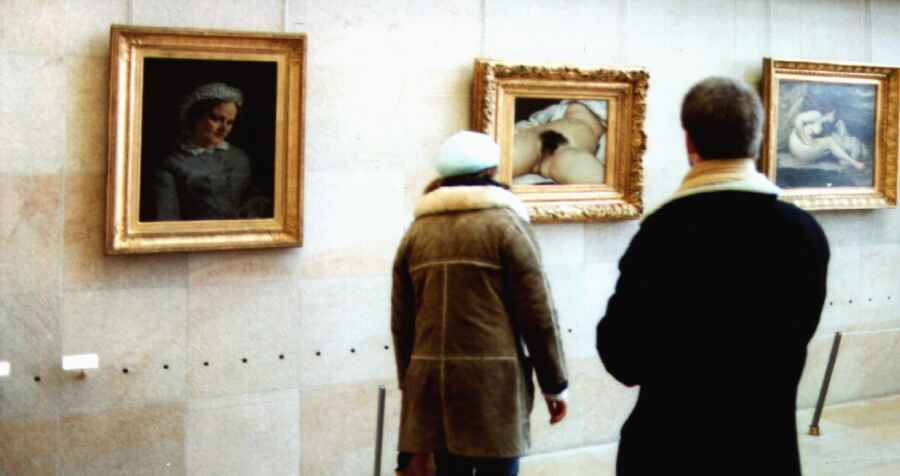
He was four years old at the time — though, when dating his later, profound train phobia to this encounter with the topography that Courbet’s painting categorises as L’Origine du Monde, he remembered it as happening when he was two. A not insignificant change, to my mind — both in his life story and to his Oedipal theories.

Why did he say he didn’t go to her funeral. He told his brother he didn’t like ceremonies and, besides, he was iller himself than people thought (with the cancer that would kill him, nine years later). He also contented himself with the thought that at least he didn’t die first so she was spared the pain of his death. I think there was some vanity going on. He really, really didn’t like people seeing how he looked with his mouth prosthesis and the way it affected his voice.

Still and all, not going to your mother’s funeral? I think he was even more honest than he realised when he wrote to Ernest Jones about ‘the growth in personal freedom I have acquired’ since her death.

And so to today's Advent goodies . . .

One If you want to know how to swear in ASL, watch this.

Two There is a section in my book, Filthy English, about Jackie Wilson and Lavern Baker's . . . alternative version of Think Twice. Now I've found this cute picture of the two of them together.


Three As there are rules for a bride's outfit (old, new, borrowed, blue) and a cocktail (sour, sweet, strong . . . *), so I have developed rules for creating Christmas (plus Hannukah) CD compilations. The first rule is: there must be Elvis. Here is the Memphis manchild performing a posthumous duet. NB Pop experts will notice that something has been excised from this recreated version — Elvis shouting 'Play it dirty!' On a Christmas song.

I would, of course, shown off my new YouTube skills by embedding it but that's blocked for this clip. But not for . . .

Four The other week, someone who was talking to me about their personal life said: It's not rocket science, is it. I said: Yes, it is actually. It's rocket science that isn't rocket science. It's people that are rocket science. Then, in a quite different context, I was pointed in the direction of this clip. Which is: a double pendulum. Which is: a physical demonstration of chaos theory (the butterfly effect) by which the tiniest change in the starting point can very quickly produce extraordinarily varied outcomes. Which is: a pretty damn good analogy for the complexity of human beings bumping along with each other.


Next up Dat dissertation (finally)

* Something like that anyway and certainly nothing to do with the 'cocktail rule' about VAT rate for composite items with differing VAT rates — book plus CD, for example.

Friday, 4 December 2009

Eine kleine nacht spiel, part five: the so-what of it

My teenage son and I walked away from the theatre, north on Upper St, past the Hope & Anchor, the rock basement where I spent so many hot and sticky evenings in the late 1970s — when my theatre, I guess, was seeing Joe Strummer in the pink zoot suit he wore as a 101er, clambering over amps and barking Them’s Gloria.

Well? I asked my son.

Hmm, he said. (Or something of the like.) What was it about? he asked. What was the point of it?

If I’d been really on the button, I’d have said: That you came to ask what was the point of it, that was the point of it.

But I wasn’t and I rambled a bit about how sometimes the things which have an obvious meaning later come to seem as if they have actually have no or little meaning.

At least he didn’t suggest that it’s not just psychoanalysts make bad parents but students of psychoanalysis, too. Too polite for their own good, perhaps, today’s teenagers.

Next up The sixth of the five parts of Mrs Klein. (I told you the collective noun is a complex of analysts.)

Wednesday, 8 July 2009

A tale of two dumplings

Some years ago now, my father-in-law had a stroke. So it was decided that, to lighten the load for my mother-in-law, we would have that year’s seder at our house.*

The seder meal is a fairly standard one — though it varies from family to family. The one I’m used to starts with chicken soup plus all the trimmings. Bits of chicken, noodles and — most particular and important of all — kneidlach. Little dumplings.

I’d eaten kneidlach many times, of course, and can’t say I’d liked them much. They’re the kind of thing, I guess, that you have to grow up eating to appreciate. About the size of a very large marble and the colour of a camouflaged tank, they’re heavy eating. To my mind, they’d be better put to use as large calibre ammunition.

I’d never made them, though. I’d not even watched someone make them. So, charged with providing a batch for fifteen or so people, I did what I thought was the most sensible thing. I looked up the recipe in Claudia Roden’s Book of Jewish Food — to Jewish food what the OED is to the English language.

I followed it carefully, finely chopping the coriander, beating the egg whites into peaks and folding them in with a knife. These kneidlach were fantastic, by far the best I had ever eaten — light, fluffy, fragrant, joyous.

I’m not a big praiser of my own cooking in public but I was about to say something when I caught the air of general distaste around the table. These aren’t right, was the clear and general vibe. These are not kneidlach as we know them. But they’re much better, aren’t they — light, fluffy, fragrant etc etc. Absolutely, I was told. That’s what’s wrong with them. Kneidlach are meant to be heavy, leaden, drably coloured. Home is where the heartburn is, I guess.

So I never made kneidlach again. Which is where this story might have ended. Then I happened to be reading a New Yorker profile of Claudia Roden. In it, she told a story about what she, a Sephardic Jew from Cairo, thought of the food served by her husband’s Ashkenazi family in London. She found it quite awful, leaden, colourless and flavourless — dreary, central European, stodgy. In particular, she hated the kneidlach.

Years later, she took her revenge. When writing the kneidlach recipe for her masterwork, she invented her own recipe for them — a Sephardic reimagining of an Ashkenazi staple. Which, of course, was the one I followed so carefully. So light, so fragrant, so . . . inauthentic.

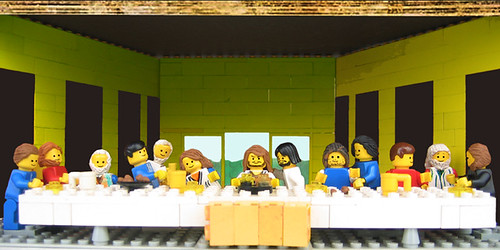
* The seder is the Passover meal, the one that Jesus is tucking into in the Da Vinci painting that the book got all coded up about.

Tuesday, 16 June 2009

I have seen the future and it’s . . . pandas

I was in Israel last week, for a wedding — eight hundred or so of the bride and groom’s closest friends. It was a Sephardic-Ashkenazi marriage, held in a kind of pretend oasis in the rich flatlands south of Tel Aviv.

There was food (lots, of course). There was drink (lots, too). There were no suits and virtually no ties — but many, many deep-cut frocks, somewhat to the dismay of the religious, Sephardic side of the union. There were Power-pointed speeches. There were video-screens.

There was dancing — to modern house, to the delight of my son and the dismay of the older guests. The newly-weds were, as tradition demands, hoisted up high on shoulders. The groom’s brothers and friends hit the shots and circle-danced.

And there were pandas . . . giant, inflated, dancing pandas. Four-metre tall pandas, with men inside. They joined in on the dance floor, buffeted and barrelling around till exhaustion set in.

So? So this is where you first read about it. I’m as certain as I can be that this was the first appearance of inflatable giant pandas at a wedding anywhere. The bride had seen them on a TV show and thought: that’s exactly what weddings have previously lacked. The way you do.

I could, though, hear the minds of the young girls on the dance-floor whirling away. They were thinking: when I get married, giant pandas, that’s what I’ll want. But, Daddy, they’ll say, there are always giant pandas at weddings, it’s tradition. Etc etc.

The future started here.

Next up A story about the Sephardic-Ashkenazi thing, starring Claudia Roden . . . and me