

 Posts
Posts


Testing, two . . .
So, fifteen months or so later, I found myself in a room high above Tottenham Court Rd. I'd already taken exams at the end of the first year's study. I'd done well enough in that first set of exams. I had, though, been pretty stressed in the lead-up to them. Why? Because . . .
1. Since learning to touch-type some thirty years ago, I'd barely written more than a short note for someone else to read. My handwriting has always been terrible (worse, actually) and three decades of not writing for other people had done nothing to improve it.
2. I was quite out of practice at studying for exams. I had no real way of knowing what was expected. There were no sample answers to look at. I wondered if criteria had changed since I took my first degree. I did ask a tutor and was, again, told not to worry. But still . . .
3. I did want to do well. I didn't want to shine. Or rather, that would of course be nice but I wouldn't be downcast if I didn't manage it. Getting a really low mark, though, that would be humiliating.
4. There had only been one previous piece of submitted work for the course. Although I'd done well in that, it was far from being a general test of my understanding and knowledge.
5. Somehow, I'd managed to do more units in the first year than I intended. My idea was to do around two-thirds of the course in the first year. But units were moved around and I didn't adjust my schedule accordingly. So I ended up doing three-quarters of it. And so I could do nine out of the necessary twelve exam questions. Which I did. (Despite also facing a looming delivery deadline for my book, Filthy English, Portobello, October 2009.)
So, stressed, I revised. With no guidance, I developed my own strategy. I made a spreadsheet of previous years' questions and did a rough frequency count to predict what would come up in each unit. I wrote a list of concepts, with notes on each. I focused on a few potential questions and wrote draft answers in note form and introductory sections in full. I read and re-read them.
All of which worked, more or less. I reckon I only fell down badly on two papers. One was a new unit for which no one could have predicted the questions. I wrote some fractious rubbish.
The other unit I'm sure I screwed up was the French stuff: Lacan and Andre Green. Despite there only being one seminar on Green to seven or so on Lacan, the exam had always featured a question on each. Further, the Green one was always the same. It was about his big thing, the dead mother complex. (You were supposed to glide over the fact that this was something that was expressed in his own personal history. Mere gossip, in the words of psychoanalysts' favourite brittle, defensive put-down.)
I couldn't, though, bring myself to answer or even revise the Green question. An evening at a lecture by him at the Institute of Psychoanalysis exemplified for me everything I had always hated about the game. It was pompous, endless, petty and spiteful, self-congratulatory and expressed in a language which bore no relation to any I'd learned. It certainly wasn't in either English or French - or even the Cairene Arabic or Ladino of Green's childhood. As I wrote at the time, as evenings go, it was the longest month I've ever endured.
So: no Green. It had to be Lacan then. My calculations pointed to the Lacan question being about the French guru-analyst's deeply silly and wrong notion that the unconscious is structured like a language. I'd not been there for that lecture so I actually had to read some of his quite awful writing.
(That judgment of his prose is not opinion but fact. Even our Lacanian tutor - an amusing and engaging London-based French psychiatrist who dresses like a Balkan gangster - opened his seminars by pointing out what a terrible, terrible writer Lacan was.)
So I tried to read Lacan. And failed. I'd either get angry and argue with every word on the page or I'd drift into some kind of trance state. I'd like to liken it to analysts' aimed-for state of free-floating attention but I can't. Free-floating disattention, more like it. I'd look at a page for what felt like hours - useless hours, at that. Then I'd look at my watch. Hours really had passed. So I gave up on Lacan.
What then did I do when my predicted question came up in the exam? I blagged it, of course. Just as I'd always done in exams I hadn't revised for. I dragged in as much outside knowledge I had - from linguistics, in this case - and slapped it on to the page, filling out what little I knew. And I pointed out that thinking of the unconscious as structured like a language was silly, wrong and - biggest no-no in the psychoanalytic world - in direct contradiction of Freud's thoughts on it.
It's not really a surprise if I got a bad mark for that one, is it?
Next up The aftermath of last year's exams
Friday, 11 September 2009


Thursday, 10 September 2009
Testing, one . . .
Just over 35 years ago, I walked out of an exam room, having finished the final paper of my psychology degree finals. I’d been sitting exams once or twice a year since the age of nine or so. Twelve years: maybe twenty sets of exams. Mostly, I was good at them. But I’d had enough.
I walked into the bar, I announced that I would never take another exam. Then I got drunk.
I don’t know if I meant my decision to last a lifetime but I certainly stuck to it for long enough. Apart from taking my driving test (and maybe the odd personality test in a magazine), I sat no exams for 35 years. Nor did I miss them.
It’s not that I don’t think exams are a good thing — now and or back then. I think they’re a good way of assessing capability. They’re not perfect, of course, but they are a pretty good measure of knowledge, understanding and ability to work smart and fast in a stressful and unpredictable situation. All incredibly useful skills in life and work’s not uncommon tight spots.
Renouncing exams was a purely personal thing. Enough was, just, enough. I felt I’d had my lifetime’s fill of them.
So, when I decided I wanted to do a masters in psychoanalysis, I was put off by the fact that the UCL course had exams. It was clearly the best and toughest course — closest to my house, too. But exams . . . I really, really couldn’t be having with them.
I mentioned this to a university lecturer friend, Elizabeth. She was her usual direct self. ‘Don’t be so silly,’ she said. ‘You of all people shouldn’t worry. You’ve spent a lifetime writing to deadline under pressure. You’ll be fine.’
Next up So was I? Fine, that is.
Just over 35 years ago, I walked out of an exam room, having finished the final paper of my psychology degree finals. I’d been sitting exams once or twice a year since the age of nine or so. Twelve years: maybe twenty sets of exams. Mostly, I was good at them. But I’d had enough.
I walked into the bar, I announced that I would never take another exam. Then I got drunk.
I don’t know if I meant my decision to last a lifetime but I certainly stuck to it for long enough. Apart from taking my driving test (and maybe the odd personality test in a magazine), I sat no exams for 35 years. Nor did I miss them.
It’s not that I don’t think exams are a good thing — now and or back then. I think they’re a good way of assessing capability. They’re not perfect, of course, but they are a pretty good measure of knowledge, understanding and ability to work smart and fast in a stressful and unpredictable situation. All incredibly useful skills in life and work’s not uncommon tight spots.
Renouncing exams was a purely personal thing. Enough was, just, enough. I felt I’d had my lifetime’s fill of them.
So, when I decided I wanted to do a masters in psychoanalysis, I was put off by the fact that the UCL course had exams. It was clearly the best and toughest course — closest to my house, too. But exams . . . I really, really couldn’t be having with them.
I mentioned this to a university lecturer friend, Elizabeth. She was her usual direct self. ‘Don’t be so silly,’ she said. ‘You of all people shouldn’t worry. You’ve spent a lifetime writing to deadline under pressure. You’ll be fine.’
Next up So was I? Fine, that is.
Wednesday, 9 September 2009
School’s out
It’s over. In the words of Alice Cooper (and the playground rhyme that inspired him), no more pencils, no more books, no more teachers’ dirty looks.
That’s it. It’s all over bar the mark. I’ve done the seminars, the essays, the exams, the dissertations. Somewhere down the line, I'll get the piece of paper to prove it.
Meantime . . . I took an extended summer break from this blog — even longer than I intended, frankly. I will now, though, be posting fairly regularly. In particular, I’ll be writing about the course and stuff I learned on it — about psychoanalysis, yes, but also about people (in which category, I include myself, at least some of the time).
So . . . forthcoming attractions include:
Dissertation writing — as viewed from a lifetime of writing
Exams — what’s a grown man sitting at a desk scribbling furiously with a pen
Drugs — should I have taken neuro-enhancers?
Chance encounters of a psychoanalytic kind — a barbecue of analysts (where? in north west London, of course)
Sunny Goodge Street — what I’ll miss about the course
Then and now — a (brief) return to south east London and finishing with academia for the second time
Typography — me and IKEA
Lacan and le con — what the French psychoanalyst kept in his cupboard
See you soon.
It’s over. In the words of Alice Cooper (and the playground rhyme that inspired him), no more pencils, no more books, no more teachers’ dirty looks.
That’s it. It’s all over bar the mark. I’ve done the seminars, the essays, the exams, the dissertations. Somewhere down the line, I'll get the piece of paper to prove it.
Meantime . . . I took an extended summer break from this blog — even longer than I intended, frankly. I will now, though, be posting fairly regularly. In particular, I’ll be writing about the course and stuff I learned on it — about psychoanalysis, yes, but also about people (in which category, I include myself, at least some of the time).
So . . . forthcoming attractions include:
Dissertation writing — as viewed from a lifetime of writing
Exams — what’s a grown man sitting at a desk scribbling furiously with a pen
Drugs — should I have taken neuro-enhancers?
Chance encounters of a psychoanalytic kind — a barbecue of analysts (where? in north west London, of course)
Sunny Goodge Street — what I’ll miss about the course
Then and now — a (brief) return to south east London and finishing with academia for the second time
Typography — me and IKEA
Lacan and le con — what the French psychoanalyst kept in his cupboard
See you soon.
Friday, 31 July 2009
Self and others
I’ve made a few small changes to the way this blog looks and is arranged.
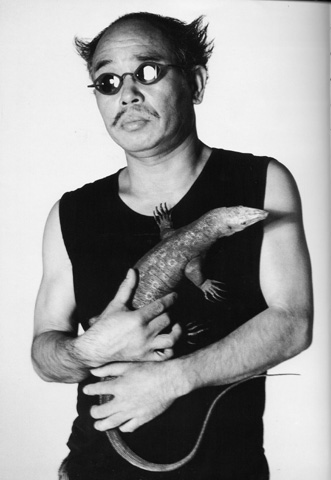
One I’ve added a new photo of myself. I’ve already asked some of you this question but no-one has got it right yet: who took the photo? There’s a prize for a correct answer — and it’s not a signed copy of the picture. Clue one: he’s not unknown (actually, that’s two clues, isn’t it). Clue two: there’s another clue lower down in this post.
Two I’ve added a link to rocksbackpages (rocking writing under free-ish associations below). It’s an archive of all kinds of pop music writing. There’s loads of my stuff there. I think you might have to pay for some of it but it is also available free via some local libraries. There is a link on the rocksbackpages home page to something called Freekly. The idea here is that you sign up — for free — and the site interrogates your iTunes, then sends you links to pop music stories, old and new, that you might be interested in. If you then buy stuff on click-through, I get money. That is the idea anyway. I find it quite fun: it’s even recommended my own writing to me. So it clearly has taste.
Three I’ve added a link to Professional Photography magazine (legendary photography, under free-ish associations below). I’ve been writing a series for them, on . . . legendary photographers. I’ve done a dozen or so far, including Guy Bourdin, William Eggleston, Herb Ritts and Deborah Turbeville. As soon as I’ve done posting this, I’m off to finish one on Araki.
Next up Shhhh
I’ve made a few small changes to the way this blog looks and is arranged.
One I’ve added a new photo of myself. I’ve already asked some of you this question but no-one has got it right yet: who took the photo? There’s a prize for a correct answer — and it’s not a signed copy of the picture. Clue one: he’s not unknown (actually, that’s two clues, isn’t it). Clue two: there’s another clue lower down in this post.
Two I’ve added a link to rocksbackpages (rocking writing under free-ish associations below). It’s an archive of all kinds of pop music writing. There’s loads of my stuff there. I think you might have to pay for some of it but it is also available free via some local libraries. There is a link on the rocksbackpages home page to something called Freekly. The idea here is that you sign up — for free — and the site interrogates your iTunes, then sends you links to pop music stories, old and new, that you might be interested in. If you then buy stuff on click-through, I get money. That is the idea anyway. I find it quite fun: it’s even recommended my own writing to me. So it clearly has taste.
Three I’ve added a link to Professional Photography magazine (legendary photography, under free-ish associations below). I’ve been writing a series for them, on . . . legendary photographers. I’ve done a dozen or so far, including Guy Bourdin, William Eggleston, Herb Ritts and Deborah Turbeville. As soon as I’ve done posting this, I’m off to finish one on Araki.
Next up Shhhh
Wednesday, 29 July 2009
Group theory
People were always asking me the same question about my course. It was the one I’d have asked me, too, if I weren’t me. It was this: ‘Theoretical?’ As in, why Theoretical Psychoanalytic Studies? Does that mean they’re not real studies, only theoretical ones? Some put it less politely.
I’ve always given the same answer — there or thereabouts, anyway. I tell them that it’s theoretical as opposed to clinical. That is, it’s not training to become an analyst or a therapist etc. It’s the study of psychoanalytic theory. Its practice, too, as it happens. But not how to practise it.
Last week, I came up with another answer: a less abstract, more concrete one. It comes in two parts.
Part one. We are sitting in the seminar room. The seminar leader is outlining the work, life and theories of Wilfred Bion, an analyst who helped set up the Tavistock. His notion of ‘containment’ has seeped out into the wider world. Roughly, it’s the idea that the analyst can take a patient’s messy, unhappy emotions, hold them ‘inside’ himself for a bit of processing and return them in slightly better shape. It can sound hippy-dippy but Bion didn’t mean it that way. He was looking to explain how patients could and did get ‘better’.
Bion also did a lot of work on group dynamics. In some accounts, he is the major influence in the early development of studies on how groups function — and dysfunction. This was raised in the seminar. There was, though, only the briefest reference to the fact that we, in the room, were a group — and no attempt to discuss or dissect its dynamics. That’s theoretical for you — a discussion of the practice rather than the practice itself.
Part two. After class one Saturday, I’m having lunch with the other students who, like me, had chosen to do the course over two years. We are discussing this year’s students — the way you do, the way anyone would. We talk about them as individuals and as a group.
Interestingly, we each have quite different views of them — as individuals and as a group. For some of us, they are far more intellectual than the previous year. For others, they like to talk more. For some of us, they are more engaged in the subject. For others, they are less worldly. For some of us, there is a feeling that the course directors thought the previous year’s lot — ie us — were a bit flaky. Others of us thought: whatever.
What we all agreed on, in an unspoken way, was that there was a group, that this year’s intake were a group and that we were a different group — still essentially linked to last year’s students who have now left. How easily and inevitably are groups formed, I thought. And how we look for and mark the things which make our group distinctive. And how small a step it can be from there to marking the things which make our group better — or, at least, we imagine they do. And from there to the eternal tragedy of Freud’s narcissism of small differences.
People were always asking me the same question about my course. It was the one I’d have asked me, too, if I weren’t me. It was this: ‘Theoretical?’ As in, why Theoretical Psychoanalytic Studies? Does that mean they’re not real studies, only theoretical ones? Some put it less politely.
I’ve always given the same answer — there or thereabouts, anyway. I tell them that it’s theoretical as opposed to clinical. That is, it’s not training to become an analyst or a therapist etc. It’s the study of psychoanalytic theory. Its practice, too, as it happens. But not how to practise it.
Last week, I came up with another answer: a less abstract, more concrete one. It comes in two parts.
Part one. We are sitting in the seminar room. The seminar leader is outlining the work, life and theories of Wilfred Bion, an analyst who helped set up the Tavistock. His notion of ‘containment’ has seeped out into the wider world. Roughly, it’s the idea that the analyst can take a patient’s messy, unhappy emotions, hold them ‘inside’ himself for a bit of processing and return them in slightly better shape. It can sound hippy-dippy but Bion didn’t mean it that way. He was looking to explain how patients could and did get ‘better’.


Bion also did a lot of work on group dynamics. In some accounts, he is the major influence in the early development of studies on how groups function — and dysfunction. This was raised in the seminar. There was, though, only the briefest reference to the fact that we, in the room, were a group — and no attempt to discuss or dissect its dynamics. That’s theoretical for you — a discussion of the practice rather than the practice itself.
Part two. After class one Saturday, I’m having lunch with the other students who, like me, had chosen to do the course over two years. We are discussing this year’s students — the way you do, the way anyone would. We talk about them as individuals and as a group.

Interestingly, we each have quite different views of them — as individuals and as a group. For some of us, they are far more intellectual than the previous year. For others, they like to talk more. For some of us, they are more engaged in the subject. For others, they are less worldly. For some of us, there is a feeling that the course directors thought the previous year’s lot — ie us — were a bit flaky. Others of us thought: whatever.
What we all agreed on, in an unspoken way, was that there was a group, that this year’s intake were a group and that we were a different group — still essentially linked to last year’s students who have now left. How easily and inevitably are groups formed, I thought. And how we look for and mark the things which make our group distinctive. And how small a step it can be from there to marking the things which make our group better — or, at least, we imagine they do. And from there to the eternal tragedy of Freud’s narcissism of small differences.
Wednesday, 8 July 2009
A tale of two dumplings
Some years ago now, my father-in-law had a stroke. So it was decided that, to lighten the load for my mother-in-law, we would have that year’s seder at our house.*
The seder meal is a fairly standard one — though it varies from family to family. The one I’m used to starts with chicken soup plus all the trimmings. Bits of chicken, noodles and — most particular and important of all — kneidlach. Little dumplings.
I’d eaten kneidlach many times, of course, and can’t say I’d liked them much. They’re the kind of thing, I guess, that you have to grow up eating to appreciate. About the size of a very large marble and the colour of a camouflaged tank, they’re heavy eating. To my mind, they’d be better put to use as large calibre ammunition.
I’d never made them, though. I’d not even watched someone make them. So, charged with providing a batch for fifteen or so people, I did what I thought was the most sensible thing. I looked up the recipe in Claudia Roden’s Book of Jewish Food — to Jewish food what the OED is to the English language.
I followed it carefully, finely chopping the coriander, beating the egg whites into peaks and folding them in with a knife. These kneidlach were fantastic, by far the best I had ever eaten — light, fluffy, fragrant, joyous.
I’m not a big praiser of my own cooking in public but I was about to say something when I caught the air of general distaste around the table. These aren’t right, was the clear and general vibe. These are not kneidlach as we know them. But they’re much better, aren’t they — light, fluffy, fragrant etc etc. Absolutely, I was told. That’s what’s wrong with them. Kneidlach are meant to be heavy, leaden, drably coloured. Home is where the heartburn is, I guess.
So I never made kneidlach again. Which is where this story might have ended. Then I happened to be reading a New Yorker profile of Claudia Roden. In it, she told a story about what she, a Sephardic Jew from Cairo, thought of the food served by her husband’s Ashkenazi family in London. She found it quite awful, leaden, colourless and flavourless — dreary, central European, stodgy. In particular, she hated the kneidlach.
Years later, she took her revenge. When writing the kneidlach recipe for her masterwork, she invented her own recipe for them — a Sephardic reimagining of an Ashkenazi staple. Which, of course, was the one I followed so carefully. So light, so fragrant, so . . . inauthentic.
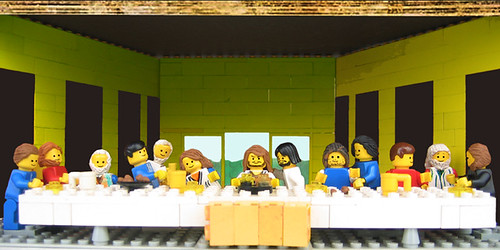
* The seder is the Passover meal, the one that Jesus is tucking into in the Da Vinci painting that the book got all coded up about.
Some years ago now, my father-in-law had a stroke. So it was decided that, to lighten the load for my mother-in-law, we would have that year’s seder at our house.*

The seder meal is a fairly standard one — though it varies from family to family. The one I’m used to starts with chicken soup plus all the trimmings. Bits of chicken, noodles and — most particular and important of all — kneidlach. Little dumplings.


I’d eaten kneidlach many times, of course, and can’t say I’d liked them much. They’re the kind of thing, I guess, that you have to grow up eating to appreciate. About the size of a very large marble and the colour of a camouflaged tank, they’re heavy eating. To my mind, they’d be better put to use as large calibre ammunition.

I’d never made them, though. I’d not even watched someone make them. So, charged with providing a batch for fifteen or so people, I did what I thought was the most sensible thing. I looked up the recipe in Claudia Roden’s Book of Jewish Food — to Jewish food what the OED is to the English language.
I followed it carefully, finely chopping the coriander, beating the egg whites into peaks and folding them in with a knife. These kneidlach were fantastic, by far the best I had ever eaten — light, fluffy, fragrant, joyous.
I’m not a big praiser of my own cooking in public but I was about to say something when I caught the air of general distaste around the table. These aren’t right, was the clear and general vibe. These are not kneidlach as we know them. But they’re much better, aren’t they — light, fluffy, fragrant etc etc. Absolutely, I was told. That’s what’s wrong with them. Kneidlach are meant to be heavy, leaden, drably coloured. Home is where the heartburn is, I guess.
So I never made kneidlach again. Which is where this story might have ended. Then I happened to be reading a New Yorker profile of Claudia Roden. In it, she told a story about what she, a Sephardic Jew from Cairo, thought of the food served by her husband’s Ashkenazi family in London. She found it quite awful, leaden, colourless and flavourless — dreary, central European, stodgy. In particular, she hated the kneidlach.
Years later, she took her revenge. When writing the kneidlach recipe for her masterwork, she invented her own recipe for them — a Sephardic reimagining of an Ashkenazi staple. Which, of course, was the one I followed so carefully. So light, so fragrant, so . . . inauthentic.
* The seder is the Passover meal, the one that Jesus is tucking into in the Da Vinci painting that the book got all coded up about.
Tuesday, 16 June 2009
I have seen the future and it’s . . . pandas
I was in Israel last week, for a wedding — eight hundred or so of the bride and groom’s closest friends. It was a Sephardic-Ashkenazi marriage, held in a kind of pretend oasis in the rich flatlands south of Tel Aviv.
There was food (lots, of course). There was drink (lots, too). There were no suits and virtually no ties — but many, many deep-cut frocks, somewhat to the dismay of the religious, Sephardic side of the union. There were Power-pointed speeches. There were video-screens.
There was dancing — to modern house, to the delight of my son and the dismay of the older guests. The newly-weds were, as tradition demands, hoisted up high on shoulders. The groom’s brothers and friends hit the shots and circle-danced.

And there were pandas . . . giant, inflated, dancing pandas. Four-metre tall pandas, with men inside. They joined in on the dance floor, buffeted and barrelling around till exhaustion set in.
So? So this is where you first read about it. I’m as certain as I can be that this was the first appearance of inflatable giant pandas at a wedding anywhere. The bride had seen them on a TV show and thought: that’s exactly what weddings have previously lacked. The way you do.
I could, though, hear the minds of the young girls on the dance-floor whirling away. They were thinking: when I get married, giant pandas, that’s what I’ll want. But, Daddy, they’ll say, there are always giant pandas at weddings, it’s tradition. Etc etc.
The future started here.
Next up A story about the Sephardic-Ashkenazi thing, starring Claudia Roden . . . and me
I was in Israel last week, for a wedding — eight hundred or so of the bride and groom’s closest friends. It was a Sephardic-Ashkenazi marriage, held in a kind of pretend oasis in the rich flatlands south of Tel Aviv.
There was food (lots, of course). There was drink (lots, too). There were no suits and virtually no ties — but many, many deep-cut frocks, somewhat to the dismay of the religious, Sephardic side of the union. There were Power-pointed speeches. There were video-screens.
There was dancing — to modern house, to the delight of my son and the dismay of the older guests. The newly-weds were, as tradition demands, hoisted up high on shoulders. The groom’s brothers and friends hit the shots and circle-danced.


And there were pandas . . . giant, inflated, dancing pandas. Four-metre tall pandas, with men inside. They joined in on the dance floor, buffeted and barrelling around till exhaustion set in.

So? So this is where you first read about it. I’m as certain as I can be that this was the first appearance of inflatable giant pandas at a wedding anywhere. The bride had seen them on a TV show and thought: that’s exactly what weddings have previously lacked. The way you do.
I could, though, hear the minds of the young girls on the dance-floor whirling away. They
 were thinking: when I get married, giant pandas, that’s what I’ll want. But, Daddy, they’ll say, there are always giant pandas at weddings, it’s tradition. Etc etc.
The future started here.
Next up A story about the Sephardic-Ashkenazi thing, starring Claudia Roden . . . and me

Subscribe to:
Posts (Atom)