

 Posts


Music for (your) pleasure, number six
And here is something general that I wrote for the first Theme Time Radio Hour compilation . . .
What, I wonder, do we dream of when we dream of Bob Dylan? And, more intriguingly, what does Bob Dylan dream of when he dreams of us?
This is what I think: he dreams of a small boy called Robert who lives in a small city, an industrial centre in a rural landscape. It's a nowhere town that was once called Alice but had its name changed when an enormous hole was dug where its new name used to be. That giant hole was - and still is - the biggest of its kind in the world, an open-cast iron mine.
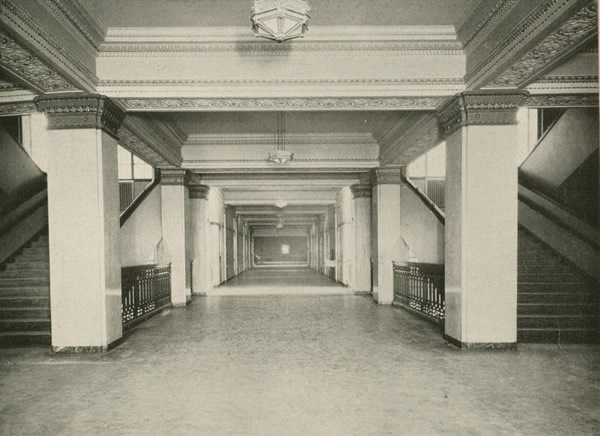
It's a place that seems to doze on the periphery but is, in fact, also surprisingly at the heart of things. When Robert was growing up, it had the most lavishly appointed high school auditorium in the whole country. He played there, in a rock and roll band.
It's the head point for the drainages to three great seas, the Gulf of Mexico and the Atlantic and Arctic Oceans. Swim up any of the great rivers of the eastern United States (Canada, too) and it's where you'll end up, like a salmon returning to spawn.
It's where the Greyhound Bus company was founded and headquartered for many years. It sits between the two great spinal cords of the continent - to the west, the eternal geographical one, the Mississippi River, to the east, the old national one, Highway 61.
Here, young Robert took in all the musics that swam to him up all those rivers, that spilled out of all those long-haul buses, that drifted up the great natural wonder that the Cheyenne called Big Greasy River - and the first European to see it called the River of the Holy Ghost.
Blues and folk and country and R&B, that's what Robert's dreams were made of. And I think he had a dream of a radio dee-jay out there somewhere, distant enough to be mythic, close enough to be real. This dee-jay would play records for Robert and his imaginary friends. He'd link song with song, mixing and matching and combining and recombining them. It'd be a bridal outfit of a radio show: something old, something new, something borrowed, something blue. And the dee-jay would tell stories to go with the songs: about them, inspired by them, around them.
In dreams begin responsibilities, wrote Delmore Schwartz, poet, drunk, Lou Reed's teacher. And so Robert eventually became his own dream, hosting Theme Time Radio Hour, week in, week out. Last time, I looked there had been 69 shows. I've got them all in my iTunes and so, whenever I shuffle-play, I'll always hear Bob Dylan's voice, reading me a Robert Frost poem or making one of those wry digs he makes every time he plays a Beatles track. It's strange: one of the most elusive of performers now shares his thoughts with me on an almost daily basis.
Theme Time Radio Hour is the mix-tapes collection we've all dreamed of making. It's both a taxonomy and a topography of 20th century popular musics. Not all of them, it's true. There's no Charles Trenet, say. No Abba, either. But Grandpa Jones is there. Jack Teagarden, Charles Mingus, the Donays and the White Stripes, too. The show is always as happy to let songs collide and divorce as it is following them up the aisle or encouraging them to cuddle up in bed together.
Dylan (and his collaborators, I guess) approach 20th century pop the way 18th century naturalists figured out how tomatoes are related to tobacco and where swallows go to in the winter. Making sense of things nearly always involves categorising them somehow.
As these things do, it started with life's basics, things like Weather, Mother, Father. And it's pretty much stuck with the everyday: School, Sleep, Food, Tears. It's addressed life's two great certainties, Death and Taxes - though not yet the third, Nurses. It's travelled a bit: Tennessee, New York. It's even found space for a little product placement: Cadillac.
Roger Armstrong (and his collaborators, I should imagine) have taken this great, ongoing taxonomic and topographic project and refined it down into an elegant precis of the original. A taxonomy of a taxonomy, a topography of a topography. I found myself thinking about something I was told only recently: that any chip of any diamond will always be a mini-version of the whole diamond, a microcosm of all its glories.
So this double CD, too, takes and shakes the everyday world, raising all kinds of new questions and notions along the way. Listen - carefully or lightly, or both - and you find new thoughts on something as old and universal as the Heart (show 41, Billie Holiday's Good Morning Heartache) or the potential erotogenic symbolism of Musical Instruments (show 37, Dinah Washington's Big Long Slidin' Thing) or the bibbity-bobbity relationship between family life, heredity and alcoholic Drink (show 3, Mary Gauthier's I Drink).
Then there's the two versions - one black, one white - of Pistol Packin' Mama (show 25, Guns). They got me thinking afresh about what really is one of pop's oddest megahits. It had a 15-year run as a scene-maker, from around the time the time the world went to war to the time Elvis went into the army. Maybe there's another song recorded by both Bing Crosby (plus Andrews Sisters) and Gene Vincent (plus Blue Caps). I never heard it.
If it weren't for the jauntiness and accordion of Al Dexter's original, I'd have realised long ago that it's a pop musical parallel to the same period's film noir, with the same anxieties about women's new place in a new world (and the bedroom). Personally, I see Joan Crawford in the lead, reprising her role in Mildred Pierce, only with a blam-blam-blam in every hand, as Dylan put it in John Wesley Harding.
A fast dance tune about sex and violence, drink, guns and girls that ends with the singer's murder. If you can't find your own dreams, schemes and themes in there somewhere, I doubt you're human.
Plus A little seasonal story-telling
Next up What does the world look like through Bob Dylan's eyes?
Monday, 20 December 2010




Friday, 17 December 2010
Music for (your) pleasure, five
This one was the very last track on the first volume of Ace Records Theme Time Radio Hour compilations . . .
Roadrunner is one of the most intriguing songs in all pop history. It looks backwards, to the Velvet Underground's three-chord Sister Ray - the riff is the same, only minus one chord. It looks forward, to punk - the Sex Pistols played it, early on, and recorded it, late on.
It appears to be playing with irony - a hymn to 'the modern world' has to be a gag, right? But I don't think it's actually meant to be ironic. I think Jonathan Richman means every word of it, really does love Massachusetts and the modern world, if in a Jonathan Richman way.
It's a road song yet, of the many songs about specific roads - Route 66 etc - it is surely the only one about a by-pass. Not just any by-pass, though. Route 128, which loops around Boston, was 'the first limited access circumferential highway in the US'. It opened in 1951, the year Richman was born, in Natick, less than five miles to the west. Like London's M25, it's evolved, over time, to become half ring-road, half metaphor.
As home - and connecting ribbon - to generations of computer and software companies, it's developed a whole other imaginative life as an adjective, a synonym for 'hi-tech'. In other words, Route 128 really is the modern world. What sounded like - and still sounds like - a naïve projection was, in fact, a fairly accurate prediction of our future. Out of the mouths of babes and Jonathan Richman.
Next up A trip up river, to deepest Minnesota
This one was the very last track on the first volume of Ace Records Theme Time Radio Hour compilations . . .
25. ROADRUNNER (TWICE)
(Jonathan Richman)
THE MODERN LOVERS
Home Of The Hits LP HH 1910 76) 4.03
From Show 18 “Radio”
Roadrunner is one of the most intriguing songs in all pop history. It looks backwards, to the Velvet Underground's three-chord Sister Ray - the riff is the same, only minus one chord. It looks forward, to punk - the Sex Pistols played it, early on, and recorded it, late on.
It appears to be playing with irony - a hymn to 'the modern world' has to be a gag, right? But I don't think it's actually meant to be ironic. I think Jonathan Richman means every word of it, really does love Massachusetts and the modern world, if in a Jonathan Richman way.
It's a road song yet, of the many songs about specific roads - Route 66 etc - it is surely the only one about a by-pass. Not just any by-pass, though. Route 128, which loops around Boston, was 'the first limited access circumferential highway in the US'. It opened in 1951, the year Richman was born, in Natick, less than five miles to the west. Like London's M25, it's evolved, over time, to become half ring-road, half metaphor.
As home - and connecting ribbon - to generations of computer and software companies, it's developed a whole other imaginative life as an adjective, a synonym for 'hi-tech'. In other words, Route 128 really is the modern world. What sounded like - and still sounds like - a naïve projection was, in fact, a fairly accurate prediction of our future. Out of the mouths of babes and Jonathan Richman.


Next up A trip up river, to deepest Minnesota
Tuesday, 14 December 2010
Music for (your) pleasure, four This is something I wrote for the first Theme Time Radio Hour compilation, back in 2008.
The Thompson gun was the very first hand-held machine gun, developed in the aftermath of WWI. By 1978, it had long been a museum piece. Once upon a time, though, it was the the Depression era rum-runner's Chicago typewriter, the rat-tat-tat of the St Valentine's Day Massacre. It was John Dillinger's chosen weapon. Baby Face Nelson's and Pretty Boy Floyd's, too. That's why Joe Strummer wrote a song about it. It was a gun with history and meanings: romantic, sexy ones.
Like so much about the Clash, Tommy Gun seeks to have it both ways - and manages, it mostly, too. It's a violent song about the horrors of violence. It knows how much fun shooting and killing people is - in our secret thoughts anyway. But it also knows how terrible guns and death are in reality. Its power and meaning distills from the tension between those two tragically incompatible thoughts. Oh, and from Topper Headon's drumming, too.
Next up Jonathan Richman's journeys through the outskirts of Boston, Mass
TOMMY GUN (Joe Strummer, Mick Jones, Paul Simonon, Nicholas Headon)
THE CLASH
CBS 6788 (1978) 3.15
From Show 25 “Guns”
I'm not sure if I was there when Tommy Gun was cut but I was there when the Give 'Em Enough Rope sessions were just starting, in a deconsecrated church in west London, with war films projected on the studio wall. And I was there when they were finishing, too, in an office block in mid-town Manhattan, with three studios running simultaneously - one each for recording, overdubbing and sequencing. New York and London, war and grandiosity: the story of the Clash. One of them anyway. Nostalgia is another.

The Thompson gun was the very first hand-held machine gun, developed in the aftermath of WWI. By 1978, it had long been a museum piece. Once upon a time, though, it was the the Depression era rum-runner's Chicago typewriter, the rat-tat-tat of the St Valentine's Day Massacre. It was John Dillinger's chosen weapon. Baby Face Nelson's and Pretty Boy Floyd's, too. That's why Joe Strummer wrote a song about it. It was a gun with history and meanings: romantic, sexy ones.

Like so much about the Clash, Tommy Gun seeks to have it both ways - and manages, it mostly, too. It's a violent song about the horrors of violence. It knows how much fun shooting and killing people is - in our secret thoughts anyway. But it also knows how terrible guns and death are in reality. Its power and meaning distills from the tension between those two tragically incompatible thoughts. Oh, and from Topper Headon's drumming, too.
Next up Jonathan Richman's journeys through the outskirts of Boston, Mass
Music for (your) pleasure, three For this third sample of my writing from Theme Time Radio Hour, I tackle the world's greatest dancer . . .
To explain the exquisiteness of Fred Astaire's voice, best start with his legs. The clearest view is in The Barkleys of Broadway - he and Ginger Rogers dance in kilts. His legs are so, so thin - the stuff of chopsticks. They were that way for a reason, though: his exceptional physical balance and grace. You and I need muscles. He got by on air. His singing was the same. Light to the point of non-existence, it was a speech-like expression of a deep, subtle understanding that the meaning of a great show tune is in the dance between tune and lyrics. And this is one of the greatest. Debuted, by Astaire, in the 1936 movie, Swing Time, it's become an untypically rueful wedding song standard. This version was cut in 1952 in Los Angeles, at loose, lengthy studio sessions with a cool jazz sextet led by Oscar Peterson. The music is by Jerome Kern, a German Jewish New Yorker who fell in love, one summer night in 1910, with the landlord's daughter at the Swan, Walton-on-Thames. They lived the happy-ever-after life of a Broadway hit. The words are by Dorothy Fields - Jewish, from New Jersey and not so lucky in real love. But an exceptional love song lyricist - notice the internal rhyme of 'warm' and 'for me'. When Kern first played her the melody, she left the room to cry. 'I couldn't stop, it was so beautiful.' Love, pain, tears. Death, too. Good or bad, every marriage ends in tears.
PS If you want to hear this song (or any of the others I've posted about), either post a comment or email and I'll send you a link.
Next up The Clash and their Chicago piano
17. THE WAY YOU LOOK TONIGHT
(Jerome Kern, Dorothy Fields)
FRED ASTAIRE with the Oscar Peterson Group
Clef MGC 1002 (1952) 2.58
From Show 78 “Night”
To explain the exquisiteness of Fred Astaire's voice, best start with his legs. The clearest view is in The Barkleys of Broadway - he and Ginger Rogers dance in kilts. His legs are so, so thin - the stuff of chopsticks. They were that way for a reason, though: his exceptional physical balance and grace. You and I need muscles. He got by on air. His singing was the same. Light to the point of non-existence, it was a speech-like expression of a deep, subtle understanding that the meaning of a great show tune is in the dance between tune and lyrics. And this is one of the greatest. Debuted, by Astaire, in the 1936 movie, Swing Time, it's become an untypically rueful wedding song standard. This version was cut in 1952 in Los Angeles, at loose, lengthy studio sessions with a cool jazz sextet led by Oscar Peterson. The music is by Jerome Kern, a German Jewish New Yorker who fell in love, one summer night in 1910, with the landlord's daughter at the Swan, Walton-on-Thames. They lived the happy-ever-after life of a Broadway hit. The words are by Dorothy Fields - Jewish, from New Jersey and not so lucky in real love. But an exceptional love song lyricist - notice the internal rhyme of 'warm' and 'for me'. When Kern first played her the melody, she left the room to cry. 'I couldn't stop, it was so beautiful.' Love, pain, tears. Death, too. Good or bad, every marriage ends in tears.


PS If you want to hear this song (or any of the others I've posted about), either post a comment or email and I'll send you a link.
Next up The Clash and their Chicago piano
Music for (your) pleasure, number two
So, for the second of my writings for the Theme Time Radio Hour compilation, we move from the modern Manhattan of 14th St to the eternal hope springs of gospel . . .
Pressed for my religious affiliation, I tend to reply 'North London Jewish-ish (through marriage) Catholic atheist' - and, to steal an old Nik Cohn line, not untypical of the sort. As such, I feel as qualified to comment on matters sacred as the merely worshipful - more so, perhaps, not being distracted by faith*.
Founded in Los Angeles in 1944, the Zion Travelers worked steadily but never made the headlines. Though The Blood sounds like it could easily predate Hymns Ancient and Modern, it was actually made in 1962, for Dootone - the label that Earth Angel built. LC Cohen, manager and lead tenor, sings/shouts/wails/testifies: 'Weeeell, bloood, running warm, aaaargh-uh-h, o Lord, in your veins, wooh.' What's he on about? And what is it that a non-Bible-basher like me can find so moving - irrefutable, even - in such unchecked sky pilotry?
My guess is it's because it's a kind of Rothko painting for the ears. An essentially abstract piece of work that floats on the boundary of consciousness - where the inchoate begins to be represented as language. Such expressions of a universally shared sense of the ineffable are pop's half-secret core: from Clyde McPhatter's opening cries on Billy Ward and His Dominoes' The Bells to Lorraine Ellison's despair between 2:42 and 2:54 of Stay With Me to the piano sound at 1:06 (and again at 2:09) on Abba's Mamma Mia.
* Not that I have anything against the religious. I have a cousin -a successful lawyer - who believes in fairies but I still let her drive my car.
Next up Fred Astaire's wedding song.
So, for the second of my writings for the Theme Time Radio Hour compilation, we move from the modern Manhattan of 14th St to the eternal hope springs of gospel . . .
16. THE BLOOD (LC Cohen)
THE ZION TRAVELERS
Dooto 602 (1960) 2.06 From Show 80 “Blood”
Pressed for my religious affiliation, I tend to reply 'North London Jewish-ish (through marriage) Catholic atheist' - and, to steal an old Nik Cohn line, not untypical of the sort. As such, I feel as qualified to comment on matters sacred as the merely worshipful - more so, perhaps, not being distracted by faith*.
Founded in Los Angeles in 1944, the Zion Travelers worked steadily but never made the headlines. Though The Blood sounds like it could easily predate Hymns Ancient and Modern, it was actually made in 1962, for Dootone - the label that Earth Angel built. LC Cohen, manager and lead tenor, sings/shouts/wails/testifies: 'Weeeell, bloood, running warm, aaaargh-uh-h, o Lord, in your veins, wooh.' What's he on about? And what is it that a non-Bible-basher like me can find so moving - irrefutable, even - in such unchecked sky pilotry?

My guess is it's because it's a kind of Rothko painting for the ears. An essentially abstract piece of work that floats on the boundary of consciousness - where the inchoate begins to be represented as language. Such expressions of a universally shared sense of the ineffable are pop's half-secret core: from Clyde McPhatter's opening cries on Billy Ward and His Dominoes' The Bells to Lorraine Ellison's despair between 2:42 and 2:54 of Stay With Me to the piano sound at 1:06 (and again at 2:09) on Abba's Mamma Mia.

* Not that I have anything against the religious. I have a cousin -a successful lawyer - who believes in fairies but I still let her drive my car.
Next up Fred Astaire's wedding song.
Monday, 13 December 2010
Music for (your) pleasure, number one
One of the other things in my life . . . I help out (a little) on the Bob Dylan's Theme Time Radio Hour compilations put out by Ace Records — and my old friend Roger Armstrong. Among other things, this time round, for the third volume, it involved such burdensomeness as dinner at Moro. It also involves my writing about music — something I don't do that often these days.
Each album is a double with forty or fifty songs that Dylan played on his show. There is no Dylan voice on there. (Actually, there is one tiny, tiny snatch of him and I'll provide a reward to anyone who can tell me where it is.) There is a really extensive booklet for each album — and now a cardboard slipcase to hold all three albums. If I didn't already have it, I'd command you to buy it for me this Christmas. (So buy it for someone else instead. You won't regret it. The range and quality of the music is astonishing. The latest one has Jerry Lee Lewis singing as Iago in Othello. Can pop get any better than that?)
I've written a few bits for the sleevenotes etc now and thought you might be interested in them. I'll be posting one a day till I've finished them (then get back to Lacan's con). First up is Laura Cantrell's version of 14th St. If you don't know the tune, post a comment or email me with your address and I will send you a link to my dropbox which will enable you to fetch it etc. So . . .
A song about boundaries and borderlines - crossed, uncrossed and uncrossable - sung by Laura Cantrell, a Nashville emigrant to New York whose biggest champion was an Englishman, John Peel. It's a pinhole view, she said, of 'the moment when you see someone you're obsessed with - and decide whether it's worth it to say hello or stay safely in the background.'
Love and not-love, desire and rejection: they couldn't have a more evocative setting than the broad crosstown street which is not just the unofficial divide between uptown and downtown Manhattan but an interzone between the ancient and modern worlds. It's where the city's rigid street grid plan begins. It's where they put the barricades on 9/11. Originally, it was - as Bob Dylan put it on Theme Time Radio Hour - 'the old artery of Manhattan'. By the 1970s, it was meat-packing joints, gimcrack shops and dangerously louche gay sex clubs - The Anvil, The Toilet, The Manhole. These days, it's upscale fashiony.
The song's writer, Emily Spray, lived on its eastern reaches in its crack low-day of the late 1980s/early 1990s. 'It's quite literal. I had a crush on a guy who was unavailable and I used to run into him on 14th street and have this emotional experience. I could tell he enjoyed my attraction to him and played with my feelings a little. From there came the song.' With, at its core, a borderline never crossed. And a heart-rending shard of psychogeographical word-play - 'not counting the blocks between you and me'.
Next up The Zion Travelers' ecstastic religiosity
One of the other things in my life . . . I help out (a little) on the Bob Dylan's Theme Time Radio Hour compilations put out by Ace Records — and my old friend Roger Armstrong. Among other things, this time round, for the third volume, it involved such burdensomeness as dinner at Moro. It also involves my writing about music — something I don't do that often these days.
Each album is a double with forty or fifty songs that Dylan played on his show. There is no Dylan voice on there. (Actually, there is one tiny, tiny snatch of him and I'll provide a reward to anyone who can tell me where it is.) There is a really extensive booklet for each album — and now a cardboard slipcase to hold all three albums. If I didn't already have it, I'd command you to buy it for me this Christmas. (So buy it for someone else instead. You won't regret it. The range and quality of the music is astonishing. The latest one has Jerry Lee Lewis singing as Iago in Othello. Can pop get any better than that?)
I've written a few bits for the sleevenotes etc now and thought you might be interested in them. I'll be posting one a day till I've finished them (then get back to Lacan's con). First up is Laura Cantrell's version of 14th St. If you don't know the tune, post a comment or email me with your address and I will send you a link to my dropbox which will enable you to fetch it etc. So . . .
21. 14TH STREET (Emily Spray) LAURA CANTRELL
Taken from the album “Humming By The Flowered Vine” Matador LP OLE 651 (2005) 3.16
From Show 83 “Street Map”A song about boundaries and borderlines - crossed, uncrossed and uncrossable - sung by Laura Cantrell, a Nashville emigrant to New York whose biggest champion was an Englishman, John Peel. It's a pinhole view, she said, of 'the moment when you see someone you're obsessed with - and decide whether it's worth it to say hello or stay safely in the background.'
Love and not-love, desire and rejection: they couldn't have a more evocative setting than the broad crosstown street which is not just the unofficial divide between uptown and downtown Manhattan but an interzone between the ancient and modern worlds. It's where the city's rigid street grid plan begins. It's where they put the barricades on 9/11. Originally, it was - as Bob Dylan put it on Theme Time Radio Hour - 'the old artery of Manhattan'. By the 1970s, it was meat-packing joints, gimcrack shops and dangerously louche gay sex clubs - The Anvil, The Toilet, The Manhole. These days, it's upscale fashiony.


The song's writer, Emily Spray, lived on its eastern reaches in its crack low-day of the late 1980s/early 1990s. 'It's quite literal. I had a crush on a guy who was unavailable and I used to run into him on 14th street and have this emotional experience. I could tell he enjoyed my attraction to him and played with my feelings a little. From there came the song.' With, at its core, a borderline never crossed. And a heart-rending shard of psychogeographical word-play - 'not counting the blocks between you and me'.

Next up The Zion Travelers' ecstastic religiosity
Thursday, 9 December 2010
Un conte d'un con et aussi de M Lacan, part one
First to the National Portrait Gallery*. A couple of months ago, I was writing a piece on 'sexy vs sexist' for Professional Photographer. (I write a monthly column for the magazine, on a legendary photographer. Here's one on Robert Frank. I'll put a fuller list in a future posting. I also write longer pieces.
As part of that sexy vs sexist piece, I sent out an email to all of you on my blogmail list. (If you want to be added, post a comment or email me.) It contained links to various photographs and asked you to rate them as sexy or sexist. As I hoped and expected, the responses were thoughtful and widely varied. One man's urge to goose is rarely another woman's desire for a gander. And, most strikingly, vice versa.
Among the images - and, in a way, the thing that made me think of doing the email - was a photograph that had been shortlisted for the National Portrait Gallery's Taylor Wessing portraiture prize. Titled My British Wife, it is . . . well, I'll quote from the piece I wrote . . .
'a portrait by Greek photographer Panayiotis Lamprou, of his real wife. Unnamed, she is sitting in the sun, at an outdoor table. Behind her is a half-open Mediterranean blue door. Beside her is a cooking pan, with a little food still clinging to its edges - an omelette, we are told. She has finely shaped eyebrows, an aquiline nose, grey-blue eyes and a wide, pale pink-lipped mouth. Her hair is tousled and falls messily over the top of her halter-topped sundress. You can see a light touch of hair in her left armpit. She sits, looking directly at the camera/viewer, her legs apart, on a chair cushion almost the same colour as the door. She has no knickers on.
She also has no pubic hair - shaved, I guess - and a notably expressive vulva. Context and intent aside, it is the stuff - the raw material, anyway - of pornography. Or, at least, what is usually meant when people use the word, pornography. Certainly, the NPG was worried enough about it to crop the picture in half for its website, turning it into a plain and almost unexplicable image of the top half of an attractive young woman.'
So, when invited to the press show, I made sure I went. The picture didn't win. It was a runner-up**. The photographer was there - though not his British wife. I talked to him briefly but his English (not fluent) and my Greek (non-existent) weren't really up to a meaningful conversation, particularly in a room where everyone was acting as if there wasn't something notably notable about the convergence of the image of his wife, him and a shuttle of artsy journalists.
I did think of asking him: how's the wife? But I wasn't sure the humour would translate. He did, though, hand me a leaflet, the press release for his picture, written by the art critic of the Greek broadsheet Kathimerini. It's a not unthoughtful piece, if marked by the rhetoric of art-speak and Mediterranean journalism - 'condensation of beatitude and lightweight materialism'. It describes the picture as 'a rather delicate, unpretentious requiem for femininity, a reminder of the self-esteem of the naked body before the fall and sin . . .' Myself, I think that's a naïve, unhistorical approach - once the fall has happened, it can't be unfalled, so to speak, its tragic irrevocability is the trade-off we made for self-knowledge. But still . . .
Its writer continues: 'but also a reminder of the admiration of a man towards a woman, a prompt to the classical work of art of . . .' I should have seen this coming but didn't . . . 'Gustav Courbet, The Origin of the World.' And then, of course, he references this painting's last private owner, the French psychoanalyst Jacques Lacan. He poses a question: can we accuse 'Lacan for voyeurism, the man who changed the course of psychoanalysis and modern thinking'? He clearly thinks not. I'm not so sure.
I've been thinking about Lacan's ownership of that painting for some time now but had somehow never quite got round to posting the blog about it that I intended to write. Ever since I'd learned that he'd owned the picture, I'd been intrigued by that fact. I already knew the painting but . . . well, there was something odd about his ownership. It was, apart from anything else, such a, well, French thing to do.
I wondered how that had come about and looked it up. It's a story. I'll tell it in the next blog or two.
* Site of one of the world's great escalator journeys. (For some years, I have been making a small collection of them.) It begins in the modern day and takes you back to the 16th century.
** Nothing was said but there had been a similar picture in the show a few years ago. The differences are notable, though.
Meanwhile, a little French? (I knew the song already but found this video because it’s in the new Martin Scorsese film, a documentary about Fran Lebowitz.)
Next up Some music writing of mine, occasioned by the arrival of Theme Time Radio Hour Three
Soon Part deux of this conte (in which a Turk tempts a desperate man)
First to the National Portrait Gallery*. A couple of months ago, I was writing a piece on 'sexy vs sexist' for Professional Photographer. (I write a monthly column for the magazine, on a legendary photographer. Here's one on Robert Frank. I'll put a fuller list in a future posting. I also write longer pieces.

As part of that sexy vs sexist piece, I sent out an email to all of you on my blogmail list. (If you want to be added, post a comment or email me.) It contained links to various photographs and asked you to rate them as sexy or sexist. As I hoped and expected, the responses were thoughtful and widely varied. One man's urge to goose is rarely another woman's desire for a gander. And, most strikingly, vice versa.
Among the images - and, in a way, the thing that made me think of doing the email - was a photograph that had been shortlisted for the National Portrait Gallery's Taylor Wessing portraiture prize. Titled My British Wife, it is . . . well, I'll quote from the piece I wrote . . .

'a portrait by Greek photographer Panayiotis Lamprou, of his real wife. Unnamed, she is sitting in the sun, at an outdoor table. Behind her is a half-open Mediterranean blue door. Beside her is a cooking pan, with a little food still clinging to its edges - an omelette, we are told. She has finely shaped eyebrows, an aquiline nose, grey-blue eyes and a wide, pale pink-lipped mouth. Her hair is tousled and falls messily over the top of her halter-topped sundress. You can see a light touch of hair in her left armpit. She sits, looking directly at the camera/viewer, her legs apart, on a chair cushion almost the same colour as the door. She has no knickers on.
She also has no pubic hair - shaved, I guess - and a notably expressive vulva. Context and intent aside, it is the stuff - the raw material, anyway - of pornography. Or, at least, what is usually meant when people use the word, pornography. Certainly, the NPG was worried enough about it to crop the picture in half for its website, turning it into a plain and almost unexplicable image of the top half of an attractive young woman.'
So, when invited to the press show, I made sure I went. The picture didn't win. It was a runner-up**. The photographer was there - though not his British wife. I talked to him briefly but his English (not fluent) and my Greek (non-existent) weren't really up to a meaningful conversation, particularly in a room where everyone was acting as if there wasn't something notably notable about the convergence of the image of his wife, him and a shuttle of artsy journalists.
I did think of asking him: how's the wife? But I wasn't sure the humour would translate. He did, though, hand me a leaflet, the press release for his picture, written by the art critic of the Greek broadsheet Kathimerini. It's a not unthoughtful piece, if marked by the rhetoric of art-speak and Mediterranean journalism - 'condensation of beatitude and lightweight materialism'. It describes the picture as 'a rather delicate, unpretentious requiem for femininity, a reminder of the self-esteem of the naked body before the fall and sin . . .' Myself, I think that's a naïve, unhistorical approach - once the fall has happened, it can't be unfalled, so to speak, its tragic irrevocability is the trade-off we made for self-knowledge. But still . . .
Its writer continues: 'but also a reminder of the admiration of a man towards a woman, a prompt to the classical work of art of . . .' I should have seen this coming but didn't . . . 'Gustav Courbet, The Origin of the World.' And then, of course, he references this painting's last private owner, the French psychoanalyst Jacques Lacan. He poses a question: can we accuse 'Lacan for voyeurism, the man who changed the course of psychoanalysis and modern thinking'? He clearly thinks not. I'm not so sure.


I've been thinking about Lacan's ownership of that painting for some time now but had somehow never quite got round to posting the blog about it that I intended to write. Ever since I'd learned that he'd owned the picture, I'd been intrigued by that fact. I already knew the painting but . . . well, there was something odd about his ownership. It was, apart from anything else, such a, well, French thing to do.
I wondered how that had come about and looked it up. It's a story. I'll tell it in the next blog or two.
* Site of one of the world's great escalator journeys. (For some years, I have been making a small collection of them.) It begins in the modern day and takes you back to the 16th century.
** Nothing was said but there had been a similar picture in the show a few years ago. The differences are notable, though.
Meanwhile, a little French? (I knew the song already but found this video because it’s in the new Martin Scorsese film, a documentary about Fran Lebowitz.)
Next up Some music writing of mine, occasioned by the arrival of Theme Time Radio Hour Three
Soon Part deux of this conte (in which a Turk tempts a desperate man)

Subscribe to:
Posts (Atom)