

 Posts
Posts


Jokes and their relation to my unconscious, part three
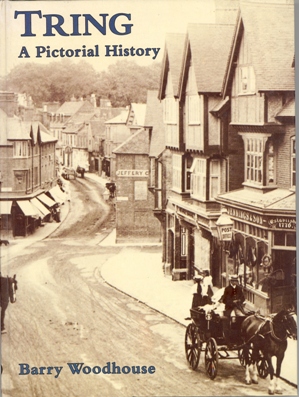
So what about that woman from northern Hertfordshire and her relationship to Mendelian genetic theory? Again, it’s not really a joke, more a witticism — if one that some people really won’t find at all funny. It’s a limerick — related to me and a roomful of fellow students in New Cross and the early 1970s.
There was a young woman from Tring
Who had an affair with a darkie.
The result of their fling
Was not one but four offspring:
One black, one white and two khaki.
And that’s how genetic inheritance works — in the case of skin colour and other things, though perhaps not everything, my memory fails at this point. Fifty per cent of children will be a mix of their parents stuff and fifty per cent will be a copy of one or other of their parents.
I’d been taught it already at school, as part of O level biology — something to do with clematis plants, I think, or maybe it was aphids, something English country gardenish, anyway, the way things were in education in those days. But it didn’t really stick till one of my university lecturers told us that limerick. Couldn’t really forget it after that, could I? Can’t imagine it being used on a 2008 university psychology course, though, can you?
Thursday, 2 October 2008




Monday, 29 September 2008
Sigmund Freud at the funfair
Looking back over recent (and not so recent) postings, I realise I’ve failed to keep some promises. There have been three things I said I was going to write about but didn’t:
* the advantages and disadvantages of making a life-long enemy of Andre Green
* the image Jacques Lacan kept in a cupboard — and only ever showed to a favoured few
* the limerick about the young lady from northern Hertfordshire whose amatory activities offer an accurate exposition of Mendel’s theories on genetic inheritance.
I will get to them, too, starting next week. But first, I’d like to share with you a couple of things that came out of my work on my book about swearing. The first is a story about Freud. The second is a link to a music download. There is a connection between the two.
Freud first. I’ll set the scene. A few weeks more than 99 years ago, Sigmund Freud made his only trip to America. He’d been invited to make a speech at Clark University in Massachusetts. He took some pals with him — Carl Jung from Zurich, Karl Abraham from Berlin and Sandor Ferenczi from Budapest. All three were psychoanalytic ‘sons’ of his — heir apparents with whom he would then fall out and banish. As Oedipus killed his father so Freud killed his sons, leaving his entire kingdom to his virgin daughter.
The four of them spent a few days in New York doing the tourist thing. They walked in Central Park, remarking on the potty-mouthed graffiti on a ‘beautiful marble flight of steps’ — Ferenczi’s words in his paper on obscenity. They took in Chinatown and Coney Island, too. I can’t help but wonder if they had chop suey or sweet and sour pork.
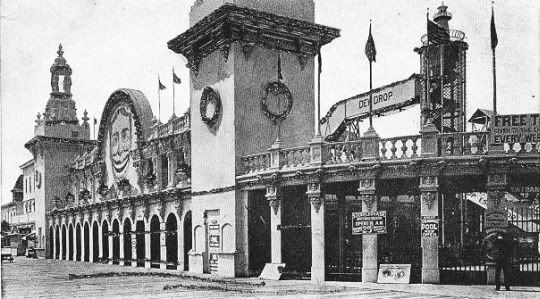
I also can’t help wondering what happened when they headed out to Coney Island. I guess they took a 5th Avenue BMT express out over Brooklyn Bridge but what did they get up to once they arrived at the oceanside resort? Did they head over to West 10th St and check out Luna Park, in the company of its usual 90,000 daily visitors? Did they take its Trip To The Moon, a dream of space travel in a dark theatre? Maybe they went to Dreamland instead, watching a chariot race round its lagoon or its Fighting Flames show — real women and real children being rescued from real fires in pretend houses by make-believe fireman. I can see Freud might have had thoughts about that.
Maybe they took a walk on the beach and saw some Coney Island whitefish — local slang for used condoms left over from the previous night’s sandy adventures. Perhaps they reflected on the name of the place. Coney is an old word, descended from the Latin cunniculus and a close relative of the Spanish conejo . It meant rabbit, a word which originally referred only to the young of the species but which, from the 16th century onwards, edged coney out of the language. Why? Because of the way coney was then pronounced. Which was? You can figure that out by the fact that it originally rhymed with another word for the same animal, bunny. In fact, bunny is probably a rhyming euphemism for coney, consciously created on account of the pronunciation problem — like, say, rollocks .
A similar thing happened in French — connil was replaced by lapin. In Spanish, a Playboy Bunny is a conejita, both a young female rabbit and deliberately close to coño. All those years, I’d thought how strangely innocent Hugh Hefner had been in calling his hostesses Bunny girls. All those years, how wrong I was. Why and how did the pronunciation of coney change? Money and honey didn’t change their sound — something taken rhyming advantage of by both Edward Lear (The Owl And The Pussycat, 1867) and Jesse Stone (Clyde McPhatter and The Drifters’ Money Honey, 1953).
It was the bible that made coney to rhyme with pony. There were lots of coneys in it: rabbits are middle Eastern thing. There were no rabbits in Britain till the Normans brought them over, which is why there is no Old English word for them. The Bible and coney problem was a reading-out-loud problem. Preachers just didn’t like to get up of a Sunday morning and inform their congregation about the habits and lifestyle choices of things whose name sounded just like the name of another thing. Or, to put it the OED way, ‘the desire to avoid certain vulgar associations with the word in the cunny form, may have contributed to the preference for a different pronunciation in reading the Scriptures.’
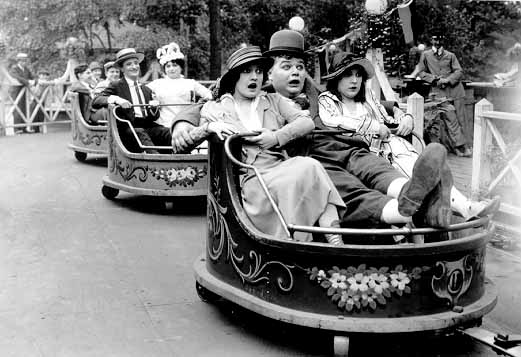
So what exactly did Freud and his fellow rubberneckers get up to that day in Coney Island. Myself, I like to think they hiked over to Steeplechase Park on West 17th, took a whirl on the mechanical horse race round the Pavilion of Fun, examined themselves in the full-size distorting mirrors and had a disbelieving, Mittel European gawp at what happened as jets of air — they were all over the park — squirted out through gratings and blew women’s dresses up around their hips. Not so much a day of fun by the ocean, then, as the field work for an entire psychoanalytic conference.
And so to the music link. It’s a song by Jackie Wilson and Lavern Baker.
Looking back over recent (and not so recent) postings, I realise I’ve failed to keep some promises. There have been three things I said I was going to write about but didn’t:
* the advantages and disadvantages of making a life-long enemy of Andre Green
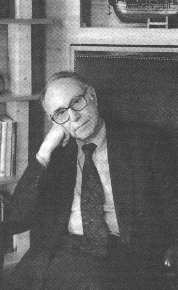
* the image Jacques Lacan kept in a cupboard — and only ever showed to a favoured few
* the limerick about the young lady from northern Hertfordshire whose amatory activities offer an accurate exposition of Mendel’s theories on genetic inheritance.
I will get to them, too, starting next week. But first, I’d like to share with you a couple of things that came out of my work on my book about swearing. The first is a story about Freud. The second is a link to a music download. There is a connection between the two.
Freud first. I’ll set the scene. A few weeks more than 99 years ago, Sigmund Freud made his only trip to America. He’d been invited to make a speech at Clark University in Massachusetts. He took some pals with him — Carl Jung from Zurich, Karl Abraham from Berlin and Sandor Ferenczi from Budapest. All three were psychoanalytic ‘sons’ of his — heir apparents with whom he would then fall out and banish. As Oedipus killed his father so Freud killed his sons, leaving his entire kingdom to his virgin daughter.

The four of them spent a few days in New York doing the tourist thing. They walked in Central Park, remarking on the potty-mouthed graffiti on a ‘beautiful marble flight of steps’ — Ferenczi’s words in his paper on obscenity. They took in Chinatown and Coney Island, too. I can’t help but wonder if they had chop suey or sweet and sour pork.
I also can’t help wondering what happened when they headed out to Coney Island. I guess they took a 5th Avenue BMT express out over Brooklyn Bridge but what did they get up to once they arrived at the oceanside resort? Did they head over to West 10th St and check out Luna Park, in the company of its usual 90,000 daily visitors? Did they take its Trip To The Moon, a dream of space travel in a dark theatre? Maybe they went to Dreamland instead, watching a chariot race round its lagoon or its Fighting Flames show — real women and real children being rescued from real fires in pretend houses by make-believe fireman. I can see Freud might have had thoughts about that.

Maybe they took a walk on the beach and saw some Coney Island whitefish — local slang for used condoms left over from the previous night’s sandy adventures. Perhaps they reflected on the name of the place. Coney is an old word, descended from the Latin cunniculus and a close relative of the Spanish conejo . It meant rabbit, a word which originally referred only to the young of the species but which, from the 16th century onwards, edged coney out of the language. Why? Because of the way coney was then pronounced. Which was? You can figure that out by the fact that it originally rhymed with another word for the same animal, bunny. In fact, bunny is probably a rhyming euphemism for coney, consciously created on account of the pronunciation problem — like, say, rollocks .
A similar thing happened in French — connil was replaced by lapin. In Spanish, a Playboy Bunny is a conejita, both a young female rabbit and deliberately close to coño. All those years, I’d thought how strangely innocent Hugh Hefner had been in calling his hostesses Bunny girls. All those years, how wrong I was. Why and how did the pronunciation of coney change? Money and honey didn’t change their sound — something taken rhyming advantage of by both Edward Lear (The Owl And The Pussycat, 1867) and Jesse Stone (Clyde McPhatter and The Drifters’ Money Honey, 1953).
It was the bible that made coney to rhyme with pony. There were lots of coneys in it: rabbits are middle Eastern thing. There were no rabbits in Britain till the Normans brought them over, which is why there is no Old English word for them. The Bible and coney problem was a reading-out-loud problem. Preachers just didn’t like to get up of a Sunday morning and inform their congregation about the habits and lifestyle choices of things whose name sounded just like the name of another thing. Or, to put it the OED way, ‘the desire to avoid certain vulgar associations with the word in the cunny form, may have contributed to the preference for a different pronunciation in reading the Scriptures.’
So what exactly did Freud and his fellow rubberneckers get up to that day in Coney Island. Myself, I like to think they hiked over to Steeplechase Park on West 17th, took a whirl on the mechanical horse race round the Pavilion of Fun, examined themselves in the full-size distorting mirrors and had a disbelieving, Mittel European gawp at what happened as jets of air — they were all over the park — squirted out through gratings and blew women’s dresses up around their hips. Not so much a day of fun by the ocean, then, as the field work for an entire psychoanalytic conference.

And so to the music link. It’s a song by Jackie Wilson and Lavern Baker.
Wednesday, 17 September 2008
Obscenity, old Etonians and a little astrophysics
As some of you will know, I’m writing a book on swearing. How we swear and, more interestingly, why. One thing I got to looking at was firsts. The first time in print, the first time on TV, the first time on record.
Here is a link to a download of what I reckon is a recorded first of what Allen Walker Read, the first great man of dirty words, called ‘the most disreputable of all English words — the colloquial verb and noun, universally known by speakers of English, designating the sex act.’ Read wrote his entire 1934 paper, An Obscenity Symbol, without using the actual word once and I’m keeping faith with the great man.
http://prewarblues.org/2008/06/introduction-to-the-blues-part-1
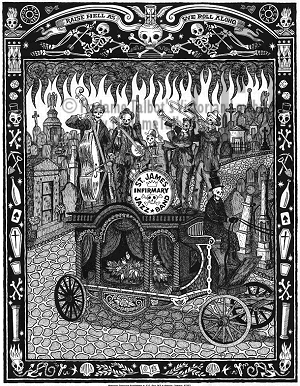
As you might guess, it’s a compilation of pre-war blues. The actual track you want is number three, Lucille Bogan’s Shave ’Em Dry. Play it an office with a strict language-code: get sacked. Those of you interested in old, old music might like to know that this site offers as many versions of Stagolee/Stackoleee as even I might care to hear. Plus there’s 121 versions of St James Infirmary Blues.
If Lucille Bogan was first, here’s a link to something new, though almost as blue. The video is censored but the missing words are still clear — and the contrast between performer and lyrical content is irresistibly charming.
http://www.myspace.com/jennyowenyoungs
While I’m about it, here are some other links to cheer your heart on this day of grey skies and crashing stocks.
1. Some extras for The Wire. Scroll down the page and find the prequels for Prop Joe, Omar and McNulty.
http://www.amazon.co.uk/Wire-Complete-HBO-Season-5/dp/B0016OZ9Y6/ref=sr_1_5?ie=UTF8&s=dvd&qid=1221570497&sr=8-5
An admission. I still find it impossible to believe that McNulty, the archetypal Baltimore Irish cop, is played by an Old Etonian Englishman who lives at Crouch End and who I’ve seen, with my own eyes, playing an upper class Edwardian at the National Theatre. I know he’s an actor and that’s what actors do — pretend to be other people in return for money. But I can’t imagine, say, Robert De Niro managing the same character switcheroo.
2. A little something for Harry Smith fans, from the Journal of the Institute for Astrophysics and the Hillbilly Blues.
http://www.celestialmonochord.org/2008/08/a-geography-of-the-anthology.html
3. And, finally, something for Bob Dylanistas. I helped out on Ace’s Theme Time Radio Hour compilation and got left with something of what hepcats of a certain age might call a Dylan jones.
http://www.dreamtimepodcast.com
As some of you will know, I’m writing a book on swearing. How we swear and, more interestingly, why. One thing I got to looking at was firsts. The first time in print, the first time on TV, the first time on record.
Here is a link to a download of what I reckon is a recorded first of what Allen Walker Read, the first great man of dirty words, called ‘the most disreputable of all English words — the colloquial verb and noun, universally known by speakers of English, designating the sex act.’ Read wrote his entire 1934 paper, An Obscenity Symbol, without using the actual word once and I’m keeping faith with the great man.
http://prewarblues.org/2008/06/introduction-to-the-blues-part-1
As you might guess, it’s a compilation of pre-war blues. The actual track you want is number three, Lucille Bogan’s Shave ’Em Dry. Play it an office with a strict language-code: get sacked. Those of you interested in old, old music might like to know that this site offers as many versions of Stagolee/Stackoleee as even I might care to hear. Plus there’s 121 versions of St James Infirmary Blues.

If Lucille Bogan was first, here’s a link to something new, though almost as blue. The video is censored but the missing words are still clear — and the contrast between performer and lyrical content is irresistibly charming.
http://www.myspace.com/jennyowenyoungs
While I’m about it, here are some other links to cheer your heart on this day of grey skies and crashing stocks.
1. Some extras for The Wire. Scroll down the page and find the prequels for Prop Joe, Omar and McNulty.
http://www.amazon.co.uk/Wire-Complete-HBO-Season-5/dp/B0016OZ9Y6/ref=sr_1_5?ie=UTF8&s=dvd&qid=1221570497&sr=8-5
An admission. I still find it impossible to believe that McNulty, the archetypal Baltimore Irish cop, is played by an Old Etonian Englishman who lives at Crouch End and who I’ve seen, with my own eyes, playing an upper class Edwardian at the National Theatre. I know he’s an actor and that’s what actors do — pretend to be other people in return for money. But I can’t imagine, say, Robert De Niro managing the same character switcheroo.


2. A little something for Harry Smith fans, from the Journal of the Institute for Astrophysics and the Hillbilly Blues.

http://www.celestialmonochord.org/2008/08/a-geography-of-the-anthology.html
3. And, finally, something for Bob Dylanistas. I helped out on Ace’s Theme Time Radio Hour compilation and got left with something of what hepcats of a certain age might call a Dylan jones.
http://www.dreamtimepodcast.com
Saturday, 13 September 2008
Jokes and their relation to my unconscious, part two
The second gag I remember from my psychology degree all those decades ago is the one about the hypothalamus. Regular readers will know that the first gag was about short-term memory capacity — one of three jokes or witticisms on the course that stuck with me because they helped me remember something significant.
For the one about the hypothalamus, I need to set the scene a little. In my memory it was in a lecture by the head of course, a professor of gathering years whose tutorials were enlivened with small glasses of sherry. Or so I’m told. He wasn’t my tutor. Not that I went to my own tutor’s tutorials either. But I did occasionally bump into him in the student bar and maybe have a chat about my work. Maybe.
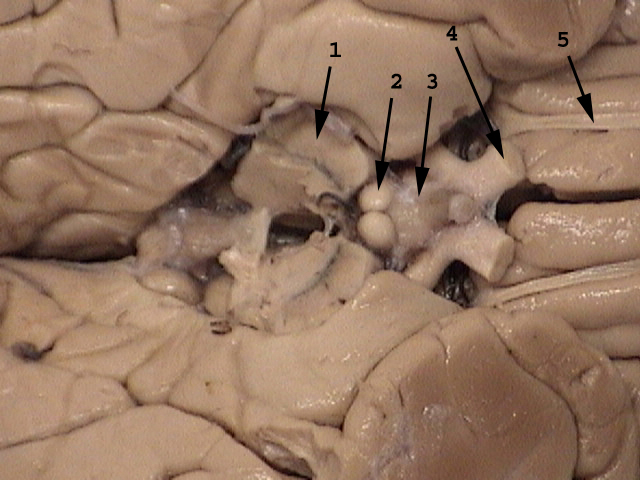
The hypothalamus? A small thing, about the size of an almond, that sits pretty much in the middle of your head.
The gag was about its function. What does the hypothalamus do? the professor asked rhetorically. He answered his own question: ‘It controls the four Fs.’ Which are? ‘Fear, flight, fight and . . . sexual behaviour.’
I could barely believe I’d heard it. An ageing, crustyish professor had just alluded to fucking, in a lecture. Some of the younger, less worldly girls looked genuinely shocked. Remember this is a third of a century ago. A different world, even in New Cross.
It’s not the whole story of the hypothalamus. It has other tasks, too. But the gag stuck those four in my memory, didn’t it. Infuckingdelibly.
The second gag I remember from my psychology degree all those decades ago is the one about the hypothalamus. Regular readers will know that the first gag was about short-term memory capacity — one of three jokes or witticisms on the course that stuck with me because they helped me remember something significant.

For the one about the hypothalamus, I need to set the scene a little. In my memory it was in a lecture by the head of course, a professor of gathering years whose tutorials were enlivened with small glasses of sherry. Or so I’m told. He wasn’t my tutor. Not that I went to my own tutor’s tutorials either. But I did occasionally bump into him in the student bar and maybe have a chat about my work. Maybe.

The hypothalamus? A small thing, about the size of an almond, that sits pretty much in the middle of your head.

The gag was about its function. What does the hypothalamus do? the professor asked rhetorically. He answered his own question: ‘It controls the four Fs.’ Which are? ‘Fear, flight, fight and . . . sexual behaviour.’

I could barely believe I’d heard it. An ageing, crustyish professor had just alluded to fucking, in a lecture. Some of the younger, less worldly girls looked genuinely shocked. Remember this is a third of a century ago. A different world, even in New Cross.

It’s not the whole story of the hypothalamus. It has other tasks, too. But the gag stuck those four in my memory, didn’t it. Infuckingdelibly.
Tuesday, 2 September 2008
Austen powers
So I haven’t posted for a while. So it’s been the summer, alright. So I was on a break from the course. Plus I got a bit raspberryed and could hardly walk for nearly a month.
The competition? The winning answer is in the comments on the Competition posting. It was Jane Austen. That’s right. I’ve never read a Jane Austen book. Scoop got it right. If he or she emails me with address details, I’ll get the prize together.
There’s also a comment by Maudie lamenting my non-reading of Jane Austen. I must say, though, I’m not yet persuaded by his/her argument that I should read Austen for her accurate portrayal of ‘the total tedium and frustration of women's lives’. That sounds more like a strong argument in favour of my non-reading of her.
The competition is really, I suppose, a variant on the after-dinner game called I’ve Never — a version of True Or False. You make a statement that starts ‘I’ve never . . .’ Read a Jane Austen book, in my case. Then the others have to guess if you’re lying or telling the truth.
I’ve played it. It’s very, very easy for it to turn socially awkward, though. Too often, people just don’t get it. They can’t figure out the level to pitch at. They say things like ‘I’ve never been to the moon’. Or ‘I’ve never eaten zebra’. Or ‘I’ve never been to Northampton’. Things that are impossible for anyone, things that are probably true for most people, things that you really couldn’t care whether they were true or false.
It works best with people you know well but not too well. My best line is ‘I’ve never been to Los Angeles’. Which is true. But, given my music writer history, no-one ever believes me. I’m not sure if I believe myself.
So I haven’t posted for a while. So it’s been the summer, alright. So I was on a break from the course. Plus I got a bit raspberryed and could hardly walk for nearly a month.

The competition? The winning answer is in the comments on the Competition posting. It was Jane Austen. That’s right. I’ve never read a Jane Austen book. Scoop got it right. If he or she emails me with address details, I’ll get the prize together.

There’s also a comment by Maudie lamenting my non-reading of Jane Austen. I must say, though, I’m not yet persuaded by his/her argument that I should read Austen for her accurate portrayal of ‘the total tedium and frustration of women's lives’. That sounds more like a strong argument in favour of my non-reading of her.


The competition is really, I suppose, a variant on the after-dinner game called I’ve Never — a version of True Or False. You make a statement that starts ‘I’ve never . . .’ Read a Jane Austen book, in my case. Then the others have to guess if you’re lying or telling the truth.
I’ve played it. It’s very, very easy for it to turn socially awkward, though. Too often, people just don’t get it. They can’t figure out the level to pitch at. They say things like ‘I’ve never been to the moon’. Or ‘I’ve never eaten zebra’. Or ‘I’ve never been to Northampton’. Things that are impossible for anyone, things that are probably true for most people, things that you really couldn’t care whether they were true or false.


It works best with people you know well but not too well. My best line is ‘I’ve never been to Los Angeles’. Which is true. But, given my music writer history, no-one ever believes me. I’m not sure if I believe myself.

Monday, 21 July 2008
Competition
It’s been pointed out to me, by Jane, that I never actually told you the name of the canonical English author whose works I have not read in their entirety.
My reasons were entirely dishonourable. I’m not sure I want to forego the many opportunities life gives me to comment on this author’s work — wittily, engagingly, originally, I hope,
Still, Jane was persistent and so I have decided to reveal the-name-of-the-author. Again, my reasons are entirely dishonourable.
I have no intrinsic problem with dissembling — what adult does or can? I don’t, I think, even particularly mind being thought of as a cad or even perhaps a liar — as long as people understand that my lying is straightforwardly self-serving, not the inconstancies of the merely forgetful or the destructive, wearisome inventions and projections of the unselfknowing fantasist. I just don’t like feeling the feeling that I get from feeling that some of you might feel that I’m a cad or liar.
So, I will tell you the-name-of-the-author I haven’t read. Or rather, things never being that simple, you will tell me who I haven’t read.
It’s a competition, with a prize. Post your answers as comments to this blog. I promise to play fair.
I think there are enough clues in the original posting so here they are again:
* I’ve seen the films and TV shows etc. So I know all the plots, themes, characters etc.
* I’ve read other books (and seen other movies and TV shows) from the same era.
* I know the history of the period — some of it anyway. I know what time dinner was served then, in which order courses were served and where the chairs were placed. I’ve read EP Thompson’s The Making Of The English Working Class. I’ve seen Sharpe on TV.
The prize? Jane suggested the author’s collected works. Fair enough. It’s a deal. (She did suggest, too, though, that the author was Ian McEwan. It’s not. Though I’m not sure I’ve read any of his books either, not even the one he ripped off from a Dirk Bogarde movie — see how easy it is to comment accurately and relevantly on the profoundly unread.)
It’s been pointed out to me, by Jane, that I never actually told you the name of the canonical English author whose works I have not read in their entirety.
My reasons were entirely dishonourable. I’m not sure I want to forego the many opportunities life gives me to comment on this author’s work — wittily, engagingly, originally, I hope,
Still, Jane was persistent and so I have decided to reveal the-name-of-the-author. Again, my reasons are entirely dishonourable.
I have no intrinsic problem with dissembling — what adult does or can? I don’t, I think, even particularly mind being thought of as a cad or even perhaps a liar — as long as people understand that my lying is straightforwardly self-serving, not the inconstancies of the merely forgetful or the destructive, wearisome inventions and projections of the unselfknowing fantasist. I just don’t like feeling the feeling that I get from feeling that some of you might feel that I’m a cad or liar.
So, I will tell you the-name-of-the-author I haven’t read. Or rather, things never being that simple, you will tell me who I haven’t read.
It’s a competition, with a prize. Post your answers as comments to this blog. I promise to play fair.
I think there are enough clues in the original posting so here they are again:
* I’ve seen the films and TV shows etc. So I know all the plots, themes, characters etc.
* I’ve read other books (and seen other movies and TV shows) from the same era.
* I know the history of the period — some of it anyway. I know what time dinner was served then, in which order courses were served and where the chairs were placed. I’ve read EP Thompson’s The Making Of The English Working Class. I’ve seen Sharpe on TV.
The prize? Jane suggested the author’s collected works. Fair enough. It’s a deal. (She did suggest, too, though, that the author was Ian McEwan. It’s not. Though I’m not sure I’ve read any of his books either, not even the one he ripped off from a Dirk Bogarde movie — see how easy it is to comment accurately and relevantly on the profoundly unread.)
Thursday, 10 July 2008
Tunnel vision
I’ve been in a tunnel. I did my exams, the first exams for about a third of a century. Three exams, nine papers in all, 45 minutes for each, hand-written.
All but one of my guesses about what would come up were right, even the one I wished I’d been wrong about. I predicted the Lacan and other Frenchman paper would offer a Hobson’s choice between a question on the one seminar I missed (‘The unconscious is structured like a language’ — discuss) and one I wished I had (Andre Green’s dead mother — what do you reckon?).
I went to an Andre Green lecture last autumn, at the Institute of Psychoanalysis, in Shirland Road, just down the road from what was, a lifetime or two ago, the Charlie Pigdog club, where I first saw Joe Strummer strum and drang, as a 101er.
I’ve no idea how long Green’s lecture lasted. A month? I phased in and out so it could have been longer. I’m told it was in English but my ears and brain indicated otherwise. I practised what analysts refer to as free-floating attention. I heard him say something about Melanie Klein. She died in 1960. That didn’t stop him being angry about her and all her works. I also think him I heard him say something about Lacan — dead these past 27 years. Lacan took a couple of sharp Green jabs to the brain-box, too.
It was the kind of evening that would confirm all the most negative views of psychoanalysis and psychoanalytic thought. It was tedious, tendentious, schismatic, pompous, drowning in its own jargon and delivered in a stage-foreigner accent. At best, I guess it was a kind of Camp Lejeune moment for prospective analysts. If you can survive an evening with Andre Green, after that anything life may throw at you will seem like a walk in the park.
So I couldn’t answer the Andre Green question — even though I knew the answer, in outline anyway. I just couldn’t forgive him for that decade in Shirland Road. He’s an old man, I know. I’ve read a really interesting dialogue between him and Gregorio Kohon, a north London Argentinian analyst. In it, Green is clear, insightful, bright, original, engaging. I’ve also read his own writing. It’s not. True, it’s not as hilariously terrible as Lacan’s but then what is?
Which left me having to answer a question on something I understood — I think — but had only ever read about. I can only hope that what I wrote wasn’t too stupid.
PS Green’s dead mother thing? His own mother did die when he was young but it’s not about that. It’s about deadened mothers placing that deadening in a child — who then grows up to seek out and recreate that deadening in other relationships. A kind of succulent presence of absence.
Still, that’s about all I can remember about it. And if that’s all I wrote, I certainly would have failed.
PPS Before posting this blog, I emailed it to my wife (in the next room). Here’s what she replied: ‘It made me laugh. But, do you want to make an enemy?’
Good question. What would it be like to have Andre Green as an enemy? I’ll tackle it in my next posting.
Linkstuff
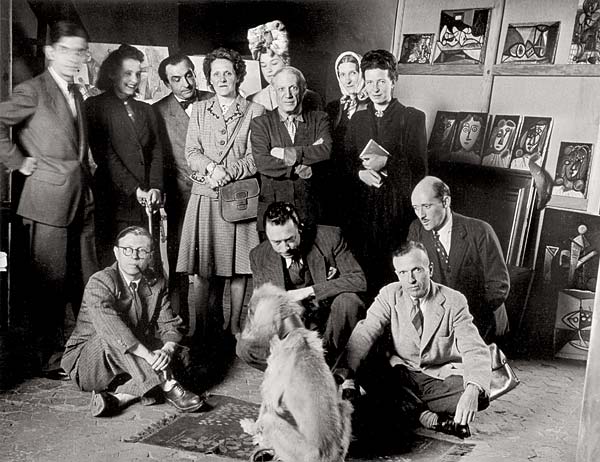
This Lacan hotlink takes you to a photograph of Lacan with — deep breath — Pablo Picasso, Simone de Beauvoir, Jean-Paul Sartre, Albert Camus (he's the one petting the dog). Which one's Lacan? I'll tell you next time.
This Lacan hotlink takes you to a painting. Why? I'll tell you that next time, too.
I’ve been in a tunnel. I did my exams, the first exams for about a third of a century. Three exams, nine papers in all, 45 minutes for each, hand-written.
All but one of my guesses about what would come up were right, even the one I wished I’d been wrong about. I predicted the Lacan and other Frenchman paper would offer a Hobson’s choice between a question on the one seminar I missed (‘The unconscious is structured like a language’ — discuss) and one I wished I had (Andre Green’s dead mother — what do you reckon?).


I went to an Andre Green lecture last autumn, at the Institute of Psychoanalysis, in Shirland Road, just down the road from what was, a lifetime or two ago, the Charlie Pigdog club, where I first saw Joe Strummer strum and drang, as a 101er.


I’ve no idea how long Green’s lecture lasted. A month? I phased in and out so it could have been longer. I’m told it was in English but my ears and brain indicated otherwise. I practised what analysts refer to as free-floating attention. I heard him say something about Melanie Klein. She died in 1960. That didn’t stop him being angry about her and all her works. I also think him I heard him say something about Lacan — dead these past 27 years. Lacan took a couple of sharp Green jabs to the brain-box, too.


It was the kind of evening that would confirm all the most negative views of psychoanalysis and psychoanalytic thought. It was tedious, tendentious, schismatic, pompous, drowning in its own jargon and delivered in a stage-foreigner accent. At best, I guess it was a kind of Camp Lejeune moment for prospective analysts. If you can survive an evening with Andre Green, after that anything life may throw at you will seem like a walk in the park.

So I couldn’t answer the Andre Green question — even though I knew the answer, in outline anyway. I just couldn’t forgive him for that decade in Shirland Road. He’s an old man, I know. I’ve read a really interesting dialogue between him and Gregorio Kohon, a north London Argentinian analyst. In it, Green is clear, insightful, bright, original, engaging. I’ve also read his own writing. It’s not. True, it’s not as hilariously terrible as Lacan’s but then what is?

Which left me having to answer a question on something I understood — I think — but had only ever read about. I can only hope that what I wrote wasn’t too stupid.
PS Green’s dead mother thing? His own mother did die when he was young but it’s not about that. It’s about deadened mothers placing that deadening in a child — who then grows up to seek out and recreate that deadening in other relationships. A kind of succulent presence of absence.
Still, that’s about all I can remember about it. And if that’s all I wrote, I certainly would have failed.
PPS Before posting this blog, I emailed it to my wife (in the next room). Here’s what she replied: ‘It made me laugh. But, do you want to make an enemy?’
Good question. What would it be like to have Andre Green as an enemy? I’ll tackle it in my next posting.
Linkstuff
This Lacan hotlink takes you to a photograph of Lacan with — deep breath — Pablo Picasso, Simone de Beauvoir, Jean-Paul Sartre, Albert Camus (he's the one petting the dog). Which one's Lacan? I'll tell you next time.
This Lacan hotlink takes you to a painting. Why? I'll tell you that next time, too.
Subscribe to:
Posts (Atom)