Friday, 10 February 2012

And the third Christmas catch-up

3 Rudolph, The Red-Nosed Reindeer Mambo Billy May

Rudolph The Red-Nose Reindeer is a rare — possibly unique — example of a toy savings bank (with light-up nose) being turned into a hit song. 

The Rudolph franchise started life as a story in the mail-order brochure for a Chicago department store, written by Robert L May. He later said that its ugly duckling tale was basically autobiographical - he was 'a scrawny kid, not accepted by my peers'.

The booklet was so successful with America's children that by the late 1940s, there was a whole Rudolph merchandising industry - stuffed toys, watches, toy film projectors, underwear and that savings bank with a nose that lit up each time a coin was dropped into it. (Oh, how I want one. Oh, how the Greeks could have done with one.)

Not that this helped May. As an employee, he didn’t own the Rudolph copyright. He was also in bad financial shape, wrecked by the medical bills for his dying wife. Then, as a kind gesture, his employer’s gave him the copyright, Rudolph became a song and May’s life and bank balance were transformed.
Rudolph was turned into a song by May's New York Jewish brother-in-law Johnny Marks. Described as ‘arrogant’, Marks all but threatened to break up the family if May didn’t let him — rather than the other songwriters who were chasing him — write the song. (He broke up the family soon enough anyway, divorcing May’s sister not long after.)

Something of a Christmas specialist, Marks also wrote I Heard The Bells On Christmas Day for Bing Crosby, A Holly Jolly Christmas for Burl Ives and Brenda Lee's Rockin' Around The Christmas Tree — while on the beach. Rudolph was published by St Nicholas Music Publishing Co — not of the north pole but 146 W54th St, NY NY.

In writing the lyrics — in April — Marks completely recast the story in May’s brochure. That original Rudolph didn’t always work for Santa, didn’t even live at the north pole and, though he did have a shiny nose and his horny deer pals did tease him about it, he wasn’t ashamed of it or anything. He lived in a regular reidndeer village. Santa found him by chance. When delivering Rudolph’s Christmas presents, he noticed a glow coming from the reindeer’s room — his red nose. Having had a succession of traffic accidents — in the fog, generally — Santa realised that Rudolph, or at least his nose, would be a solution to his collision problem. And the ever-rising insurance premiums for his sleigh, too. So he hired Rudolph as his lead reindeer, letting his red nose increase the sleigh’s night-time visibility.

Marks first offered Rudolph to that other Christmas specialist Bing Crosby. But he turned it down, as did Dinah Shore. So he took it to Gene Autry (see above). Autry didn’t like it either. But his wife Ina May did. So he recorded it, then debuted it live at Madison Square Gardens, in late 1949. It sold two million. For a long time, it was the second best all-time Christmas seller — to Bing’s White Christmas.


It has since been recorded by 500 performers. I haven’t got all of them. It just feels that way. As I discovered when I looked through the Rudolphs in my Christmas collection — a couple of boxes of Xmas CDs — Really Useful Boxes, of course — plus 750 Xmas tracks on my iTunes. I have at least thirty versions of Rudolph, by Dean Martin to Dolly Parton, Fats Domino to the Chipmunks. I’ve even got even a whole Rudolph CD, a German one, with sleeve notes and a great picture of Gene Autry with Rudolph himself. Well, maybe it’s not actually the reindeer but a man dressed up as one — the front legs do look about ten times as thick as the back ones and the facial expression does look decidedly static.

Then there are the other Rudolph songs. Chuck Berry’s fabulous Run Rudolph Run, of course. But also Johnny Horton’s They Shined Up Rudolph’s Nose and Homer & Jethro’s Randolph, The Flat-Nosed Reindeer.

Billy May was Frank Sinatra’s great arranger — see, hear, worship the Come Fly With Me album. He also had a reputation for creating parodies: he worked closely with the master musical parodist Stan Freberg. I suspect May and his band are not taking this with exactly sepulchral seriousness. I do like the idea of tropically grooving reindeer — and a version with a shout-out to Kriss Kringle.

PS1 There are eight reindeers pulling Santa’s sleigh: Dasher, Dancer, Prancer, Vixen, Comet, Cupid, Donder (sic), Blitzen. So where did Rudolph fit in the team? If Santa stuck with a four by two line-up, one of the other reindeers would have had to made way for him. If Santa made it a nine-deer team, Rudolph would have been stuck out front by himself.

PS2 Being really pedantic, given that a red light is a generally the signal for the rear end of a moving vehicle, shouldn’t Rudolph been on the back, pointing the other way? If he was on the front, other sleighs etc would probably have decided his shiny red nose indicated the back of Santa’s sleigh. Which could well have ended up with their running into it and Rudolph taking the first hit. Which wouldn’t have done much for Santa’s accident rate or insurance premiums. Rudolph’s health and welfare, either. Remind me, please, next time I write to Santa that I should raise these issues with him.

PS3 See below for more anomalous reindeers.

Next up, tomorrow Santa hits on girl, boyfriend hits back

Thursday, 9 February 2012

Xmas number two . . .

2 Frosty The Snowman Jan Garber Orchestra

A kind of sequel to the original version of the following track. In 1949, Gene Autry — the movie cowboy known as ‘the tuneful cowpuncher’ — had a hit with Rudolph The Red-Nosed Reindeer (see below). Frosty The Snowman was that song’s 1950 follow-up. It was written, as a children’s song, by Steve Nelson (lyrics) and Jack Rollins (music), professional songwriters who bounced from Tin Pan Alley to the country music world, successfully if not spectacularly.

Nelson was a New Yorker. As a younger man, he wrote with Fred Coots, author of Santa Claus Is Coming To Town. Later in life, he was an early inductee in the Nashville Songwriters Hall of Fame.The year before Frosty, he had a seasonal hit with country star Eddy Arnold, Will Santy Come To Shanty Town? He and Rollins also wrote the official song of the US Forestry Department, Smokey The Bear.

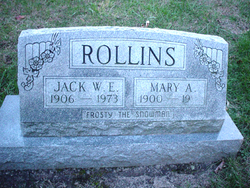
Frosty was their big hit. Rollins’ gravestone, in his hometown, Keyser, West Virginia, even has ‘Frosty The Snowman’ chiselled into it — no more than that, no explanation, no context, just the name of the song that paid for the stone and is still providing for his descendants.

The best known version, in the US anyway, is by Jimmy Durante. There are many, many others, though. Somehow, all of them manage to sustain the willed innocence of the writers’ original intentions — even the ones created by the decidedly unworldly. Phil Spector’s relentless production for the Ronettes, for example, or Leon Redbone and Dr John’s typically sly reading of it.

This version, in which the vocals don’t come in till half way through, is by Jan Garber, a mid-century bandleader from Philadelphia, known for making the sweetest of sweet big band music. ‘Lookie, lookie, here comes cookie’ was a typical line from one of his songs. You can’t hear his Frosty without thinking of white ties and Martinis — or Bob Hoskins in Dennis Potter’s Pennies From Heaven. He was billed as ‘Idol of the Airlanes’ — I guess that referred to radio rather than powered flight. It is — probably — a BBC radio broadcast from December 1954.

Next up, tomorrow Rudolph: a dying wife, an unpleasant brother-in-law and Sinatra's favourite arranger

Wednesday, 8 February 2012

Xmas 2011 sleevenotes

The very last act of last Christmas . . .

As I do most years, I put together a Christmas music compilation. I put this year's on Dropbox and made it available to everyone on my blogmail list. At the same time I promised some sleevenotes. Somehow, life intervened and I didn't post what I'd got and I decided a little more detail would be good — especially as I made you wait so long. Then I realised it wouldn't fit into one blogpost — or at least it would make an incredibly long one. So I decided to post one track note a day. Then I realised that some of them needed a little work. So I started fixing them. Anyway, you get the idea.

Finally, though, it's good to view. I will be posting one track note a day, over the next twenty days. You can still download the tracks from my Dropbox if I sent you an email letting you know about the compilation. If you haven't got that or have lost it or have just come to this blog for the first time, email me or post a comment and I'll send you a link.

Oh, one more thing. Where it says 'see below' or somesuch, it is referring to a future post.

Here goes the first of twenty . . .

1 Silver Bells Doris Day

Not as old as you’d think. It debuted in 1950, sung by Bob Hope and Marilyn Maxwell in The Lemon Drop Kid, a crime comedy. Like Guys and Dolls, it’s from a Damon Runyon story.

Nor was it much of a hit. The first time it charted in the UK was with the Terry Wogan and Aled Jones version, in 2009. That was a charity record. Still, you ask, what did a charity do to deserve that?

It was written by Jay Livingston and Ray Evans, both Jewish — like so many of the most famous Christmas song makers. Irving Berlin and Mel Torme, naturally, but also Johnny Marks (see below) and Bob Dylan (see below). And, of course, Michael Carr, author of The Little Boy That Christmas Forgot, with its final lyrical flourish: ‘I’m so sorry for that laddy, he hasn’t got his daddy’. Carr, ne Maurice Cohen of Leeds, grew up in Dublin, was the son of boxer Cockney Cohen and also wrote South Of The Border (Down Mexico Way).

Livingston and Evans won three Oscars. For Buttons and Bows, in Bob Hope’s 1948 comedy Paleface — that’s the movie with the ‘leans to the left, shoots to the right’ gag. For Mona Lisa, sung by Nat King Cole in the completely forgotten 1950 Alan Ladd spy thriller, Captain Carey USA. And for Que Sera, Sera, which was debuted by Doris Day in Hitchcock’s 1956 remake of The Man Who Knew Too Much).

Doris Day liked this song so much she recorded it twice, in 1950, and again as the lead track on 1964’s The Doris Day Christmas Album. This is the earlier version.

Next up Frosty The Snowman

Friday, 20 January 2012

Flash, bang, wallop . . .

Bang goes Kodak. Two thoughts etc . . .

One Think Cunard and White Star Line. With the early 20th century success of their Atlantic passenger lines, they thought they were in the boat business. When actually of course they were in the people-moving business. So when long-distance flight became possible, they kept on with their ships and, eventually, disappeared as businesses.

Two I was actually looking to buy some printers yesterday. One, to trial. Maybe three or four more if that one did the job. So I did a little online research. Conscious that the real cost of printing - particularly if you need, as I do in this case, to print a lot of photos - is the ink, I was taken by Kodak's regular boast that its inks were cheaper than anyone else's. So I checked out all the reviews I could find. 

The Kodak printer of choice seemed to be the one called Hero. (Yes, I know I should have set my own alarm bells then but I didn't.) I scanned the reviews and they seemed to be pretty damn positive. So I decided I might well buy one. I went to Amazon to start the process. Then I saw one bad review and it said: actually, you know what the worst thing about this printer is, that it is really not very good at printing photos. So I went back over the other reviews and I saw lines like: well, yes, it is really good but the photo-printing is not what you hope for, particularly from Kodak etc etc

So I cancelled the order and will switch to Canon. Let's see how that goes.

Which is an object lesson in company decline and failure. As Xerox developed the personal computer (mouse, icon interface etc etc), then let Apple steal it, so Kodak developed the digital camera then hid it, in case it cannibabilised its own business. Instead, it got eaten by the Japanese. 

So, I guess, the moral is this. It's better to eat your own leg and survive than let someone else eat it for you. I'm sure it says that somewhere in the Bible or Koran.

Actually, one more thought. People are always saying Britain should do more manufacture. I'm not sure about that. Manufacturing was a blip in the national history. Mostly, we've been traders. An obvious choice given our geographical position. And traders are, by nature, wide boys (and girls). They go where the action is, shamelessly. Trading is never out of fashion. It's subject to technological change, true. But, at its best, most purest, it is quite uninterested in either the object being traded or the method of trade. Cash is the king in this realm. Always. So . . . while I'm not exactly standing up for bankers and incomprehensibly complex derivatives trading, I do think there is a question here somewhere. And another one: if there is not something in what I'm saying, why does our pantheon of national heroes include Francis Drake, Arthur Daley and Del Boy Trotter?

PS I will put up the sleeve notes for the Xmas compilation. I decided to make them longer than I first intended. I'll be posting them one a day, starting early next week.

Friday, 6 January 2012

Eve Arnold (1912-2012) RIP

The great Magnum photographer has died just short of her 100th birthday. Here is an article I wrote about her a couple of years ago.

PP_May10_EveArnold
PS If you want to read more of my writings, on photography in particular, there are more in scribd. Try here. I'll be uploading more in the near future, including old pieces on a variety of subjects — though not music. For my music pieces, you need to go to rocksbackpages.com.

Tomorrow Those promised Xmas music sleevenotes

Thursday, 5 January 2012

On the twelfth day of christmas . . .

Family. I'll be untypically emotive. Years ago now, I remember reading someone who, when asked which was more important, health or wealth, said: neither, it's family, because when you're sick or broke at least there is support around you. 

I'd add friends but, basically, it's true, isn't it. Few of us prosper without family and friends. In a meaningful sense, that is – which does include financially. Unhappiness is not just a product of not making your way in the world, it's also a reason. Unfair, I know, but . . .

I've been blessed, I guess. I have family and I have friends. Quite a few people occupy both categories. So . . . Xmas and its twelve days?

Well, over the break I read a piece by Ian Jack in the The Guardian in which he pointed out that London over Xmas has now become the kind of family place it used to be. Leaving aside the fact that in my area the exodus to second houses is so notable that you could have a half hour kip in the middle of the road, that is certainly true. Further, he added that the break has become a kind of retreat where families get to spend time with each other, across the generation. Some use the opportunity to fight and relive old wounds, I guess. But not everyone.

In which light, I can report that, over the break, my time-spent included . . .

* family outing to Billy Elliot matinee (young cousin is in the cast)

* Xmas dinner (cooked with my daughter) for a baker's dozen — on Boxing Day, it's a family tradition, leaving Xmas Day itself free for, well, nothing

* dinner with a couple of friends in Cornwall, one of whom I probably won't see for a while as she's heading off east to interior design junks (honestly)

* not one but two football matches with my younger son

* takeaway curry round our table for a dozen family or so

* a formal sit-down meal at a cousin's which I missed because of a bad cold - but got to eat takeaway the next morning

* a nuclear family meal on Xmas Eve

* giving phone cooking advice to a friend when the leg of lamb (an odd Xmas dinner choice, I know, but tradition isn't what it was, clearly) got left in the freezer by mistake and dinner was due in four hours - they say it was the best lamb they ever ate so maybe I stumbled on a new recipe

* brunch with cousins at their house in the far reaches of the known world (Bury St Edmunds)

* a friend's birthday party in his brother's pub

* a New Year's Day party at a friend's

* a completely private New Year's Eve – another family tradition

* picking up my elder son and dropping him at the airport - and, because of Luton's parsimony, having to pay a pound each time for the privilege

* more, probably, that I've forgotten about

And so that's your lot, folks. 

Tomorrow (or perhaps the day after), I'll post the sleevenotes for my Xmas music selection.

Wednesday, 4 January 2012

On the eleventh day of Christmas . . .

A walk along the Thames at Mednenham. There's a long, flat stretch between an old, now disused ferry point and the locks below Henley. It curves slowly. 

I've walked it in sun and gloom and cold – though not in the rain, it's true. I've shared the early morning with caravanners and watched a stunt flier practise in a sharp blue sky, rolling and tumbling. I've done the whole walk without seeing anyone else. And I've walked back through the fields when you can't see past the crops and when the earth has been cleared for the winter.

It's a completely humanized landscape. There is no trace of what might have been there before our ancient ancestors moved in. But still, in the way the whole of the Thames Valley does, it has a deep, sharp sense of, well, nature. Not the real thing, of course, but certainly the 'real' thing – and that, being a human, is what I'm after. Reality is for animals. 'Reality' is what us princes want and cherish.

PS It's also possible that my thoughts and feelings are coloured and shaped by the fact that my father spent the war based at Danesfield House – which still forms an impenetrable riverside barrier at one end of the walk. It was the base for aerial reconnaissance intelligence. He looked at photographs, in pairs, and turned them into maps. I should think my parents walked this walk, a decade and more before I was born. When the fliers would have been practising for a different kind of show.

Till tomorrow . . .