

 Posts
Posts


Psychoanalysis, a slight return
To Exhibition Road on a Friday afternoon, in mid-October.
I was invited so I went — to a preview of a show at the Science Museum. Entitled Psychoanalysis: The Unconscious In Everyday Life, it is small, tenderly curated and intelligent.
It’s just off the main entrance, up a flight of steps. The light is low — giving a sense of the couch and the consulting room. A fine and private place.
The show’s title gives little indication of the contents or approach, though. It is, in fact, a collection of objects which exemplify and dramatise psychoanalytic thought and concepts. So there is stuff from Freud’s room — predictable in essence but given depth by the accompanying exploration of their significance by psychoanalyst David Bell.
An interruption to myself. David Bell is a funny little person, with a beard which perhaps contains a nest or two. He once nearly ran me over, on his bike, as he emerged, inattentively, from cycling through Waterlow Park. He certainly, absent-mindedly, didn’t see me. He always, always, always wears a sleeveless sweater, whatever the weather — which, of course, makes him look like an overgrown schoolboy from the 1950s. Which, I suppose . . .
Anyway, he was scurrying around the show at the preview, explaining things and herding people the way he does. He is also a wonderful speaker, a true believer whose views of psychoanalysis — as the central organising subject of human thought, effectively — are made acceptable — if not true or entirely believable — by his wit and eloquence. Though not charm. I doubt if anyone has ever accused him of that.
Other stuff in the show includes toys — as used to analyse children, by Margaret Lowenfeld and Betty Joseph. Basic idea: children aren’t capable of talking coherently about their inner life — ie via free association — so analyst gets them to play with toys and then analyse the deeper meaning of their play.
There are also drawings made by Melanie Klein’s young boy patient Richard. Pictures of Spitfires and Messerschmidts shooting and burning — it was war time. There are Winnicott’s squiggle pictures. Basic idea: analyst draws squiggly line on paper, child extends it, analyst explains meaning of child’s squiggle. (Put like that, it can sound daft. But I’m not sure it is. In fact, I’m sure it’s not. If we can’t find meaning and emotion in the shape and rhythm of a line, we would never visit art galleries and Picasso would have been out of work straight away.)
And there art works. One is directly sexual. Of course it is. It’s by Tim Noble and Sue Webster — YBAs, famous for their rubbish pieces (description, not judgment). There is an electronic piece. Of course, there is. It’s Arnold Dreyblatt’s The Wunderblock — a tablet screen which displays a paper of Freud’s which compared the way memory works to the child’s toy known, in German, as a Wunderblock. In English, a mystic writing pad — you write on it, you see what you’ve written, you lift the wax sheet you’ve written and it’s all gone. On Dreyblatt’s the text is electronic, speeding and drifting past, constantly rearranging and re-emphasising itself. Unfortunately, it’s the one thing in the show which isn’t well described or explained.
There is also a gorgeous Grayson Perry pot — his wife is, of course, an analytically inclined therapist. There is a ‘Cabinet of wish fulfilment’ — votives and pieces of tattooed skin from the Science Museum’s own collection. (You can imagine the justifying explanation by the curator who collected them, can’t you. Come on, he or she would have said, there’s bound to be a show someday when we’ll need a few ancient small carved penises and hands. Trust me, there will.)
What’s most intriguing about the show, I guess, is its concreteness. Psychoanalysis is the most cerebral — or, perhaps, most mental — of disciplines. It’s about words — silences and gesture, too, but mostly words. This show gives it, I suppose, body.
And, having spent an intrigued and distracted hour at the show, I wandered up towards Hyde Park for the next of the day’s distractions.
But that’ll have to wait for the next posting. Tomorrow. Probably.
Showing posts with label Penises. Show all posts
Showing posts with label Penises. Show all posts
Friday, 22 October 2010


Sunday, 27 June 2010
Six degrees of osteopathy
A follow-up to my last posting. Well, the first of two follow-ups actually. The next I’ll post tomorrow.
I don’t — as regular readers will surely agree — generally do personal health stuff etc here. I did, though, mention that I had a bad knee last week. Not that you probably care — I certainly wouldn’t if it was you — but I no longer have a bad knee.
For which transformation, I have one person to thank. Which is, frankly, only of interest to me and them. But I thought I’d share with you the (brief) story of how I came to find this person . . .
Garry Trainer, that is. He’s an osteopath, based around the corner from me, in Primrose Hill. A burly, middle-aged, twice-married Kiwi who likes a drink and has just taken up surfing again, he has my deep thanks for fixing my knee.
An hour or so on Monday lunchtime. A few needles — he does acupuncture, too. (I’m inherently sceptical but also acceptingly pragmatical.) A little back bending — no crackings, though. A hefty massage of the back and knee tendons.
Right away, I felt better — improved, that is. By the next day, I was limpless. So, for what it’s worth, this free add.
But I also thought I’d share with you how I came to put my body in Garry’s un-tender care in the first place. And how it connects to my (relative) closeness to Adolf Hitler's hand and Oscar Wilde’s penis.
Garry first, though. About two years ago, in the wake of the exams I sat for the first year of my course, my back got really bad. The worst I ever had. I couldn’t walk. I ended up not seeing the local shops — not much more than a hundred metres away — for nearly a month. I couldn’t get from one floor to the next in under five minutes.
I knew I had to get something done. I’d been to an osteopath years before and she’d done the trick. But she’d moved away.
Two new ones came recommended, both by people I respected. Jonathan Le Bon and Garry Trainer. I checked both their websites. I discovered that Le Bon was brother to Simon Le Bon, the popster, while Garry had had his hands on Gwyneth Paltrow. Well, which one would you have chosen to get closer to?
Me and Adolf Hitler? Well, I’ve shaken hands with not just one but two people who, as children, had their hair ruffled by him.
Oscar Wilde’s penis? I’ve shaken the hand of a man who, in pre-war Brighton, had his hair ruffled* by Bosie, Oscar Wilde’s boyfriend, nemesis and, I should guess, penis-handler.
I can also get to the Pope in one. Freud? Loads via London analysts, of course — particularly via Anna Freud. But also via an American cousin who is related to Joseph Paneth — a close friend of Freud’s who lent him the money for his wedding and who died of TB, at 32. Paneth was also a pal of Nietzche’s.
Hence, my personal variant on the classic parlour game. I call it Six Degrees of Separation Anxiety. It's just the same as Six Degrees of Kevin Bacon — only the link (or end-person) should, in some way, be odd or unsettling. I welcome all contributions to my game. Put your own links to the famous on the comments page.
* Hair-ruffling children was once a big thing in Britain — Germany, too, it seems. I was certainly a victim in my own childhood. Fears of hordes of marauding child-abusers seem to have put paid to hair-ruffling — which seems to have gone the way of spats and . . . Gordon Brown. (I can do him in one, too.)
Today, I am mostly listening to . . . Jackie DeShannon (and Jack Nitzche — no relation.)
Pins and begins
Nonchalant and want
An original demo
You’ve got to live for yourself — and nobody else
Next up The other follow-up — something Maggie Alderson didn’t mention in Cambridge.
A follow-up to my last posting. Well, the first of two follow-ups actually. The next I’ll post tomorrow.
I don’t — as regular readers will surely agree — generally do personal health stuff etc here. I did, though, mention that I had a bad knee last week. Not that you probably care — I certainly wouldn’t if it was you — but I no longer have a bad knee.
For which transformation, I have one person to thank. Which is, frankly, only of interest to me and them. But I thought I’d share with you the (brief) story of how I came to find this person . . .
Garry Trainer, that is. He’s an osteopath, based around the corner from me, in Primrose Hill. A burly, middle-aged, twice-married Kiwi who likes a drink and has just taken up surfing again, he has my deep thanks for fixing my knee.
An hour or so on Monday lunchtime. A few needles — he does acupuncture, too. (I’m inherently sceptical but also acceptingly pragmatical.) A little back bending — no crackings, though. A hefty massage of the back and knee tendons.
Right away, I felt better — improved, that is. By the next day, I was limpless. So, for what it’s worth, this free add.
But I also thought I’d share with you how I came to put my body in Garry’s un-tender care in the first place. And how it connects to my (relative) closeness to Adolf Hitler's hand and Oscar Wilde’s penis.
Garry first, though. About two years ago, in the wake of the exams I sat for the first year of my course, my back got really bad. The worst I ever had. I couldn’t walk. I ended up not seeing the local shops — not much more than a hundred metres away — for nearly a month. I couldn’t get from one floor to the next in under five minutes.
I knew I had to get something done. I’d been to an osteopath years before and she’d done the trick. But she’d moved away.
Two new ones came recommended, both by people I respected. Jonathan Le Bon and Garry Trainer. I checked both their websites. I discovered that Le Bon was brother to Simon Le Bon, the popster, while Garry had had his hands on Gwyneth Paltrow. Well, which one would you have chosen to get closer to?
Me and Adolf Hitler? Well, I’ve shaken hands with not just one but two people who, as children, had their hair ruffled by him.
Oscar Wilde’s penis? I’ve shaken the hand of a man who, in pre-war Brighton, had his hair ruffled* by Bosie, Oscar Wilde’s boyfriend, nemesis and, I should guess, penis-handler.
I can also get to the Pope in one. Freud? Loads via London analysts, of course — particularly via Anna Freud. But also via an American cousin who is related to Joseph Paneth — a close friend of Freud’s who lent him the money for his wedding and who died of TB, at 32. Paneth was also a pal of Nietzche’s.
Hence, my personal variant on the classic parlour game. I call it Six Degrees of Separation Anxiety. It's just the same as Six Degrees of Kevin Bacon — only the link (or end-person) should, in some way, be odd or unsettling. I welcome all contributions to my game. Put your own links to the famous on the comments page.
* Hair-ruffling children was once a big thing in Britain — Germany, too, it seems. I was certainly a victim in my own childhood. Fears of hordes of marauding child-abusers seem to have put paid to hair-ruffling — which seems to have gone the way of spats and . . . Gordon Brown. (I can do him in one, too.)
Today, I am mostly listening to . . . Jackie DeShannon (and Jack Nitzche — no relation.)
Pins and begins
Nonchalant and want
An original demo
You’ve got to live for yourself — and nobody else
Next up The other follow-up — something Maggie Alderson didn’t mention in Cambridge.
Sunday, 14 June 2009
I have seen the future and it’s . . . asparagus
A couple of weeks back, I went to the last game of the season at Arsenal. They played Stoke. They won easily. The man next to me chanted at the Stoke fans: we pay your fucking benefits, we pay your fucking benefits.
At half-time, I went to the loo. As I walked in, I was hit by a really strong smell. Not piss. Not shit. Not unpleasant but not pleasant either. For a moment, I couldn’t place it. Then I could. It was asparagus-scented piss. Someone had obviously just had it for lunch.
Forget rants about prawn-sandwich eating fans, that just displayed the shallowness of Roy Keane’s cultural horizons. He hadn’t even noticed that prawn sandwiches have been the cheap option in supermarkets for a decade at least. (Then football players, like pop stars, are so cossetted that they often don’t even know you have to actually buy plane tickets and need to remember to take your passport with you.)
No, asparagus-consumption is the new measure of the new football fans. Maybe they could open a farmer’s market at the ground on match days. Maybe that man next to me could start chanting: you don’t even like asparagus, you don’t even like asparagus.
Next up I have seen the future and it eats shoots and leaves
A couple of weeks back, I went to the last game of the season at Arsenal. They played Stoke. They won easily. The man next to me chanted at the Stoke fans: we pay your fucking benefits, we pay your fucking benefits.


At half-time, I went to the loo. As I walked in, I was hit by a really strong smell. Not piss. Not shit. Not unpleasant but not pleasant either. For a moment, I couldn’t place it. Then I could. It was asparagus-scented piss. Someone had obviously just had it for lunch.


Forget rants about prawn-sandwich eating fans, that just displayed the shallowness of Roy Keane’s cultural horizons. He hadn’t even noticed that prawn sandwiches have been the cheap option in supermarkets for a decade at least. (Then football players, like pop stars, are so cossetted that they often don’t even know you have to actually buy plane tickets and need to remember to take your passport with you.)
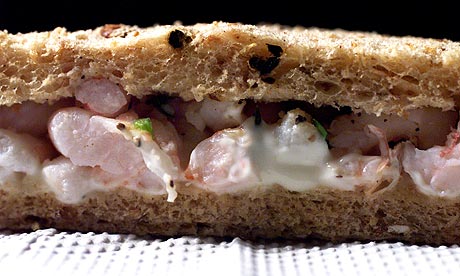
No, asparagus-consumption is the new measure of the new football fans. Maybe they could open a farmer’s market at the ground on match days. Maybe that man next to me could start chanting: you don’t even like asparagus, you don’t even like asparagus.

Next up I have seen the future and it eats shoots and leaves

Monday, 7 January 2008
So what is theoretical psychoanalytic studies anyway? (Part two)
The short — and clever dick — response to that question is, of course: if I knew the answer, there’d be no point in doing a course on it. Also, that even if I knew (or rather, thought that I knew) the answer, I should imagine (or rather, hope) that I’ll have a quite different idea by the end of the course. If I don’t, I’ll have rather wasted my time.
So, no, I can’t really say exactly what theoretical psychoanalytic studies is. But I can pass on two or three things I’ve learned studying it.
1. Sandor Ferenczi was a Hungarian psychoanalyst whose Polish father’s original surname was the same as my wife’s maiden name. Maybe we’re related. I’ve also uncovered a similar and less tentative link to one of Freud’s best friends. More about that when I introduce you to my 21st century parlour game, Six Degrees Of Separation Anxiety.
2. Psychoanalysis has nothing to say about death because it has no concept of a negative. As a theory, it can only conceive of things that are, not things that are not. Therefore it has — and can have — nothing to say about death. Thus death does not exist in psychoanalysis. There is, accordingly, no such thing as death.
3. Maybe I dreamed that last sentence.
I’ve also learned a couple of more general things about psychoanalysis, both of which I actually already knew, kind of. Only now I feel I know them well enough to consider them beliefs rather than mere prejudices — though it’s always nice to have one’s prejudices confirmed, especially by people whose brains one would like to be able to borrow whenever you needed to do some thinking.
So, essentially, it’s confirmed and deepened my two core beliefs about psychoanalysis:
1. It’s a really, really interesting and productive way of interrogating the world, of asking awkward, interesting questions. And of allowing — encouraging, even — the world to interrogate you back.
2. It could also quite easily all be total bollocks. Analysts, I know, worry that they are complete frauds — which at least is profoundly different to homeopaths etc who are complete frauds but don’t seem to worry about it at all. Then I think doubt is good — or at least I think I do. Or maybe I just think I think I do.
Still, there are bits of psychoanalytic theory you read and think: hang on a minute, which leg are you pulling today, sunshine? Everyone, I’m sure, has different bits they think have LaLaLand passports. Myself, I have no problem with the Oedipus Complex. If there weren’t something like that going on in us all, the playground taunt ‘your mum’ would not have the life-threatening power it does. But maybe you disagree with me. And if you do, you’ll surely agree with my doubt about the idea that the suckling infant’s mind can conceive of the breast as a penis.
And yet . . .
I was having dinner in Bury St Edmunds recently and I got naughty, really naughty. The woman next to me, having berated Tesco — for being everywhere — fell to attacking Rupert Murdoch — also for being everywhere, essentially. God save my soul but I couldn’t stop myself, I just couldn’t.
I know that both Tesco and Rupert Murdoch are big boys and really don’t need my help. But I rushed to their defence anyway. I rounded up the usual arguments — democracy, free speech, free thinking, free minds, free choice, how no one ever put a gun to anyone’s head to shop at Tesco/buy The Sun etc etc. I meant it, every word. Well, sort of.
Only, I didn’t only mean it, I meant other stuff, too; stuff that, disingenuously, I chose not to mention; stuff that the woman next to me couldn’t imagine I might also think. In the end, I had to stop. It was either that or tears and the dinner-giver would never have forgiven me. (How things change. My younger self would have kept on till the tears flowed. Blood, too, possibly.)
The next morning, I found myself wondering: what is it about Tesco and Rupert Murdoch? It’s not just that people dislike them or even that they hate them. They looooaaathe them, with an intensity that seems quite out of proportion. No, not quite out of proportion but completely and incomprehensibly out of proportion.
I’ve tried, again and again, to get a comprehensible answer from them to the question ‘What has Rupert Murdoch/Tesco ever done to you?’. But I’ve never got one. It just seems to be the same kind of fury that some people had about Tony Blair, the ones who’d tell you he was the worst prime minister ever. Generally, they were the same ones who’d said the same before, about John Major, Margaret Thatcher and, quite probably, Bonar Law.
So what is going on here? Obviously, it’s an anger in search of a target but what anger and why these particular targets? I tried putting my psychoanalytic thinking cap on. It didn’t take me very far. But it did take me this far: Tesco: food: mother. And this far: Murdoch: power: control: father. And a little further: mother: breast. And further still: the giant, attacking breasts in Woody Allen’s Everything You Wanted To Know About Sex. And, even father down the road: the regularly expressed fear of my dinner companion etc that Tesco and Murdoch are out to screw them. Maybe the idea of the breast as a threatening penis does have its merits after all.
I made myself a cup of tea.
(Yes, I know I spelt a word wrong in the penultimate paragraph. Not a Freudian slip but a Freudian deliberate.)
The short — and clever dick — response to that question is, of course: if I knew the answer, there’d be no point in doing a course on it. Also, that even if I knew (or rather, thought that I knew) the answer, I should imagine (or rather, hope) that I’ll have a quite different idea by the end of the course. If I don’t, I’ll have rather wasted my time.
So, no, I can’t really say exactly what theoretical psychoanalytic studies is. But I can pass on two or three things I’ve learned studying it.
1. Sandor Ferenczi was a Hungarian psychoanalyst whose Polish father’s original surname was the same as my wife’s maiden name. Maybe we’re related. I’ve also uncovered a similar and less tentative link to one of Freud’s best friends. More about that when I introduce you to my 21st century parlour game, Six Degrees Of Separation Anxiety.
2. Psychoanalysis has nothing to say about death because it has no concept of a negative. As a theory, it can only conceive of things that are, not things that are not. Therefore it has — and can have — nothing to say about death. Thus death does not exist in psychoanalysis. There is, accordingly, no such thing as death.
3. Maybe I dreamed that last sentence.
I’ve also learned a couple of more general things about psychoanalysis, both of which I actually already knew, kind of. Only now I feel I know them well enough to consider them beliefs rather than mere prejudices — though it’s always nice to have one’s prejudices confirmed, especially by people whose brains one would like to be able to borrow whenever you needed to do some thinking.
So, essentially, it’s confirmed and deepened my two core beliefs about psychoanalysis:
1. It’s a really, really interesting and productive way of interrogating the world, of asking awkward, interesting questions. And of allowing — encouraging, even — the world to interrogate you back.
2. It could also quite easily all be total bollocks. Analysts, I know, worry that they are complete frauds — which at least is profoundly different to homeopaths etc who are complete frauds but don’t seem to worry about it at all. Then I think doubt is good — or at least I think I do. Or maybe I just think I think I do.
Still, there are bits of psychoanalytic theory you read and think: hang on a minute, which leg are you pulling today, sunshine? Everyone, I’m sure, has different bits they think have LaLaLand passports. Myself, I have no problem with the Oedipus Complex. If there weren’t something like that going on in us all, the playground taunt ‘your mum’ would not have the life-threatening power it does. But maybe you disagree with me. And if you do, you’ll surely agree with my doubt about the idea that the suckling infant’s mind can conceive of the breast as a penis.
And yet . . .
I was having dinner in Bury St Edmunds recently and I got naughty, really naughty. The woman next to me, having berated Tesco — for being everywhere — fell to attacking Rupert Murdoch — also for being everywhere, essentially. God save my soul but I couldn’t stop myself, I just couldn’t.
I know that both Tesco and Rupert Murdoch are big boys and really don’t need my help. But I rushed to their defence anyway. I rounded up the usual arguments — democracy, free speech, free thinking, free minds, free choice, how no one ever put a gun to anyone’s head to shop at Tesco/buy The Sun etc etc. I meant it, every word. Well, sort of.
Only, I didn’t only mean it, I meant other stuff, too; stuff that, disingenuously, I chose not to mention; stuff that the woman next to me couldn’t imagine I might also think. In the end, I had to stop. It was either that or tears and the dinner-giver would never have forgiven me. (How things change. My younger self would have kept on till the tears flowed. Blood, too, possibly.)
The next morning, I found myself wondering: what is it about Tesco and Rupert Murdoch? It’s not just that people dislike them or even that they hate them. They looooaaathe them, with an intensity that seems quite out of proportion. No, not quite out of proportion but completely and incomprehensibly out of proportion.
I’ve tried, again and again, to get a comprehensible answer from them to the question ‘What has Rupert Murdoch/Tesco ever done to you?’. But I’ve never got one. It just seems to be the same kind of fury that some people had about Tony Blair, the ones who’d tell you he was the worst prime minister ever. Generally, they were the same ones who’d said the same before, about John Major, Margaret Thatcher and, quite probably, Bonar Law.
So what is going on here? Obviously, it’s an anger in search of a target but what anger and why these particular targets? I tried putting my psychoanalytic thinking cap on. It didn’t take me very far. But it did take me this far: Tesco: food: mother. And this far: Murdoch: power: control: father. And a little further: mother: breast. And further still: the giant, attacking breasts in Woody Allen’s Everything You Wanted To Know About Sex. And, even father down the road: the regularly expressed fear of my dinner companion etc that Tesco and Murdoch are out to screw them. Maybe the idea of the breast as a threatening penis does have its merits after all.
I made myself a cup of tea.
(Yes, I know I spelt a word wrong in the penultimate paragraph. Not a Freudian slip but a Freudian deliberate.)
Subscribe to:
Posts (Atom)