

 Posts
Posts


A Christmas gift for you (and you and you and you)
Some Christmases I manage to get a proper CD compilation together and mailed to people. Last Christmas and the one before, I did just that.
Some Christmases I run so late putting it together, I get no further than a beta version to hand out on Christmas Eve. That’s this year.
So here is this year’s playlist. If you’ve got a CD, now you know what’s on it. If you haven’t got one and want one, try posting a comment on this posting. Even Santa sometimes comes late.
1 White Christmas Darlene Love
2 Christmas (Baby Please Come Home) Death Cab for Cutie
3 Merry Christmas (I Don't Want To Fight Tonight) The Smithereens
4 Happy Xmas (War Is Over) John Holt
5 A Change at Christmas (Say It Isn’t So) The Flaming Lips
6 8 Days Of Christmas Destiny's Child
7 Christmas Tree Lady Gaga (ft. Space Cowboy)
8 Merry Christmas Polka The Andrews Sisters
9 Beatniks Wish Patsy Ray & The Beatniks
10 Hot Christmas The Elves
11 Have Yourself a Merry Little Christmas Aimee Mann
12 Not Now But in the Coming Katharine Whalen
13 Noel Blanc Jean Sablon
14 White Christmas Sugar Boy Crawford
15 Children Go Where I Send Thee Daryl Hall And John Oates
16 Winter Wonderland Allen Toussaint
17 The Little Drummer Boy Johnny Cash
18 'Zat You, Santa Claus? Louis Armstrong & The Commanders
19 Please, Daddy (Don't Get Drunk This Christmas) Sean Na Na
20 Blue Christmas Ernest Tubb
21 Christmas Blues Ralph Willis
22 Merry Christmas Baby Elvis Presley & Gretchen Wilson
23 All I Want For Christmas Is You Mariah Carey
24 Handsome Santa Marah (ft. Zuzu Petal)
25 Conclusion Of Symondsbury Mummer's Play Symondsbury Mummer's play
PS So, you might well ask, what happened to the posting about my dissertation that I keep promising. Well, I guess it’s now become a dithertation. Pretty soon, too, it’ll be part of a new year’s resolution thing.
Next up (Tomorrow, in fact. Honest Injun.) An explication of a kind about how I put this CD together.
Friday, 25 December 2009


Monday, 14 December 2009
Knees-up, Mother Freud, knees-up, Mother Freud, how about a knees-up? Knees-up, knees-up, knees-up, knees-up, knees-up, Mother Freud
So, to answer your question, Flea, why didn’t Freud go to his mother’s funeral? Particularly, as the year before her death, he wrote, in condolences to a colleague whose mother had died: ‘the loss of a mother must be something quite remarkable, not to be compared with anything else, and awaken excitations that are hard to grasp.’
What excitations, you ask? I don’t know. Hard to grasp? Perhaps the usual elision that awoke in Freud any time he came near to discussing his own undergrowth. We do, though, know he recalled seeing his mother naked on a train — in her sleeping compartment, nothing untoward.
It happened on what the Encyclopedia Britannica describes as the ‘fateful overnight train trip when the family moved to Vienna’ — his father’s (mostly fruitless) attempt to improve on his life in the tiny Moravian town of Freiberg (now Pribor in the Czech Republic).
He was four years old at the time — though, when dating his later, profound train phobia to this encounter with the topography that Courbet’s painting categorises as L’Origine du Monde, he remembered it as happening when he was two. A not insignificant change, to my mind — both in his life story and to his Oedipal theories.
Why did he say he didn’t go to her funeral. He told his brother he didn’t like ceremonies and, besides, he was iller himself than people thought (with the cancer that would kill him, nine years later). He also contented himself with the thought that at least he didn’t die first so she was spared the pain of his death. I think there was some vanity going on. He really, really didn’t like people seeing how he looked with his mouth prosthesis and the way it affected his voice.
Still and all, not going to your mother’s funeral? I think he was even more honest than he realised when he wrote to Ernest Jones about ‘the growth in personal freedom I have acquired’ since her death.
And so to today's Advent goodies . . .
One If you want to know how to swear in ASL, watch this.
Two There is a section in my book, Filthy English, about Jackie Wilson and Lavern Baker's . . . alternative version of Think Twice. Now I've found this cute picture of the two of them together.

Three As there are rules for a bride's outfit (old, new, borrowed, blue) and a cocktail (sour, sweet, strong . . . *), so I have developed rules for creating Christmas (plus Hannukah) CD compilations. The first rule is: there must be Elvis. Here is the Memphis manchild performing a posthumous duet. NB Pop experts will notice that something has been excised from this recreated version — Elvis shouting 'Play it dirty!' On a Christmas song.
I would, of course, shown off my new YouTube skills by embedding it but that's blocked for this clip. But not for . . .
Four The other week, someone who was talking to me about their personal life said: It's not rocket science, is it. I said: Yes, it is actually. It's rocket science that isn't rocket science. It's people that are rocket science. Then, in a quite different context, I was pointed in the direction of this clip. Which is: a double pendulum. Which is: a physical demonstration of chaos theory (the butterfly effect) by which the tiniest change in the starting point can very quickly produce extraordinarily varied outcomes. Which is: a pretty damn good analogy for the complexity of human beings bumping along with each other.
Next up Dat dissertation (finally)
* Something like that anyway and certainly nothing to do with the 'cocktail rule' about VAT rate for composite items with differing VAT rates — book plus CD, for example.
So, to answer your question, Flea, why didn’t Freud go to his mother’s funeral? Particularly, as the year before her death, he wrote, in condolences to a colleague whose mother had died: ‘the loss of a mother must be something quite remarkable, not to be compared with anything else, and awaken excitations that are hard to grasp.’
What excitations, you ask? I don’t know. Hard to grasp? Perhaps the usual elision that awoke in Freud any time he came near to discussing his own undergrowth. We do, though, know he recalled seeing his mother naked on a train — in her sleeping compartment, nothing untoward.
It happened on what the Encyclopedia Britannica describes as the ‘fateful overnight train trip when the family moved to Vienna’ — his father’s (mostly fruitless) attempt to improve on his life in the tiny Moravian town of Freiberg (now Pribor in the Czech Republic).
He was four years old at the time — though, when dating his later, profound train phobia to this encounter with the topography that Courbet’s painting categorises as L’Origine du Monde, he remembered it as happening when he was two. A not insignificant change, to my mind — both in his life story and to his Oedipal theories.
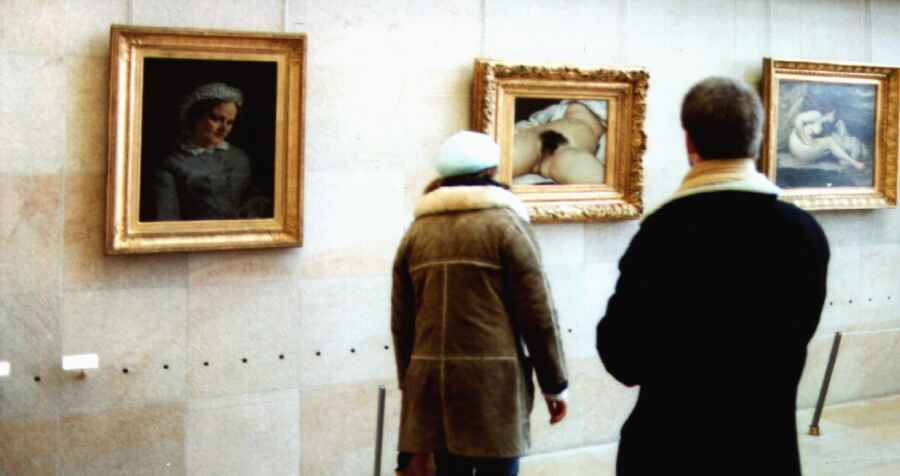
Why did he say he didn’t go to her funeral. He told his brother he didn’t like ceremonies and, besides, he was iller himself than people thought (with the cancer that would kill him, nine years later). He also contented himself with the thought that at least he didn’t die first so she was spared the pain of his death. I think there was some vanity going on. He really, really didn’t like people seeing how he looked with his mouth prosthesis and the way it affected his voice.
Still and all, not going to your mother’s funeral? I think he was even more honest than he realised when he wrote to Ernest Jones about ‘the growth in personal freedom I have acquired’ since her death.
And so to today's Advent goodies . . .
One If you want to know how to swear in ASL, watch this.
Two There is a section in my book, Filthy English, about Jackie Wilson and Lavern Baker's . . . alternative version of Think Twice. Now I've found this cute picture of the two of them together.

Three As there are rules for a bride's outfit (old, new, borrowed, blue) and a cocktail (sour, sweet, strong . . . *), so I have developed rules for creating Christmas (plus Hannukah) CD compilations. The first rule is: there must be Elvis. Here is the Memphis manchild performing a posthumous duet. NB Pop experts will notice that something has been excised from this recreated version — Elvis shouting 'Play it dirty!' On a Christmas song.
I would, of course, shown off my new YouTube skills by embedding it but that's blocked for this clip. But not for . . .
Four The other week, someone who was talking to me about their personal life said: It's not rocket science, is it. I said: Yes, it is actually. It's rocket science that isn't rocket science. It's people that are rocket science. Then, in a quite different context, I was pointed in the direction of this clip. Which is: a double pendulum. Which is: a physical demonstration of chaos theory (the butterfly effect) by which the tiniest change in the starting point can very quickly produce extraordinarily varied outcomes. Which is: a pretty damn good analogy for the complexity of human beings bumping along with each other.
Next up Dat dissertation (finally)
* Something like that anyway and certainly nothing to do with the 'cocktail rule' about VAT rate for composite items with differing VAT rates — book plus CD, for example.
Wednesday, 9 December 2009
Free gifts
It being the time of year that it is, I thought I should make out like other bloggers do and give you stuff — links etc, that is. I briefly — very briefly — considered a whole advent calendar of goodies but settled — realistically — on just putting a few in here.
I've already gifted some people Bessie Banks' studio tapes and Jerry Lee Lewis as Iago. (If both of those two things don't quicken your pulse just reading about them, you wouldn't have been interested in them anyway.)
Here, though, I offer, for this ninth day of Advent, a few little things. (Also, I get to display my eventual and tardy mastering of embedding YouTube postings.)
First Many of you might already have seen the Taiwanese TV news recreation of the Tiger Woods event. But it's surely worth another look. If you haven't seen it, think Grand Theft Auto. Wouldn't it be great if all TV news was like this? Who wouldn't want to watch a recreation of the Brown-Blair Granita dinner? Or what went on that night at OJ Simpson's?

Second In another part of my life, I write about legendary photographers for Professional Photographer magazine. This month, the editor got me to put my index figure where my words are and arranged a spot for me in the photographers' pit catwalk show in London Fashion Week. See how I dealt with it. (It's where the image above was taken.)
Third The Word magazine published a piece of mine about my book, Filthy English, and invited me in to talk dirty with them on their monthly podcast. Which four of us did, for an hour. It's got a parental advisory on it. The comments on it (which are many) contain excerpts from the Troggs tapes ('why don't you just fucking do what you fucking started doing?') and performances of some of the songs I write about in my book.
Fourth My word for the day: callipygian. You'll find it on the second page of this New York Times review of the Knee High production of Brief Encounter — which, being much impressed by other Knee High shows, I meant to see in London but, being somewhat busy with my course and book etc, never did get round to doing.
Next up Freud: if it's not one thing, it's his mother
It being the time of year that it is, I thought I should make out like other bloggers do and give you stuff — links etc, that is. I briefly — very briefly — considered a whole advent calendar of goodies but settled — realistically — on just putting a few in here.
I've already gifted some people Bessie Banks' studio tapes and Jerry Lee Lewis as Iago. (If both of those two things don't quicken your pulse just reading about them, you wouldn't have been interested in them anyway.)
Here, though, I offer, for this ninth day of Advent, a few little things. (Also, I get to display my eventual and tardy mastering of embedding YouTube postings.)
First Many of you might already have seen the Taiwanese TV news recreation of the Tiger Woods event. But it's surely worth another look. If you haven't seen it, think Grand Theft Auto. Wouldn't it be great if all TV news was like this? Who wouldn't want to watch a recreation of the Brown-Blair Granita dinner? Or what went on that night at OJ Simpson's?

Second In another part of my life, I write about legendary photographers for Professional Photographer magazine. This month, the editor got me to put my index figure where my words are and arranged a spot for me in the photographers' pit catwalk show in London Fashion Week. See how I dealt with it. (It's where the image above was taken.)
Third The Word magazine published a piece of mine about my book, Filthy English, and invited me in to talk dirty with them on their monthly podcast. Which four of us did, for an hour. It's got a parental advisory on it. The comments on it (which are many) contain excerpts from the Troggs tapes ('why don't you just fucking do what you fucking started doing?') and performances of some of the songs I write about in my book.
Fourth My word for the day: callipygian. You'll find it on the second page of this New York Times review of the Knee High production of Brief Encounter — which, being much impressed by other Knee High shows, I meant to see in London but, being somewhat busy with my course and book etc, never did get round to doing.
Next up Freud: if it's not one thing, it's his mother
Saturday, 5 December 2009
Eine kleine nacht spiel, part six: the contents of Mrs Klein’s drawers
There is a joke in the play about Mrs Klein’s filing cabinet. It’s of a kind that Ray Cooney would have constructed an entire play around. An intellectual version of Benny Hill could have made a career out of it.
The gag is this. Mrs Klein files her her correspondence into three different drawers of the cabinet, according to the divisions of Freud’s 1921 structural* model of the mind: ego, superego, id. (I’ve no idea whether Mrs Klein's filing strategy has any historical accuracy. Nor can I decide whether that matters — or whether I wish it did or didn’t.)
So, of course, Mrs Klein puts letters from the taxman in the superego drawer. And she puts the letter from Melitta which is the driving force of what plot there is . . . well, to be honest, I can’t remember which drawer she uses for her daughter's correspondence. However, I do suspect, that my not remembering is an accurate reflection of a similar confusion in the characters’ minds about which drawer the letter properly belongs in.
I had an irritating question about this gag, though. It’s a topographical one. Filing cabinets (including the one in the play) have four drawers, not three. So what does Mrs Klein call her fourth drawer? And what might she keep in it? What, in the Kleinian administrative universe lies beyond (or below) the ego, superego and id. Possible answers welcome in this posting's comments section. (Facetious ones, hopefully.)
PS1 How can I have six sessions in a week? Isn’t that transgressing a central rule of analysis? No. Freud himself regularly did six-day weeks for his patients. (I’ll be writing more about Freud’s work practices when I get back to writing about my dissertation.)
PS2 Kleinians, of course, would never do six-day weeks. That would mean they couldn’t demand of their patients** on a Friday morning: so how do you feel about how much you will miss me over the weekend? Or, of a Monday: so tell me about your missing me over the weekend.
PS3 Yes, I do know that ‘spiel’ is a masculine noun in German but ‘ein klein nacht spiel’ just didn’t roll right.
PS4 The play’s run finishes tonight.
* The structural model — the ‘second topography’, to the French — eclipsed the previous, topographical which divided the mind/brain into conscious, unconscious and, sometimes, pre-conscious. Almost without exception, modern analysts slip — promiscuously, with polymorphous perversity even —between the two models.
** At first, I typed ‘parents’ — a significant slip, of course, and one that neatly matches (and ironises) Kleinians’ view of the transference thing. The patient as parent to the analyst is as good a construction as any to start a discussion of the meanings of transference.
Next up I shoot a model
There is a joke in the play about Mrs Klein’s filing cabinet. It’s of a kind that Ray Cooney would have constructed an entire play around. An intellectual version of Benny Hill could have made a career out of it.
The gag is this. Mrs Klein files her her correspondence into three different drawers of the cabinet, according to the divisions of Freud’s 1921 structural* model of the mind: ego, superego, id. (I’ve no idea whether Mrs Klein's filing strategy has any historical accuracy. Nor can I decide whether that matters — or whether I wish it did or didn’t.)
So, of course, Mrs Klein puts letters from the taxman in the superego drawer. And she puts the letter from Melitta which is the driving force of what plot there is . . . well, to be honest, I can’t remember which drawer she uses for her daughter's correspondence. However, I do suspect, that my not remembering is an accurate reflection of a similar confusion in the characters’ minds about which drawer the letter properly belongs in.
I had an irritating question about this gag, though. It’s a topographical one. Filing cabinets (including the one in the play) have four drawers, not three. So what does Mrs Klein call her fourth drawer? And what might she keep in it? What, in the Kleinian administrative universe lies beyond (or below) the ego, superego and id. Possible answers welcome in this posting's comments section. (Facetious ones, hopefully.)
PS1 How can I have six sessions in a week? Isn’t that transgressing a central rule of analysis? No. Freud himself regularly did six-day weeks for his patients. (I’ll be writing more about Freud’s work practices when I get back to writing about my dissertation.)
PS2 Kleinians, of course, would never do six-day weeks. That would mean they couldn’t demand of their patients** on a Friday morning: so how do you feel about how much you will miss me over the weekend? Or, of a Monday: so tell me about your missing me over the weekend.
PS3 Yes, I do know that ‘spiel’ is a masculine noun in German but ‘ein klein nacht spiel’ just didn’t roll right.
PS4 The play’s run finishes tonight.
* The structural model — the ‘second topography’, to the French — eclipsed the previous, topographical which divided the mind/brain into conscious, unconscious and, sometimes, pre-conscious. Almost without exception, modern analysts slip — promiscuously, with polymorphous perversity even —between the two models.
** At first, I typed ‘parents’ — a significant slip, of course, and one that neatly matches (and ironises) Kleinians’ view of the transference thing. The patient as parent to the analyst is as good a construction as any to start a discussion of the meanings of transference.
Next up I shoot a model
Friday, 4 December 2009
Eine kleine nacht spiel, part five: the so-what of it
My teenage son and I walked away from the theatre, north on Upper St, past the Hope & Anchor, the rock basement where I spent so many hot and sticky evenings in the late 1970s — when my theatre, I guess, was seeing Joe Strummer in the pink zoot suit he wore as a 101er, clambering over amps and barking Them’s Gloria.
Well? I asked my son.
Hmm, he said. (Or something of the like.) What was it about? he asked. What was the point of it?
If I’d been really on the button, I’d have said: That you came to ask what was the point of it, that was the point of it.
But I wasn’t and I rambled a bit about how sometimes the things which have an obvious meaning later come to seem as if they have actually have no or little meaning.
At least he didn’t suggest that it’s not just psychoanalysts make bad parents but students of psychoanalysis, too. Too polite for their own good, perhaps, today’s teenagers.
Next up The sixth of the five parts of Mrs Klein. (I told you the collective noun is a complex of analysts.)
My teenage son and I walked away from the theatre, north on Upper St, past the Hope & Anchor, the rock basement where I spent so many hot and sticky evenings in the late 1970s — when my theatre, I guess, was seeing Joe Strummer in the pink zoot suit he wore as a 101er, clambering over amps and barking Them’s Gloria.
Well? I asked my son.
Hmm, he said. (Or something of the like.) What was it about? he asked. What was the point of it?
If I’d been really on the button, I’d have said: That you came to ask what was the point of it, that was the point of it.
But I wasn’t and I rambled a bit about how sometimes the things which have an obvious meaning later come to seem as if they have actually have no or little meaning.
At least he didn’t suggest that it’s not just psychoanalysts make bad parents but students of psychoanalysis, too. Too polite for their own good, perhaps, today’s teenagers.
Next up The sixth of the five parts of Mrs Klein. (I told you the collective noun is a complex of analysts.)
Thursday, 3 December 2009
Eine kleine nacht spiel, part four: the so? of it
So . . . when I wrote the thing about my evening with Mrs Klein, I divided it into five sections, mimicking the five sessions of a full analytic week. Or, rather that's what I thought I did.
In fact, I divided it into four, only missing out the fourth section and skipping straight to the fifth. So, as someone who has learned to seek (if not always find) significance in even seemingly straightforward errors, I found myself faced with the question: what should I do with this unexpectedly blank Thursday afternoon session? How might I fill the space?
I thought about this . . . and I thought about this . . . and I thought about this . . . and, suddenly, my fifty minutes were up. See you tomorrow.
PS1 Yesterday afternoon I recorded a podcast for The Word magazine, for whose latest issue I've written a piece about swearing. It was fabulous fun, a whole hour of talking seriously and laughingly about my book and swearing with two old work colleagues, David Hepworth and Mark Ellen — both of whom I've known since I was half the man I am today. In fact, since I 'wore skinny ties and dressed like a member of an Island records power pop group — the Jags, say', said Mark Ellen. 'Not in a bad way, though,' he added with his customary exquisite tact.
You can hear our full podcast here.
Warning It carries a parental advisory warning.
PS2 Someone has also posted links to the Troggs Tapes on it — which I don't mention in my book but maybe should have.
Next up After the play is over
So . . . when I wrote the thing about my evening with Mrs Klein, I divided it into five sections, mimicking the five sessions of a full analytic week. Or, rather that's what I thought I did.
In fact, I divided it into four, only missing out the fourth section and skipping straight to the fifth. So, as someone who has learned to seek (if not always find) significance in even seemingly straightforward errors, I found myself faced with the question: what should I do with this unexpectedly blank Thursday afternoon session? How might I fill the space?
I thought about this . . . and I thought about this . . . and I thought about this . . . and, suddenly, my fifty minutes were up. See you tomorrow.
PS1 Yesterday afternoon I recorded a podcast for The Word magazine, for whose latest issue I've written a piece about swearing. It was fabulous fun, a whole hour of talking seriously and laughingly about my book and swearing with two old work colleagues, David Hepworth and Mark Ellen — both of whom I've known since I was half the man I am today. In fact, since I 'wore skinny ties and dressed like a member of an Island records power pop group — the Jags, say', said Mark Ellen. 'Not in a bad way, though,' he added with his customary exquisite tact.
You can hear our full podcast here.
Warning It carries a parental advisory warning.
PS2 Someone has also posted links to the Troggs Tapes on it — which I don't mention in my book but maybe should have.
Next up After the play is over
Wednesday, 2 December 2009
Eine kleine nacht spiel, part three: the what did I think of it
What did I think? Of the production, that’s easy. It was as excellently acted, carefully directed and arrestingly staged as you come to expect in Lottery theatres. Of the play itself, though? That’s far harder. Its structure and its writing are both fine, of course. Well, better than fine, in fact. Far better. But there’s something beyond that which, well, I don’t even really know myself . . .
A few thoughts, though . . .
* The blood-red red of the set made me think of the womb — it is MK’s consulting room
* There was something of The Servant or Pasolini’s Theorem about the play — the outsider who comes in and takes over
* Paula Heimann was, I finally realised after much head-scratching, played by the actress who was Ruth in Spooks — a Ruth, in fact, who was no stranger to fiction (suitably, given the above)
* It’s a truism (and, in my experience, true) that analysts don’t make good parents — this play certainly more than hints at that
* Melanie Klein analysed Melitta — no analyst would do that now but, surely, even at the time, it must have seemed improper at least
* Paula Heimann, in time, also fell out with MK — though there is no hint of this future discord in the play
* Hanna Segal — who did become MK’s representative on earth and who is still alive — blamed MK’s own mother for her ‘bad’ mothering of Melitta
* The analytic world is fractious beyond all imaginings — even more so than the play presents
* Analysis is — if you believe it has any meaning at all — a form of biography, in good part, at the very least
* A love of gossip is one of the human universals, according to anthropologist Donald E Brown
* In discussing the history of psychoanalysis, analysts are wont — very wont — to dismiss biographical discussion as ‘mere gossip’
* Psychoanalysis prides itself on its unblinking view of humanity — though maybe not of psychoanalysis or, more particularly, psychoanalysts or, even more particularly, the ‘great’ and ‘good’ ones
PS1 Nothing to do with psychoanalysis (or any of the other things I usually blog about) at all but . . . there is a print and pot sale of students' work at Morley College (near Waterloo) tomorrow lunchtime. The work (at least some of it) is of staggering quality. I went today and bought all your Christmas presents. Well, ones those of you I actually bother to buy presents for. The teapot and harlequin set of half a dozen cups and saucers I'm keeping for myself. If you go, say hello to my friend Duncan.
PS2 This is the third of a five-part post. If you just pitched up, you might like to start here.
Next up Tomorrow belongs to . . . Thursday afternoon with the Kleins
What did I think? Of the production, that’s easy. It was as excellently acted, carefully directed and arrestingly staged as you come to expect in Lottery theatres. Of the play itself, though? That’s far harder. Its structure and its writing are both fine, of course. Well, better than fine, in fact. Far better. But there’s something beyond that which, well, I don’t even really know myself . . .
A few thoughts, though . . .
* The blood-red red of the set made me think of the womb — it is MK’s consulting room
* There was something of The Servant or Pasolini’s Theorem about the play — the outsider who comes in and takes over
* Paula Heimann was, I finally realised after much head-scratching, played by the actress who was Ruth in Spooks — a Ruth, in fact, who was no stranger to fiction (suitably, given the above)
* It’s a truism (and, in my experience, true) that analysts don’t make good parents — this play certainly more than hints at that
* Melanie Klein analysed Melitta — no analyst would do that now but, surely, even at the time, it must have seemed improper at least
* Paula Heimann, in time, also fell out with MK — though there is no hint of this future discord in the play
* Hanna Segal — who did become MK’s representative on earth and who is still alive — blamed MK’s own mother for her ‘bad’ mothering of Melitta
* The analytic world is fractious beyond all imaginings — even more so than the play presents
* Analysis is — if you believe it has any meaning at all — a form of biography, in good part, at the very least
* A love of gossip is one of the human universals, according to anthropologist Donald E Brown
* In discussing the history of psychoanalysis, analysts are wont — very wont — to dismiss biographical discussion as ‘mere gossip’
* Psychoanalysis prides itself on its unblinking view of humanity — though maybe not of psychoanalysis or, more particularly, psychoanalysts or, even more particularly, the ‘great’ and ‘good’ ones
PS1 Nothing to do with psychoanalysis (or any of the other things I usually blog about) at all but . . . there is a print and pot sale of students' work at Morley College (near Waterloo) tomorrow lunchtime. The work (at least some of it) is of staggering quality. I went today and bought all your Christmas presents. Well, ones those of you I actually bother to buy presents for. The teapot and harlequin set of half a dozen cups and saucers I'm keeping for myself. If you go, say hello to my friend Duncan.
PS2 This is the third of a five-part post. If you just pitched up, you might like to start here.
Next up Tomorrow belongs to . . . Thursday afternoon with the Kleins
Subscribe to:
Posts (Atom)